

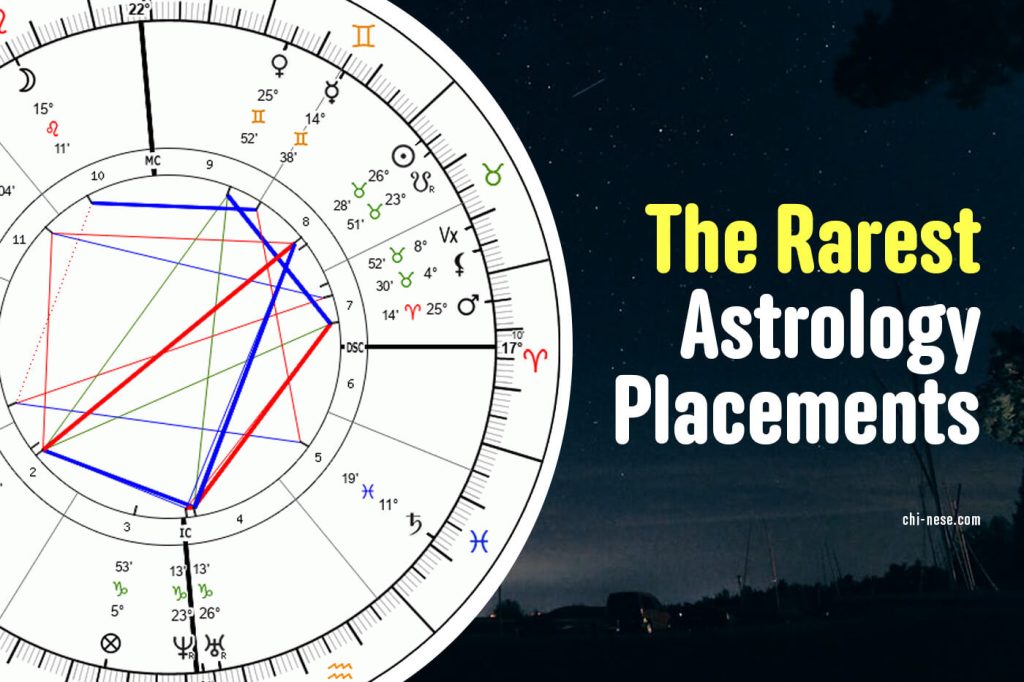
Your birth chart might contain three Yods, a five-pointed Grand Quintile, or a planet that makes no major aspects to anything else. You could also have five planets packed into a single house, several planets at the critical 29th degree, or a close conjunction between your Sun and the royal fixed star Regulus.
These unusual astrology placements can point to exceptional artistic talent, complicated love lives, powerful ambitions, or major turning points. Some are so specific that they require several planets to occupy precise degrees at the moment of birth. Here’s what they mean and how to recognize them in your own chart.
Unusual Planetary Groupings
Five or more planets in one sign or house: A stellium of this size puts enormous emphasis on one part of your chart. Five planets in Scorpio might describe someone fascinated by psychology, secrets, and human behavior. Five planets in the tenth house could belong to someone whose career dominates their life.
All planets direct: Having every planet moving direct at birth is a very unusual arrangement. Astrologically, it can describe someone who makes decisions quickly, pursues opportunities without much hesitation, and prefers moving forward to revisiting the past. Impatience and impulsive decisions can be the downside.
Several planets at 29°: Late-degree planets are associated with maturity, urgency, and unfinished business. Someone with several planets at 29°, the anaretic degree, may experience important decisions involving the areas ruled by those planets. Venus at 29° Libra, for example, can indicate complicated relationship decisions or a strong desire to find the perfect partner.
Unusual Planetary Conjunctions
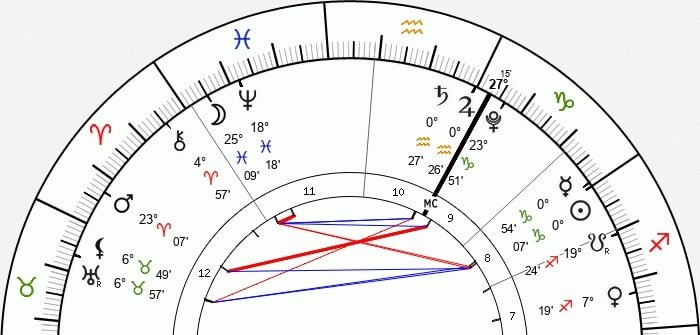
Jupiter Conjunct Saturn
Jupiter and Saturn meet approximately every 20 years. Jupiter wants expansion and new experiences, whereas Saturn prefers security, patience, and careful planning.
Someone born under this conjunction may have enormous ambitions but spend years preparing before taking action. They might establish their career later in life or achieve success through persistence and long-term work.
Pluto Conjunct the North Node
This conjunction is associated with powerful encounters and major life changes. Someone with Pluto conjunct the North Node may experience relationships that completely alter their priorities or find themselves dealing with control, jealousy, and power struggles.
In the seventh house, these experiences may involve marriage and partnerships. In the tenth house, they can concern career ambitions and authority figures.
Sun Conjunct Regulus
Regulus is a fixed star associated with royalty, leadership, ambition, and recognition. A close conjunction with the Sun can indicate someone who wants to achieve something exceptional or occupy a respected position.
Traditional astrology also connects Regulus with the danger of revenge. Pride and resentment can threaten the success a person has worked hard to achieve.
Algol on the Ascendant or New Moon
Algol is a fixed star located at approximately 26° Taurus, associated with Medusa, danger, violence, and extreme changes in fortune. In traditional astrology, it was considered one of the most feared fixed stars, although it can also represent extraordinary strength and survival.
I pay particular attention to charts where Algol is closely conjunct the Ascendant or both the Sun and Moon during a New Moon in Taurus. People with these placements may experience major upheavals, intense relationships, or events that divide their lives into a clear before and after. Algol on the Ascendant can also bring strong reactions from other people, including fascination, jealousy, or hostility.
A New Moon near Algol occurs occasionally, and an Ascendant at 26° Taurus is certainly possible. Still, I consider these conjunctions unusual, especially within a one-degree orb. In my experience, people with Algol in these positions tend to have extraordinary life stories, sometimes involving circumstances that seem almost impossible to believe.
Unusual Aspect Patterns

Three Yods in One Birth Chart
A Yod, also called the Finger of God, forms between two planets in sextile that both make a 150° quincunx to a third planet, known as the apex. Finding three Yods in a single birth chart is especially unusual, and each apex points to a different area of life that demands attention.
For example, a Yod with Venus at the apex may describe someone who repeatedly falls in love with unavailable people or sacrifices their own happiness to keep a relationship alive. With Mars at the apex, the person might struggle with suppressed anger, sexual frustration, or a lifelong desire to pursue something that always seems just out of reach. Saturn at the apex can bring heavy responsibilities from an early age or the sense of having to work twice as hard as everyone else.
Some astrologers only count Yods formed by planets. Personally, I also count configurations involving Lilith, Chiron, and the lunar nodes, especially if the aspects are tight. Chiron at the apex can point to an old wound that keeps resurfacing through different people and experiences, and the North Node can connect the configuration to an important life direction.
Grand Quintile
A Grand Quintile connects five planets through quintile aspects of 72° and their multiples, forming a five-pointed star.
Quintiles are associated with creativity, technical ability, and unusual talents. Someone with this configuration might have a remarkable ear for music, a gift for mathematics, or an ability to design intricate objects.
Mercury can emphasize writing and intellectual talent, Venus artistic ability, and Uranus unconventional ideas.
Kite Pattern
A Kite forms from a Grand Trine with an additional planet opposing one corner and forming sextiles to the other two.
For example, a Grand Trine in water signs can indicate emotional sensitivity, imagination, and intuition. If Mars completes the Kite, the person may have the ambition to turn their creative abilities into a career.
The opposition provides a challenge that encourages the person to make use of their natural talents.
Unaspected Planets
An unaspected planet has no major aspects to other planets in the birth chart. I personally use a fairly tight orb of around 4 degrees. For example, if Venus is at 20° Aries and no other planet forms a conjunction, sextile, square, trine, or opposition within that orb, I consider Venus unaspected. Some astrologers use wider orbs, especially for the Sun and Moon, but I prefer keeping them tight.
Unaspected Venus: You might fall madly in love with someone, lose interest almost overnight, or spend years longing for a person you can never have. Your taste in art, fashion, and beauty may also be quite different from everyone around you.
Unaspected Mars: You could be extremely competitive in certain situations and completely passive in others. Anger may build up for months before you suddenly explode over something small. Some people with this placement have enormous physical energy but struggle to find a consistent outlet for it.
Unaspected Moon: You might cry over a song or an old photograph but struggle to express sadness in front of another person. Your emotional reactions can surprise even you, and you may have a complicated relationship with your family, especially your mother.
Having two or more unaspected planets can make these contradictions even more pronounced, especially if personal planets such as Venus, Mars, or the Moon are involved.
Pisces and Aries Rising
Pisces and Aries are among the less common rising signs at many northern latitudes because they spend less time ascending over the eastern horizon.
Pisces Rising is associated with expressive eyes, soft facial features, and a dreamy appearance. People with this Ascendant may adapt their behavior to different social situations and have a strong interest in art, spirituality, or psychology.
Aries Rising is associated with a direct personality, quick reactions, athletic energy, and prominent facial features. These individuals may approach unfamiliar situations with confidence and act before considering every possible consequence.
Rising times depend on geographical latitude, so the distribution of Ascendants differs around the world.
Which Placements Stand Out the Most?
Three separate Yods, a complete Grand Quintile, or multiple unaspected planets can make a natal chart especially unusual. Their exact degrees, planetary connections, and house placements determine how they express themselves.
If you find one of these configurations in your birth chart, examine the planets involved. A Yod pointing toward Venus tells a very different story from one pointing toward Saturn, just as a stellium in the first house differs considerably from one in the twelfth.