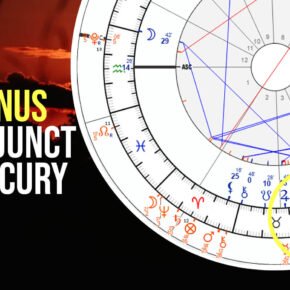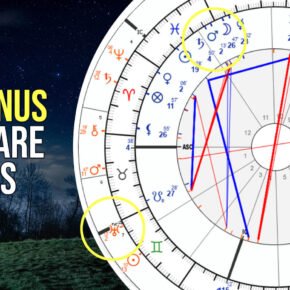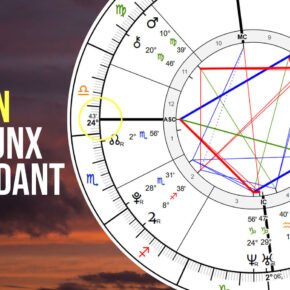



The Loosing of the Bond in Zodiacal Releasing is a major turning point in the Hellenistic astrology timing technique, particularly for career, personal direction, and the decisions that shape your future. On a Zodiacal Releasing calculator, you’ll see it marked with the letters LB, indicating that the normal sequence of zodiac signs has been interrupted.
I first came across Loosing of the Bond about fifteen years ago, after noticing those two letters in my own Zodiacal Releasing calculations. I had no idea what they meant, so I began researching the technique and comparing LB dates with events in my life. Several lined up with career changes, relationship developments, and decisions that took my life in a completely different direction. I’ve been studying Zodiacal Releasing ever since.
How Zodiacal Releasing Works
Zodiacal Releasing is an ancient Hellenistic timing technique described by the astrologer Vettius Valens and brought to wider modern attention through astrologers such as Chris Brennan.
The technique divides your life into chapters ruled by zodiac signs. Each sign has a specific duration, and the sequence begins from one of the calculated Lots in your birth chart.
Two Lots are particularly important:
- Lot of Spirit: Used for career, personal ambitions, actions, and the direction you actively pursue in life.
- Lot of Fortune: Associated with physical circumstances, health, and experiences that are less directly controlled by personal decisions.
For this article, we’re concentrating on the Lot of Spirit, because its Loosing of the Bond can coincide with important changes in career and life direction.
Each zodiac sign has a traditional number of years assigned to it.
| Zodiac sign | Years |
|---|---|
| Aries | 15 |
| Taurus | 8 |
| Gemini | 20 |
| Cancer | 25 |
| Leo | 19 |
| Virgo | 20 |
| Libra | 8 |
| Scorpio | 15 |
| Sagittarius | 12 |
| Capricorn | 27 |
| Aquarius | 30 |
| Pisces | 12 |
These durations are used on Level 1, the longest division of Zodiacal Releasing. On Level 2, the same numbers represent months, with further subdivisions on Levels 3 and 4.
The calculations use traditional 360-day years and 30-day months, which explains why software-generated dates may differ from simple calendar-year calculations.
What Is the Loosing of the Bond?
The Loosing of the Bond, sometimes called the breaking of the sequence, occurs after the releasing subperiods have completed a full circuit of the twelve zodiac signs.
Normally, the subperiods move through the zodiac in order. For example, inside a Level 1 Cancer chapter, Level 2 begins in Cancer, progresses through Leo, Virgo, Libra, and the remaining signs, eventually reaching Gemini.
At that point, the sequence would ordinarily return to Cancer. Instead, it jumps to Capricorn, the sign opposite Cancer.
That jump from the expected starting sign to its opposite is the Loosing of the Bond.
The important detail is that the jump happens after a complete circuit of subperiods. It occurs according to the mathematical structure of Zodiacal Releasing, at a calculable point in the larger chapter.
On Level 2, a full circuit lasts 211 releasing months, approximately 17 years and 7 months. Therefore, only six Level 1 signs have chapters long enough to contain a Level 2 Loosing of the Bond:
- Gemini → Sagittarius
- Cancer → Capricorn
- Leo → Aquarius
- Virgo → Pisces
- Capricorn → Cancer
- Aquarius → Leo
The arrows indicate the sign ruling the larger chapter and the opposite sign activated by the Loosing of the Bond.

How the Loosing of the Bond Can Change Your Life
In Zodiacal Releasing from the Lot of Spirit, the Loosing of the Bond is associated with a change in career direction, personal ambitions, or the role someone occupies in the world.
For example, someone might spend years building a successful career in finance, only to leave that profession and begin studying medicine. Another person might abandon plans to move abroad after receiving an opportunity that changes their priorities.
The change can also happen within the same profession. A journalist may move into publishing, a teacher may become a school administrator, or a business owner may sell their company and begin working independently.
The common theme is a significant departure from the direction established earlier in the larger chapter.
The sign activated by the Loosing of the Bond can provide additional information about the nature of the transition. Its ruling planet, natal house placement, and aspects help describe the circumstances surrounding the change.
For example, a jump into Gemini may emphasize writing, communication, education, or multiple professional roles. A jump into Capricorn may correspond with greater responsibility, management, or a more structured career path.
Loosing of the Bond on Different Levels
Zodiacal Releasing has four levels, and the Loosing of the Bond can occur within its subdivisions.
- Level 2 (L2): This is especially important for understanding changes within a longer life chapter. A Level 2 Loosing of the Bond from Spirit can correspond with a substantial career redirection, a change in professional identity, or a decision that influences the following years.
- Level 3 (L3): These shorter subdivisions can help identify the weeks or months surrounding a transition. They may coincide with important decisions, negotiations, resignations, or the beginning of a new project.
- Level 4 (L4): The shortest subdivisions provide more precise timing within the larger sequence. They can help identify individual days connected with meetings, announcements, conversations, or decisions.
The meanings of each Loosing of the Bond depends partly on the larger chapter in which it occurs. A Level 3 transition during an important Level 2 chapter may be especially interesting to examine.
A Level 1 chapter itself ordinarily progresses to the next zodiac sign. The familiar Loosing of the Bond used in natal timing takes place in the subperiods within a longer chapter.
Example: Lot of Spirit in Scorpio
Let’s use a hypothetical birth chart with the Lot of Spirit in Scorpio.
The person begins life in a 15-year Scorpio Level 1 chapter. After Scorpio comes Sagittarius, lasting 12 years, followed by Capricorn, lasting 27 years.
| Approximate age | Level 1 sign | Duration |
|---|---|---|
| Birth–15 | Scorpio | 15 years |
| 15–27 | Sagittarius | 12 years |
| 27–54 | Capricorn | 27 years |
| 54–84 | Aquarius | 30 years |
These are approximate ages because Zodiacal Releasing uses 360-day years.
The first two chapters are too short to contain a Level 2 Loosing of the Bond. The Capricorn chapter, however, lasts 27 years, providing enough time for the Level 2 sequence to complete all twelve signs.

The Capricorn to Cancer Loosing of the Bond
Inside the Capricorn Level 1 chapter, the Level 2 subperiods begin in Capricorn and move through Aquarius, Pisces, Aries, Taurus, Gemini, Cancer, Leo, Virgo, Libra, Scorpio, and Sagittarius.
After Sagittarius, the sequence would ordinarily return to Capricorn.
Instead, it jumps to Cancer.
This is the Capricorn to Cancer Loosing of the Bond, occurring approximately 17 years and 7 months into the Capricorn chapter, around age 44 in our hypothetical example.
The larger Capricorn chapter continues. The Loosing of the Bond changes the Level 2 sequence within it.
What Could Happen During This Transition?
Imagine someone who entered the Capricorn chapter around age 27 and spent the following years establishing a demanding professional career.
They worked toward promotions, accumulated responsibilities, and became known for their reliability. By their early forties, they held a senior position and had achieved many of the goals they set for themselves.
Around the Capricorn to Cancer Loosing of the Bond, their priorities could change.
They might leave corporate management to establish a family business, move closer to relatives, or begin working from home. Their professional ambitions could become more closely connected with domestic life, property, or providing security for loved ones.
Capricorn represents structure, professional responsibility, and long-term achievement. Cancer introduces themes of home, family, emotional attachment, and personal security.
This example illustrates how the symbolism of the two signs can describe a change in priorities. The natal placements of Saturn and the Moon would provide further details.
A Real Example: Al Gore’s Career
A well-known example discussed by astrologer Chris Brennan involves former U.S. Vice President Al Gore.
Gore was born with the Lot of Spirit in Scorpio. He entered a Capricorn Level 1 chapter in November 1974, during which he began building his political career.
His Level 2 Loosing of the Bond occurred on March 10, 1992, with the releasing sequence jumping from the expected Capricorn subperiod to Cancer.
That same year, Gore was selected as Bill Clinton’s running mate in the presidential election. The Clinton-Gore ticket won, and Gore became vice president in January 1993.
The timing is especially interesting because his political career continued, but his public role changed considerably. He moved from serving as a U.S. senator to holding one of the highest offices in the country.
This is a great example of how a Loosing of the Bond can describe a major transition within an established career, even if the person remains in the same professional field.
How to Find Your Loosing of the Bond Date
You’ll need your birth date, exact birth time, and birthplace to calculate your Lot of Spirit accurately.
You can use a Zodiacal Releasing calculator such as Astro-Seek or Astro.com.
Start by selecting Zodiacal Releasing from the Lot of Spirit. The calculator will generate your Level 1 chapters and their subdivisions.
Look through the Level 2 sequence for the letters LB. These mark the Loosing of the Bond dates.
If you’re examining a Capricorn Level 1 chapter, for example, look for the Level 2 transition into Cancer after the first complete circuit. For a Virgo Level 1 chapter, the Loosing of the Bond activates Pisces.
You can also examine Levels 3 and 4 for shorter transitions within the larger chapters.
I recommend comparing the dates with your personal timeline. Look at career changes, relocations, major professional decisions, and significant changes in your long-term plans. The most interesting examples may involve a change of direction that only becomes fully apparent several months later.