

When someone says something rude, provocative, or unnecessary, the instinct to respond can be immediate. Many people want to defend themselves, correct the other person, or make their position clear.
Yet a surprising number of conflicts lose their momentum when no reaction is given. Without another comment, another explanation, or another attempt to prove a point, the conversation often slows down on its own.
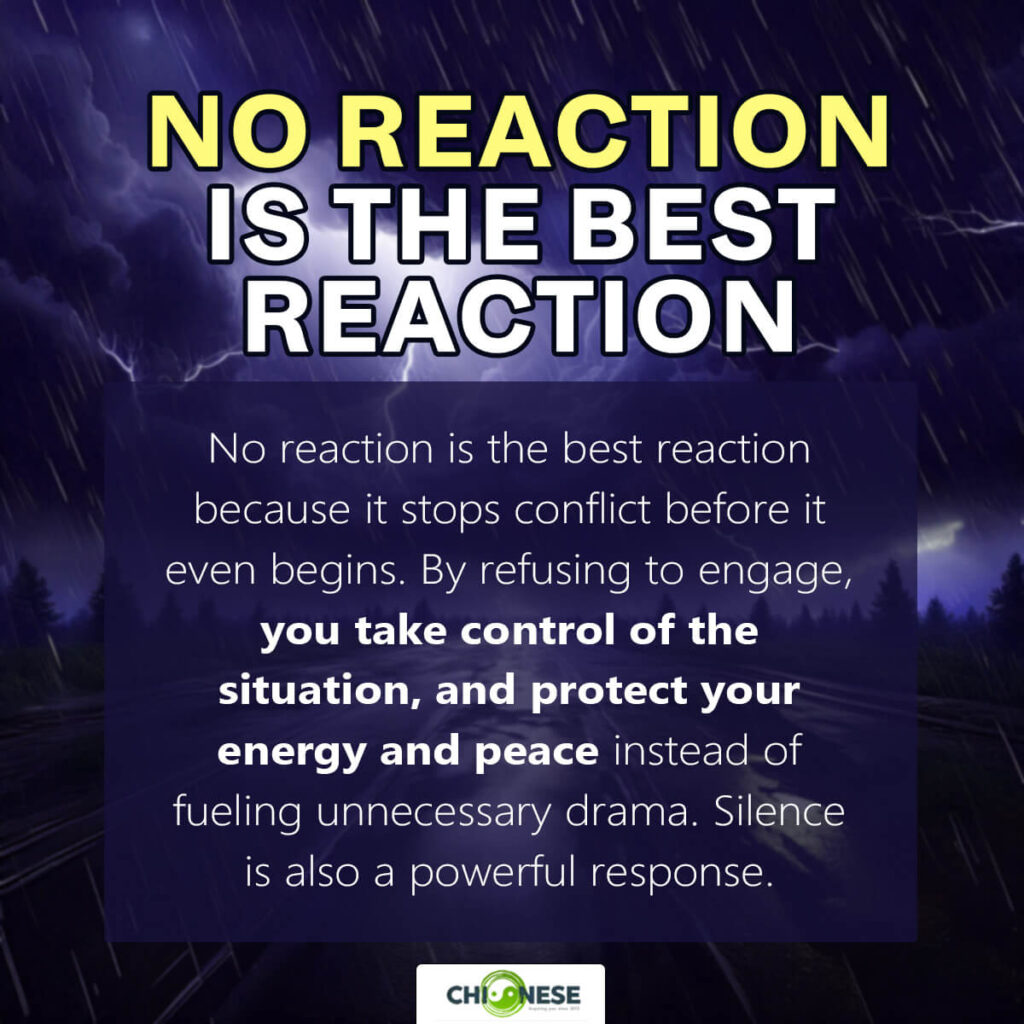
This is why the phrase “no reaction is the best reaction” has become so popular. In certain situations, silence can accomplish what words cannot: it prevents an unproductive exchange from growing into something larger.
No Reaction Removes Momentum
Many disagreements continue because each response creates another opportunity for discussion.
One comment leads to a reply. The reply leads to a clarification. The clarification creates another question, another criticism, or another interpretation. Before long, the conversation has expanded far beyond the original issue.
A lack of reaction changes that pattern. Without new material to respond to, the interaction often loses momentum. What seemed urgent a few moments earlier can suddenly become much less significant.
This is one reason silence often brings an argument to a close faster than a lengthy explanation.
Not Every Comment Requires A Reply
People often feel responsible for responding to everything directed at them. A criticism invites a defense. An accusation invites an explanation. A rude remark invites a comeback. In reality, every comment does not carry the same importance.
Some observations deserve attention. Others pass through a conversation without offering anything useful, productive, or meaningful. Recognizing the difference is a valuable skill.
Choosing not to react allows a person to decide what deserves engagement and what deserves to be left behind.
Silence Creates Clarity
Conversations move quickly. Emotions, assumptions, and misunderstandings can all become mixed together within a matter of minutes.
Silence introduces space. That space often provides an opportunity to view the situation more objectively. A comment that initially seemed important may appear much smaller after a little time has passed. A disagreement that appeared urgent may reveal itself as something temporary. Many situations become clearer once the pressure to respond immediately disappears.

Some People Are Looking For Engagement
Not every interaction is motivated by curiosity, understanding, or genuine discussion. Certain comments are designed to provoke a response. Online platforms provide countless examples. A controversial statement attracts attention. An exaggerated opinion generates replies. The resulting reactions keep the conversation active.
When no reaction arrives, the exchange often loses its appeal. Attention shifts elsewhere, and the situation gradually fades on its own. This pattern appears in many areas of life, both online and offline.
Silence Speaks For Itself
Words communicate ideas, but silence can communicate decisions. Sometimes, silence expresses disinterest. In other situations, it reflects confidence, patience, or a decision to move forward without further discussion.
For that reason, silence is often interpreted more strongly than people expect. A lengthy explanation can be debated, analyzed, or challenged. Silence leaves far less room for additional discussion. Its message is often simple and immediately understood.
Why No Reaction Protects Your Time
Every interaction requires attention. A five-minute exchange can easily occupy much more time than the conversation itself. People replay discussions in their minds, revisit old messages, and think about responses long after the interaction has ended.
Choosing not to react allows attention to return to more important things. Work, hobbies, relationships, and personal goals receive space that might otherwise be consumed by an unnecessary exchange. Over time, those small decisions can add up to a significant amount of reclaimed time.
Why No Reaction Is Often the Best Reaction
No reaction is the best reaction because it prevents unnecessary conflicts from gaining momentum. Many disagreements continue only because both sides keep responding, explaining, defending, and revisiting the same points. When no reaction is given, the conversation often loses energy and gradually comes to an end.
Silence also creates space to view a situation more clearly. A comment that seemed important in the moment may look very different a few hours later. Without the pressure to respond immediately, it becomes easier to decide whether the issue deserves any attention at all.
A disagreement is a lot like a fire. Every reply adds another piece of wood to the flames. Sometimes the most effective response is to stop feeding it. Without constant attention, many arguments lose their intensity and fade away on their own. That is one reason the phrase “no reaction is the best reaction” continues to resonate with so many people.
More to Read Next
- Drive It Like You Stole It: Meaning and Origin
- Why Is Everyone From My Past Coming Back? Spiritual Meaning Explained
- Stars Can’t Shine Without Darkness: What This Quote Really Means
- Wherever You Go, There You Are (Explained)