

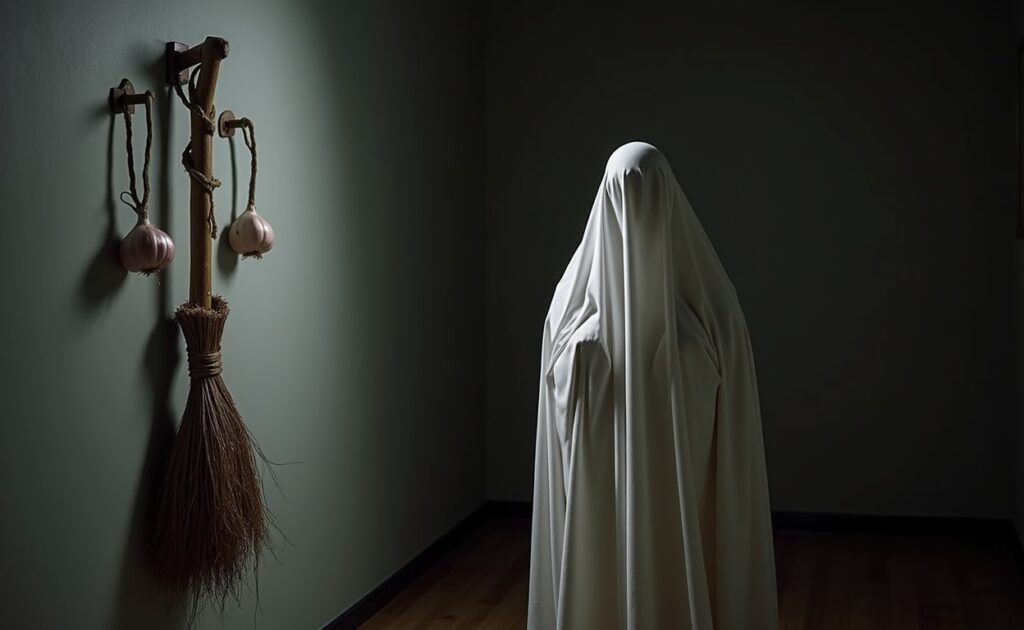
Ghost folklore has no shortage of ways to keep unwanted spirits away. Surprisingly, many involve ordinary objects instead of rare or expensive ones. Salt, garlic, iron, herbs, and other familiar items have earned a lasting place in ghost lore, and many are probably already in your home. Here are 10 of the most common ghost repellents found in folklore.
Salt
Salt has long symbolized protection and purification in spiritual traditions around the world. Folklore describes it as a barrier that keeps unwanted spirits from crossing.
People often sprinkle lines of salt across doorways, windowsills, and room corners. Some traditions also call for dissolving salt in water to cleanse spaces that feel heavy or unsettling.
Garlic

Garlic isn’t just associated with vampires. In many traditions, it also serves as protection against unwanted spirits. Its strong scent and long connection with warding off evil have made it a common household safeguard.
Garlic is often hung near entrances, placed in bedrooms, or kept around the home as a protective charm to discourage lingering spirits.
Holy Symbols and Religious Items
Crosses, prayer beads, sacred texts, blessed water, and other religious objects have long been used as protection against restless spirits. They represent faith, spiritual authority, and divine protection in many cultures.
These items are commonly placed near beds, doorways, or personal spaces to create a sense of safety and protection.
Iron
Iron has a long-standing reputation as one of the strongest protections against spirits. Horseshoes above doors, iron nails, and simple iron objects placed near entrances appear throughout folklore.
Iron is often associated with strength, stability, and the physical world, making it a natural barrier against supernatural beings in many traditional stories.
Bright, Lived-In Homes

Ghost lore usually places restless spirits in abandoned buildings, neglected houses, and forgotten places instead of homes filled with light and daily life. A house where people cook, clean, laugh, and spend time together has long been viewed as an unlikely place for a haunting.
Open curtains, regular cleaning, conversation, music, and everyday activity all contribute to a home that folklore describes as unwelcoming to unwanted spirits.
Cleansing Herbs
Burning herbs is a common feature of many cleansing rituals. Sage, cedar, rosemary, lavender, and frankincense are among the herbs most often chosen to clear unwanted spiritual influences from a home.
Each herb has its own symbolism, but all share a connection with purification and spiritual protection.
Running Water
According to folklore, ghosts struggle to cross running water. Streams, rivers, and waterfalls often appear as natural boundaries between the living and the spirit world.
Some traditions extend this idea indoors by using fountains or flowing water as symbols of movement that prevent spirits from settling.
Covered Mirrors
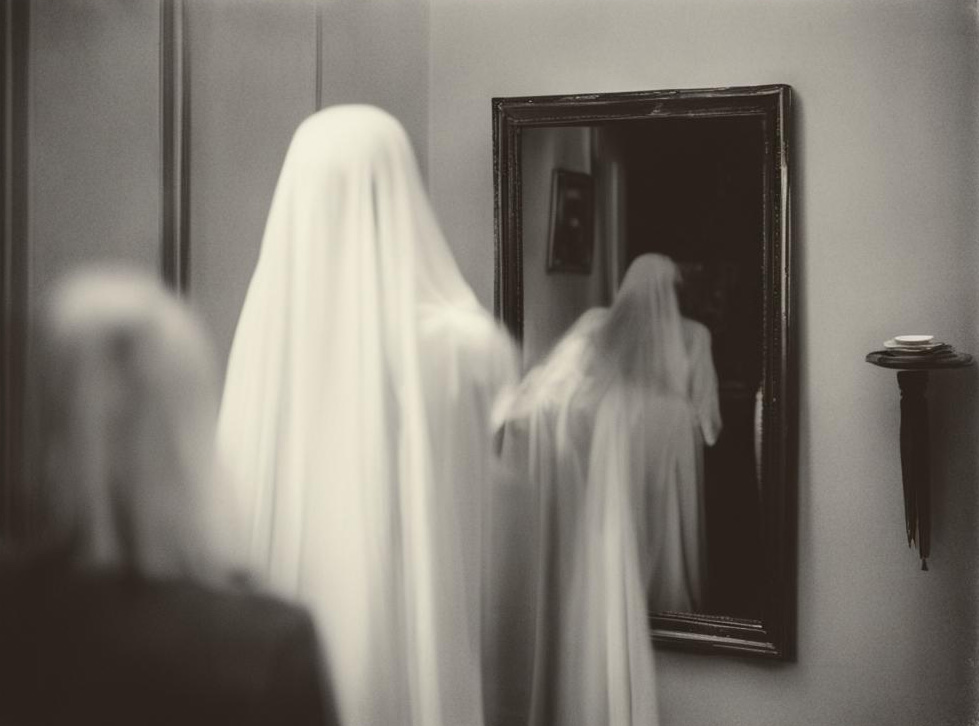
Mirrors occupy a unique place in ghost folklore and are often described as doorways between the living and the spirit world. Covering a mirror is believed to close that passage, preventing spirits from entering, leaving, or becoming trapped inside.
Covering mirrors after a death remains part of many funeral and mourning traditions. According to folklore, leaving a mirror uncovered could allow a wandering spirit to linger in the home or become attached to its reflection.
Fresh Flowers and Living Plants
Fresh flowers and healthy plants symbolize life, growth, and renewal. Many traditions associate these qualities with protection against unwanted spirits.
Plants and flowers are often placed near entrances or in rooms that feel neglected or uncomfortable, bringing life into spaces connected with ghost folklore.
Brooms
Brooms do more than sweep away dust in ghost folklore. They also symbolize clearing a home of unwanted spiritual influences and restoring order after unsettling events.
Sweeping toward the front door is a common tradition, symbolizing the removal of anything unwanted from the home before it has a chance to linger.
One Thing They All Share
Ghost folklore gives many ordinary household items an extraordinary role. Salt, garlic, iron, herbs, mirrors, flowing water, and even a simple broom all serve the same purpose of keeping unwanted spirits outside the home.
One detail connects nearly all of these traditions. Protection doesn’t come from rare ingredients or expensive objects. Most ghost repellents come straight from the kitchen, the garden, or everyday life, making them easy to keep around the home. A bag of salt, a clove of garlic, a broom by the door, or a healthy houseplant often carries just as much symbolic importance in folklore as religious or ceremonial objects.
These traditions also describe the same type of home. A space filled with light, regular activity, fresh air, and good care leaves little room for restless spirits to settle. Clean rooms, open curtains, and familiar routines create an environment that ghost folklore consistently describes as unwelcoming to unwanted visitors.
More Ghost Stories and Folklore
- Do Ghosts Have DNA? Facts About Spirit Memories
- Do Ghosts Have Bones and Teeth? Their Anatomy Explained
- Why Ghosts Are Depicted as White Sheets: The History & Symbolism
- Do Ghosts Watch You Poop? 4 Theories Behind the Creepy Question