

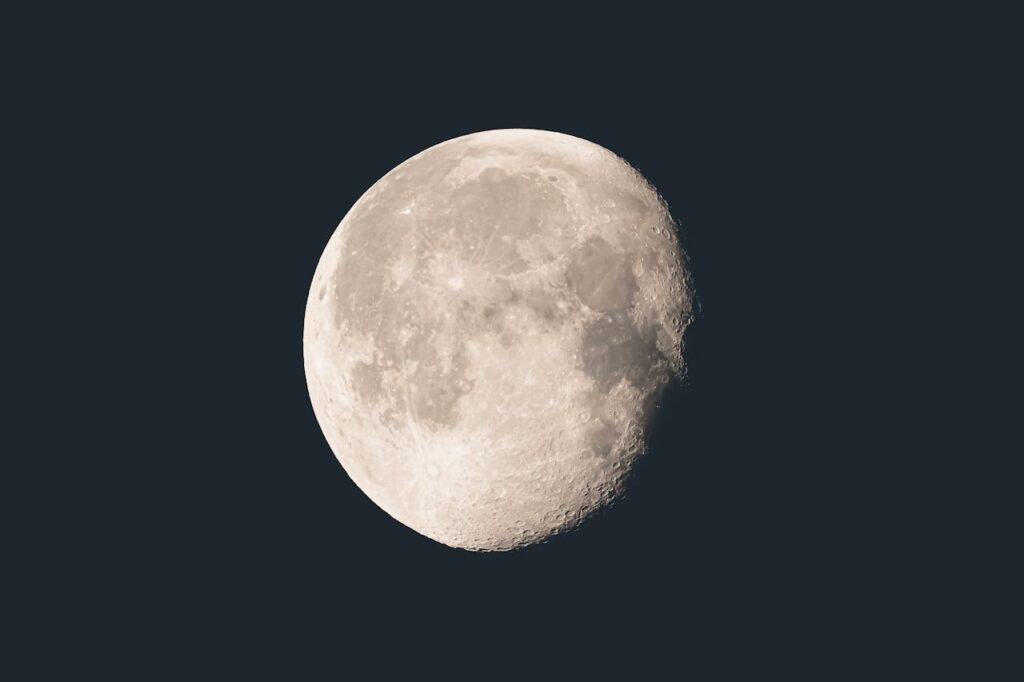
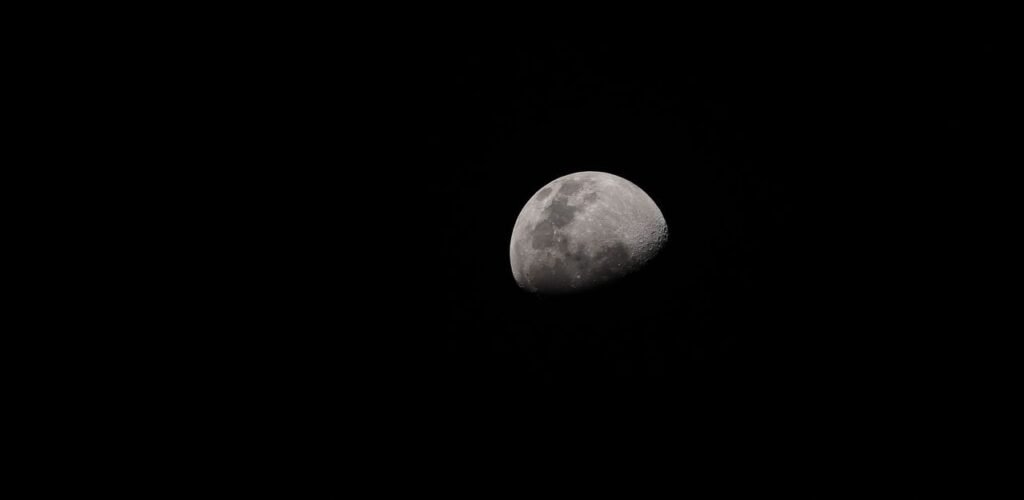
The waning gibbous moon represents release, gratitude, completion, and sharing what you have learned. It comes immediately after the Full Moon, when the illuminated portion of the Moon begins decreasing each night. Spiritually, this phase is associated with letting go of excess, processing recent experiences, and deciding what you want to carry forward.
In lunar spirituality, the Full Moon marks culmination. The waning gibbous begins the journey away from that peak, making its energy more suited to releasing and completing than attracting and initiating.
Between the Full Moon and Last Quarter
The waning gibbous begins after the Full Moon and lasts until the Last Quarter. More than half of the Moon is still illuminated, but the bright portion becomes smaller each night.
“Waning” means decreasing, and “gibbous” describes the Moon when more than half of its visible disk is illuminated. During this phase, the Moon rises later each night and remains visible into the morning.
Its decreasing light is also behind much of its spiritual symbolism. The waxing phases are associated with growth and attraction, and the waning phases with release, removal, and bringing things to an end.
A Time for Release and Completion
Spiritually, the waning gibbous moon is associated with release after culmination. Something has reached its peak under the Full Moon, and now you begin deciding what remains useful and what has run its course.
Old habits, resentment, attachments, abandoned plans, and relationships that have run their course all belong to this phase. Something that became impossible to ignore around the Full Moon may now be easier to release.
The waning gibbous also favors finishing what has already begun. Complete unfinished work, settle unresolved conversations, clear lingering obligations, and close chapters that no longer have anywhere to go.
Gratitude After the Full Moon
The waning gibbous comes just after the Full Moon, when the lunar cycle has already reached its brightest point. In spiritual practice, this phase is associated with appreciating what came from the cycle before beginning to let it go.
You may have reached a goal, received an answer, finished something difficult, or finally understood a situation that had been confusing you. The waning gibbous is traditionally used to acknowledge those results before attention moves toward release and closure.
This is also where the name Disseminating Moon comes in. In astrology, the phase is linked with taking what you have learned or gained and passing it on through teaching, conversation, writing, or helping someone else with your experience.
Born Under a Waning Gibbous Moon
People born during the waning gibbous, or Disseminating, Moon are traditionally associated with sharing knowledge, teaching, communication, and passing experience to others.
You may have a strong urge to explain what you know or turn personal experience into something useful for other people. Teaching does not necessarily mean standing in a classroom. It can take the form of writing, mentoring, advising, storytelling, or simply being the person others come to when they need an explanation.
A waning gibbous birth phase can also indicate someone who learns through experience and later needs to communicate those lessons. Knowledge gains greater value when it can be shared.
Waning Moon Superstitions
Older lunar folklore often divides activities according to whether the Moon is growing or shrinking.
The waxing Moon became associated with increase: planting for growth, attracting prosperity, beginning projects, and encouraging things to develop.
The waning Moon became associated with decrease: cutting, clearing, removing, harvesting, ending unwanted habits, and getting rid of things.
Agricultural folklore also used lunar phases when deciding when to plant, prune, harvest, or cut timber. Traditions varied by region and crop, so there was no single rule followed everywhere. A common principle, however, connected the waxing Moon with growth above ground and the waning Moon with activities involving reduction, roots, pruning, or harvesting.
Working With the Waning Gibbous Moon
Use the waning gibbous for finishing, clearing, cleansing, and releasing. Complete work you have already started, clean out possessions you no longer use, break a habit you want to leave behind, or have the conversation you have been postponing.
This phase also suits cleansing rituals, especially those intended to remove unwanted energy from the home or cut ties with something from the past. Journaling can focus on what changed around the Full Moon, what you learned from it, and what you are ready to leave behind.
If the Full Moon brought a result or realization, the waning gibbous is where you do something with it: finish it, share it, clear it, or let it go.
From Full Moon to Last Quarter
The waning gibbous sits between two distinct points in the lunar cycle. The Full Moon brings maximum illumination, and the Last Quarter marks a stronger stage of release and reassessment.
The days between them are associated with processing what reached its peak at the Full Moon. Gratitude, completion, teaching, cleansing, and letting go all belong naturally here.
As the illuminated portion continues shrinking, the lunar cycle gradually moves toward the darker balsamic phase and eventually the New Moon, when a new cycle begins.
More Moon Meanings & Lunar Symbolism
- Blood Moon Lunar Eclipse: Spiritual Meaning, Symbolism, and Rituals
- Can’t Sleep During a Full Moon? Spiritual Meaning & Lunar Energy
- Born on a Full Moon: Spiritual Meaning, Intuition & Astrology
- Dream About Multiple Moons in the Sky: Spiritual Meaning