


The Antarctica ice wall theory claims that Antarctica is a massive frozen boundary surrounding the known world, with unexplored lands beyond the ice. In flat Earth theories, Antarctica forms the world’s outer boundary instead of a continent at the South Pole, with a vast wall of ice surrounding the oceans.
What lies beyond the Antarctica ice wall is the biggest mystery surrounding the theory. Antarctica remains one of the most remote and difficult places on Earth to explore, fueling stories about hidden continents, warmer lands, secret civilizations, and military bases. Admiral Richard E. Byrd, Operation Highjump, and Antarctic travel restrictions have become closely tied to these theories.
Where the Antarctica Ice Wall Theory Comes From
The ice wall is closely connected with flat Earth maps that place the North Pole at the center and Antarctica around the outer edge. On these maps, Antarctica forms a huge circular boundary surrounding the oceans and continents. The Antarctic coastline we recognize on a globe becomes an enormous ring of ice.
This model also provides an answer to one of the most obvious questions raised by a flat world: what keeps the oceans from flowing over the edge? The ice wall acts as the barrier.
Some versions end there. Antarctica is simply the frozen boundary surrounding the known world. Others claim the wall separates our familiar continents from additional territory lying farther outward. That second possibility has created much of the modern fascination with the theory.
What Could Be Beyond the Ice Wall?
The most popular answer is more land. According to the theory, crossing Antarctica would not bring you to the end of anything. You would eventually pass the ice and reach continents missing from the maps we use today.
Some maps shared online take the idea much further. They show several enormous continents beyond Antarctica, separated by oceans and additional rings of ice. Our familiar continents sit near the center, forming only a small part of a much larger world.
Stories about these hidden lands include forests, mountains, warmer climates, unknown animals, ancient ruins, military bases, and even civilizations completely separated from ours.
In this version of the ice wall theory, Antarctica is the boundary of the world we know, with an entire unknown world continuing beyond it.
The Ice Cliffs Behind the Theory
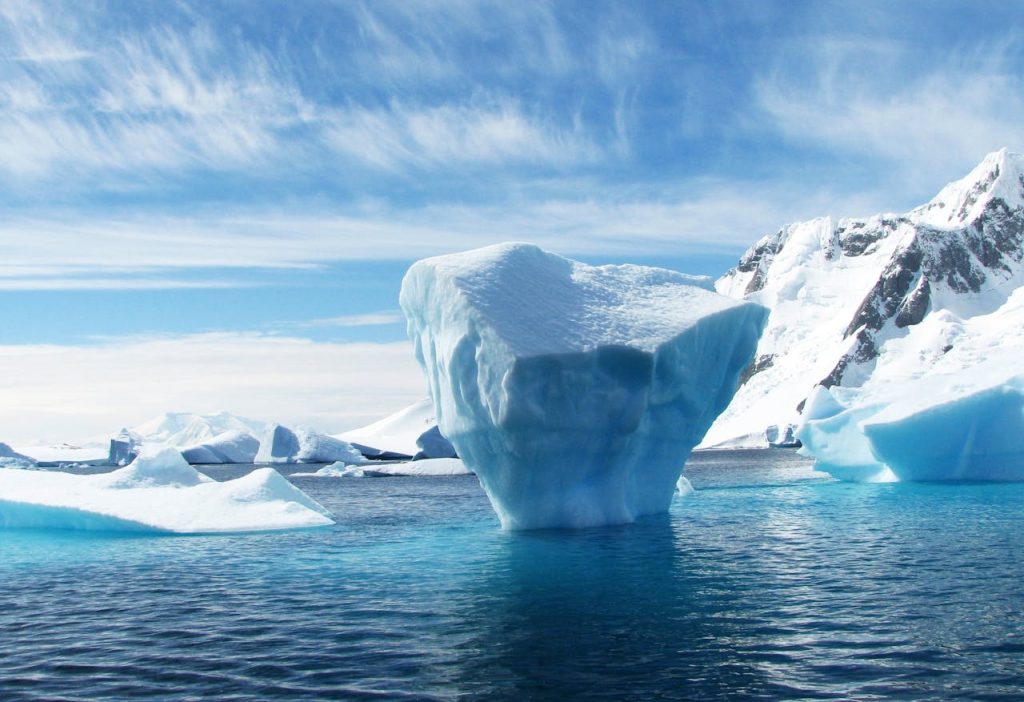
Antarctica really does have enormous walls of ice along its coastline. In some places, ice shelves end in steep vertical cliffs rising directly from the ocean, creating long white barriers that stretch across the horizon.
These cliffs are one reason the idea of an Antarctic ice wall is so visually convincing. Photos taken from ships can show little except ocean, a towering face of ice, and more ice continuing into the distance. Without seeing the continent from above, it is easy to understand how such landscapes became connected with stories of a frozen boundary.
In the ice wall theory, these cliffs continue far beyond the sections reached by ships and expeditions, eventually forming the enormous frozen border surrounding the known world.
Admiral Byrd and the Land Beyond Antarctica
Few names are mentioned more in Antarctica theories than Rear Admiral Richard E. Byrd. Byrd became famous for his polar expeditions and his involvement with Operation Highjump, the enormous American Antarctic expedition launched shortly after World War II. Ships, aircraft, and thousands of personnel traveled south to explore and photograph large areas of Antarctica.
His expeditions later became connected with stories about territory beyond the known Antarctic region.
One claim attributed to Byrd describes a vast unexplored area beyond the pole. Other stories go much further, describing a flight into warmer territory containing vegetation, animals, or an advanced civilization.
The most extreme version comes from the so-called secret diary of Admiral Byrd, in which he supposedly entered an unknown world hidden beyond the Antarctic landscape.
Why Operation Highjump Became So Important

Operation Highjump took place in 1946 and 1947, only a short time after World War II. The expedition involved thousands of personnel, numerous ships, aircraft, aerial photography, mapping, and operations across an enormous Antarctic area. Its military scale has fascinated conspiracy communities ever since.
Why would such a huge naval operation be sent to one of the most hostile places on Earth? That question generated countless explanations.
Some theories claim the expedition was searching for secret German bases established near the end of World War II. Others connect it with unknown technology, entrances beneath Antarctica, or discoveries made beyond the familiar coastline.
Ice wall theories give Operation Highjump another purpose entirely: exploring territory that extends beyond the world shown on conventional maps. The expedition’s enormous scale gives these stories a historical event around which much larger claims can be built.
Admiral Byrd’s Mysterious Flight
One of the biggest mysteries surrounding Admiral Byrd concerns what he supposedly saw during his flights over Antarctica.
Stories claim that Byrd flew beyond the frozen areas he expected to find and encountered mountains, open land, warmer temperatures, and even vegetation. In the more extreme versions, he reached an entirely unknown territory hidden beyond Antarctica.
This story later became connected with two very different theories. Hollow Earth believers say Byrd found an entrance leading inside the Earth, where another inhabited world exists. The ice wall theory gives his journey a different destination: Byrd crossed beyond Antarctica and reached land outside the world shown on our maps.
Both versions revolve around the same mystery: did Byrd see something beyond Antarctica that was never publicly revealed?
Why the Antarctic Treaty Attracts So Much Attention
The Antarctic Treaty is a major part of discussions about the ice wall. Antarctica has no ordinary national borders like other continents. Multiple countries operate research stations there, military activity is restricted, and travel requires far more planning and regulation than an ordinary international trip.
For people who believe something is hidden beyond Antarctica, all of this raises an obvious question: why is access to such an enormous continent so controlled?
They believe the restrictions keep independent explorers from traveling deep into Antarctica and continuing beyond the areas shown on conventional maps. If hidden land exists beyond the ice, unrestricted exploration could expose it.
The treaty consequently becomes part of the mystery surrounding what lies beyond the Antarctic ice and why ordinary travelers cannot simply head south and explore wherever they want.
Old Maps and Hidden Continents
Historical maps also play a large role in theories about hidden Antarctic lands.
Alternative-history communities frequently examine old maps for coastlines, islands, and southern territories that look different from modern geography. Maps containing enormous southern landmasses are interpreted as possible evidence that earlier civilizations knew about territory later removed or redefined.
Some ice wall theories also circulate modern speculative maps showing multiple continents beyond Antarctica.
These maps usually depict the familiar world at the center, surrounded by Antarctic ice, followed by additional oceans and continents farther outward.
The result transforms Antarctica from the bottom of the world into the doorway to a much larger geography.
Antarctica and the Forbidden Boundary
Antarctica is enormous, remote, frozen, dangerous, expensive to reach, and inaccessible to most people. Towering ice cliffs, endless white horizons, months of darkness, isolated research stations, and vast stretches of land far beyond normal tourist routes have made it the perfect setting for theories about a forbidden boundary.
Some theories claim that the public sees only a small part of Antarctica and that restricted areas hide underground facilities, bunkers, or passages leading beyond the ice. Wealthy and powerful people also feature in these stories, with claims that private aircraft, specialized transport, and enormous financial resources give them access to places ordinary travelers could never reach.
In the most extreme versions, underground bunkers or private facilities used by political and financial elites exist somewhere deep within Antarctica or beyond the supposed ice wall. The secrecy surrounding these locations is then connected with the wider idea that Antarctica separates the publicly known world from territory reserved for a small group with the resources to reach it.
Antarctica already feels separated from ordinary civilization. The ice wall theory pushes that separation much further, turning the continent into a guarded boundary with another world hidden on the other side.
Beyond the Antarctic Ice
The Antarctica ice wall theory places the known world on one side of the Antarctic ice and unknown territory on the other. Beyond that frozen boundary could be additional continents, warmer lands, secret bases, isolated civilizations, or enormous regions missing from modern maps.
Admiral Byrd, Operation Highjump, old maps, Antarctic travel restrictions, and immense walls of coastal ice have all become part of the mystery. Antarctica is so remote that very few people will ever cross its interior themselves, leaving plenty of room for questions about places far beyond established expedition routes.
The biggest question has always been what lies beyond the ice. If the world continues farther than our maps suggest, Antarctica would be the boundary separating the world we know from everything beyond it.
More Mysteries & Alternative Theories
- The Unfinished Room Theory: Why Certain People Stay in Your Head
- The Invisible Guest Theory: Why You’re Not Being Watched
- The Invisible String Theory: Are We Secretly Connected?
- Broken Bone Theory: The Spiritual Side of Never Breaking a Bone
- TikTok’s “Meeting Twice” Theory: Coincidence or Something More?
- Was Bob Ross a Serial Killer? The Reddit Theory Explained