

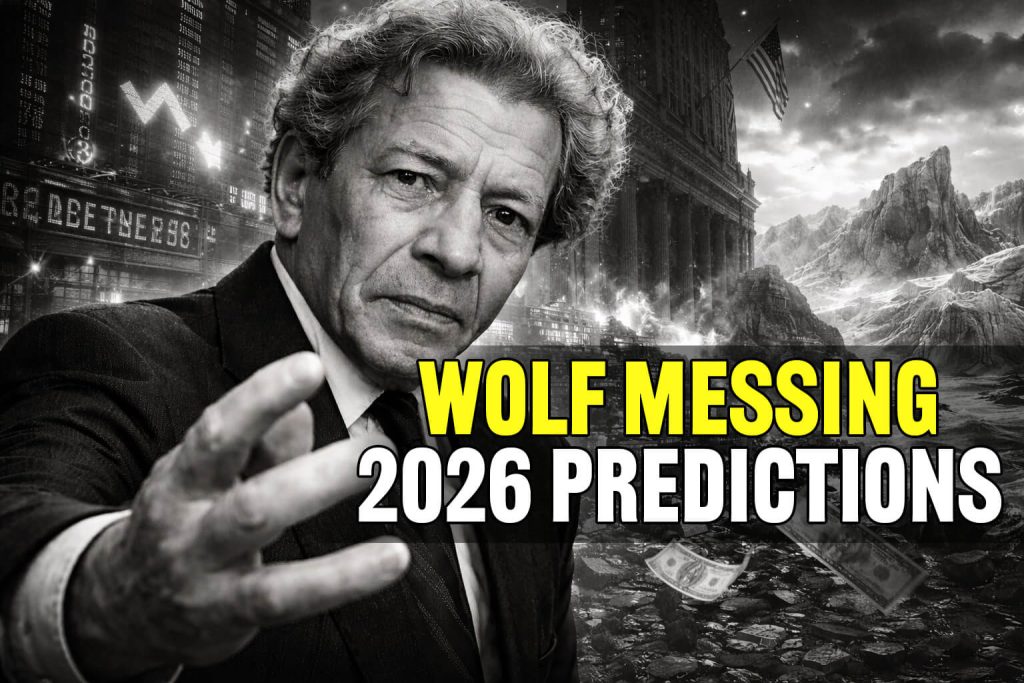
Wolf Messing remains one of the most mysterious figures associated with twentieth-century prophecy. The Soviet mentalist, performer, and alleged clairvoyant has long been surrounded by stories that blur the line between documented history and legend. Over the decades, countless predictions have been attributed to him, ranging from political events to technological breakthroughs.
Among the most widely discussed in recent years are a series of predictions connected to the year 2026. According to various online sources, articles, and translated texts attributed to Messing, three major events are said to mark a turning point in world history.
The challenge is that these predictions do not come from a single verified document. Instead, they appear across multiple sources that claim to preserve fragments of Messing’s visions. Some people accept them as genuine prophecies. Others view them as later additions attached to his name.
Regardless of their origin, the stories themselves continue to attract attention. Here is a closer look at the three events most commonly associated with Wolf Messing’s predictions for 2026.
Who Was Wolf Messing?
Wolf Messing was born in 1899 in what is now Poland and later became known throughout the Soviet Union as a mentalist and stage performer. Stories about his abilities spread widely during his lifetime, with some accounts claiming he could read minds, influence decisions, and foresee future events.
Many of these stories remain difficult to verify. Historians continue to debate how much of Messing’s reputation was based on documented events and how much developed through folklore and popular retellings.
That uncertainty has followed his legacy for decades and helps explain why so many predictions continue to be linked to him long after his death in 1974.
The First Prediction: Financial Upheaval in the United States
The first event frequently connected to Messing’s alleged 2026 predictions involves a major financial crisis centered on the United States.
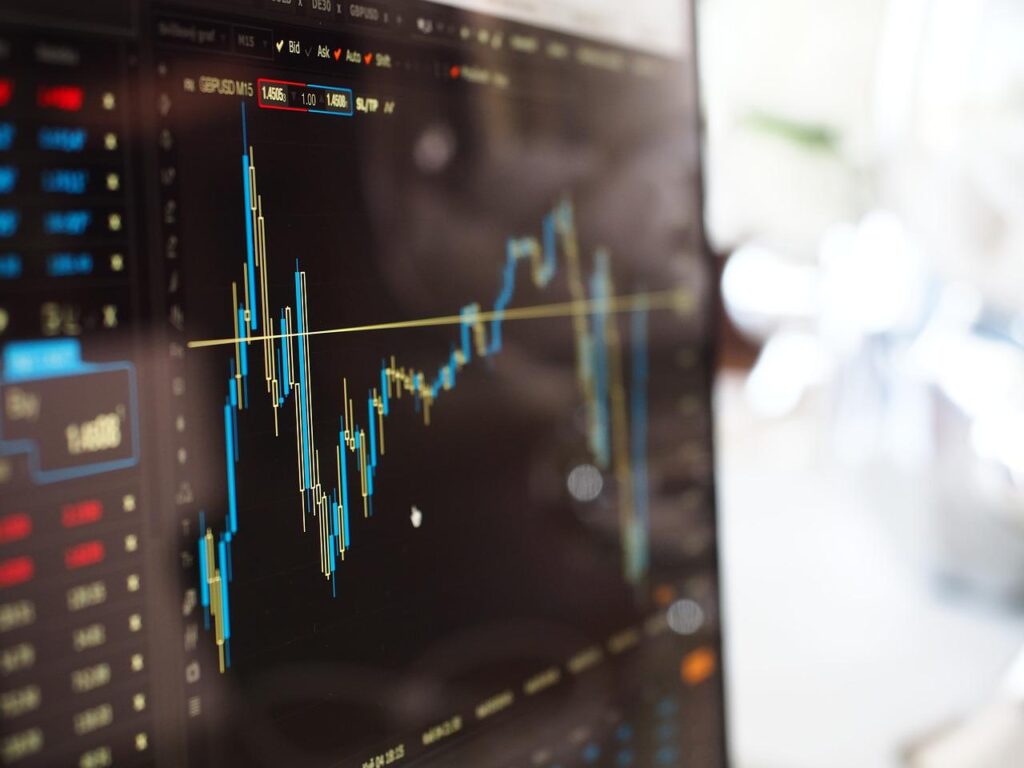
According to these accounts, a large American financial institution experiences a collapse that triggers widespread instability throughout global markets. The scenario describes stock market declines, emergency economic measures, and growing concerns about the future role of the U.S. dollar within the international financial system.
Many versions of the story portray this event as more than a temporary recession. It is described as a turning point that reshapes the existing financial order and reduces America’s influence over the global economy.
One reason this prediction continues to attract attention is that concerns about debt, inflation, banking stability, and the future of the dollar appear regularly in economic discussions. As a result, the prophecy is often revisited whenever uncertainty surrounding financial markets increases.
The Second Prediction: A New Geopolitical Alliance
The second event introduces the image of a “Northern Dragon,” a symbol that has generated considerable speculation.
In the texts attributed to Messing, this symbol is linked to the formation of a new political and economic alliance stretching across parts of Europe and Asia. The alliance is described as a response to global instability and changing power structures.
Some interpretations suggest the emergence of a new financial framework backed by tangible assets such as natural resources, energy reserves, or precious metals. Other versions focus primarily on military cooperation and regional security.
Because the descriptions are highly symbolic, readers have proposed many different interpretations. Some view the “Northern Dragon” as a specific nation, while others see it as a metaphor for broader geopolitical realignment.
The Third Prediction: A Discovery Beneath the Arctic Ice

The third prediction is also the most unusual. The story revolves around an ancient mechanism hidden beneath Arctic ice and permafrost. According to the accounts attributed to Messing, its activation would reveal knowledge capable of transforming humanity’s understanding of energy, medicine, consciousness, and technology.
This part of the prediction has generated the most debate because it moves beyond economics and geopolitics into territory that resembles speculative fiction. Even so, it continues to attract attention because of its symbolism and mystery.
Interpretations vary widely. Some view the Arctic device as a metaphor for hidden knowledge waiting to be uncovered. Others connect it to the possibility of a future scientific discovery that reshapes humanity’s understanding of the world.
Looking Ahead to 2026
The predictions attributed to Wolf Messing paint a dramatic picture of 2026: financial upheaval, shifting alliances, and a discovery that could reshape humanity’s understanding of the world.
Whether these stories originated with Messing himself or were attached to his name later, they continue to attract attention because they focus on themes that people have been discussing for decades. Economic uncertainty, geopolitical change, and technological breakthroughs remain subjects of constant speculation.
For now, the events described in these accounts remain stories about the future. As 2026 unfolds, many readers will no doubt revisit them to see whether any of the claims bear resemblance to real-world developments.
More From This Category
- Baba Vanga’s predictions for 2026
- Sylvia Browne’s views on global change
- Jeanne Dixon’s forecasts and long-term visions
- Baba Vanga’s predictions that came true (1950s–Today)