


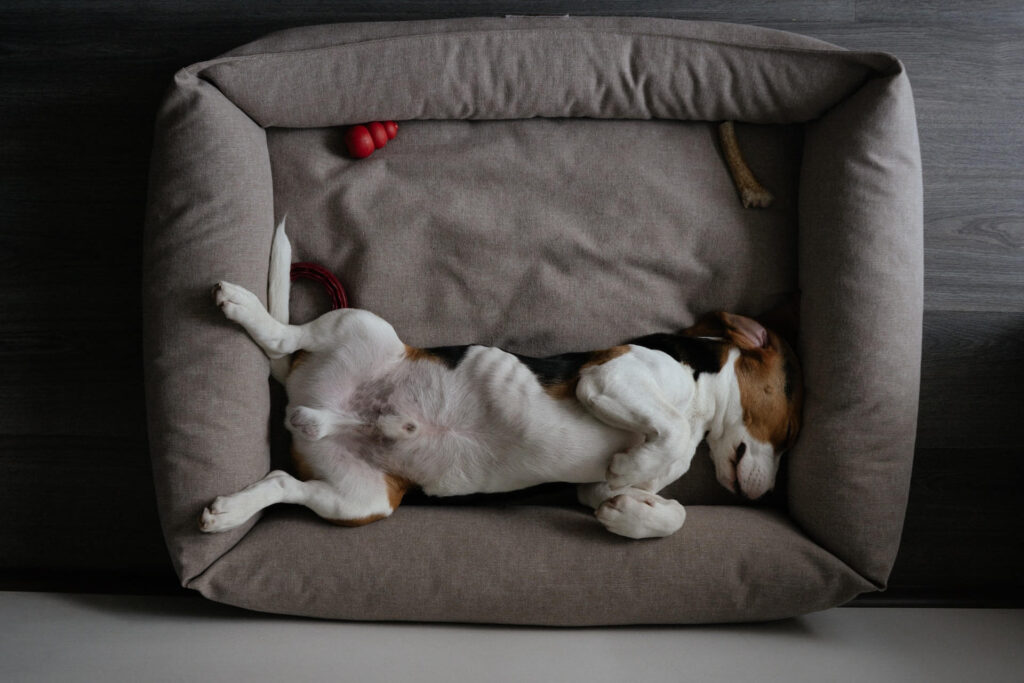
In Feng Shui, a dog bed should sit in a protected part of the room where chi moves calmly and your dog can rest without being directly in its path. A spot against a solid wall, away from busy doorways and walkways, usually works well.
Dogs also have their own preferences. If your dog repeatedly abandons the beautiful new bed in the corner and sleeps three feet away from it, moving the bed to that chosen spot may solve the problem faster than any Feng Shui rule.
The Best Place for a Dog Bed
A living room or family room is often a good location because your dog can stay near the household without sleeping in the middle of the activity.
Place the bed against or close to a solid wall when possible. The wall provides support behind the sleeping area, a principle also used for beds, sofas, and desks in Feng Shui.
A corner can work particularly well for dogs that like curling up somewhere enclosed. More social dogs may prefer the edge of the room where they can watch people coming and going.
Avoid squeezing the bed behind furniture where your dog has a poor view of the room or has only one awkward way to get out.
Keep It Away From the Door
A dog bed directly opposite the front door receives a lot of incoming movement. People enter, shoes pass nearby, the door opens and closes, and outside sounds arrive from the same direction.
There is another practical problem: some dogs become more watchful when their bed faces the entrance. If your dog already reacts to visitors, footsteps, or deliveries, sleeping beside the front door can reinforce the habit of monitoring everything that approaches the house.
The same principle applies to busy interior doorways and hallways. A resting place works better outside the main route people use to move through the home.
Should Your Dog See the Door?
Being able to see the entrance to the room without lying directly in line with it follows the Feng Shui idea of the command position.
Your dog can observe who enters without sleeping in the doorway itself. A bed positioned diagonally from the door or along a side wall can achieve this easily.
This setup is especially useful for dogs that like knowing where everyone is but settle poorly when surrounded by constant movement.
What About Windows?
A sunny window may become your dog’s favorite sleeping place, so a bed near one can work perfectly well.
Pay attention to what happens outside. A window overlooking a quiet garden is very different from one facing a busy sidewalk filled with dogs, cars, cyclists, and pedestrians. If your dog spends nap time jumping up to bark at everything passing outside, choose a less stimulating location.
Also check for drafts and strong afternoon sun before making a window spot permanent.
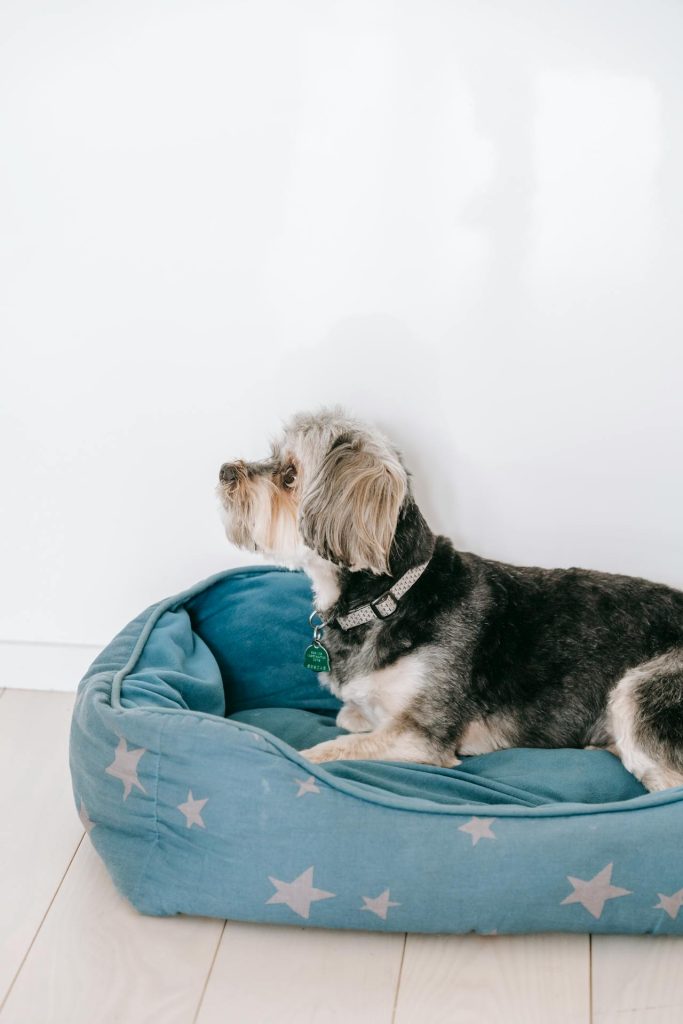
Feng Shui Colors for a Dog Bed
In Feng Shui, colors correspond with the Five Elements, so you can choose one that suits the room instead of searching for a special canine Feng Shui shade.
Beige, tan, yellow, and earthy browns correspond with Earth and work naturally for a resting area. Green represents Wood, blue and black connect with Water, white and gray belong to Metal, and red and strong pinks represent Fire.
For a large bed that occupies noticeable floor space, neutral or muted colors are often easier to integrate into the room. A bright red bed introduces much more Fire visually than a small red toy.
Your dog’s ability to distinguish colors also differs from human color vision, so choose Feng Shui colors primarily for how the bed works within the room rather than assuming a particular shade will calm your dog.
Can the Dog Bed Go in Your Bedroom?
Yes. If your dog already sleeps in your bedroom, Feng Shui gives you no reason to banish their bed to another room.
Avoid placing it where you regularly step over it, directly in the doorway, or somewhere that blocks access to your own bed. A corner or space beside a wall usually integrates more naturally.
Keeping the dog bed separate from your own bed also gives each sleeping area a clear place within the room.
If Your Dog Refuses the Bed
A dog repeatedly choosing another location gives you useful information about the placement.
They may prefer a cooler floor, more distance from household activity, a better view of the room, less light, or simply a location closer to you. Try moving the bed to the place they already choose and see whether they begin using it.
A dog sleeping peacefully in a supposedly imperfect Feng Shui location is preferable to an unused bed positioned according to every rule.
Keep the Sleeping Area Clear
Keep shoes, laundry, bags, cables, and household clutter away from the bed. Your dog should be able to enter and leave without navigating around objects.
Wash the cover regularly, replace damaged filling, and keep the floor underneath clean. If the bed becomes badly worn, flattened, or difficult to clean, replacing it keeps the sleeping area fresh and usable.
Good Feng Shui for a dog’s bed comes down to a stable location, clear space around it, protection from excessive traffic, and a position your dog actually chooses to use.
More Feng Shui Tips for Pet Owners
- Feng Shui and Pet Ashes: The Do’s and Don’ts
- Feng Shui Crystal Ball: Placement, Energy, and Purpose
- Cat Litter Box Placement in Feng Shui: Where It Should Go
- Where to Put a Wall Clock According to Feng Shui (Directions, Colors, Shapes)