


In Feng Shui, a wall clock represents time, movement, and the continuous circulation of chi. A working clock keeps moving forward, which gives it active yang energy. Where you hang it, how large it is, and whether it works properly are more important than buying a clock marketed as “Feng Shui.”
Living rooms, dining rooms, kitchens, hallways, and home offices are generally suitable. Bedrooms require more care because ticking, visible time, and constant movement can interfere with the restful purpose of the room.
Never Leave a Broken Clock on the Wall
A clock that has stopped is traditionally associated with stagnation, delay, and halted progress. If the batteries die, replace them. If the mechanism breaks, repair the clock or take it down.
The same applies to clocks that consistently display the wrong time. A clock is an object whose entire purpose depends on accurate movement, so keeping one permanently stopped as decoration conflicts with its symbolism.
An antique clock can still be displayed, but restoring the mechanism is preferable when possible.
The Best Directions for a Wall Clock
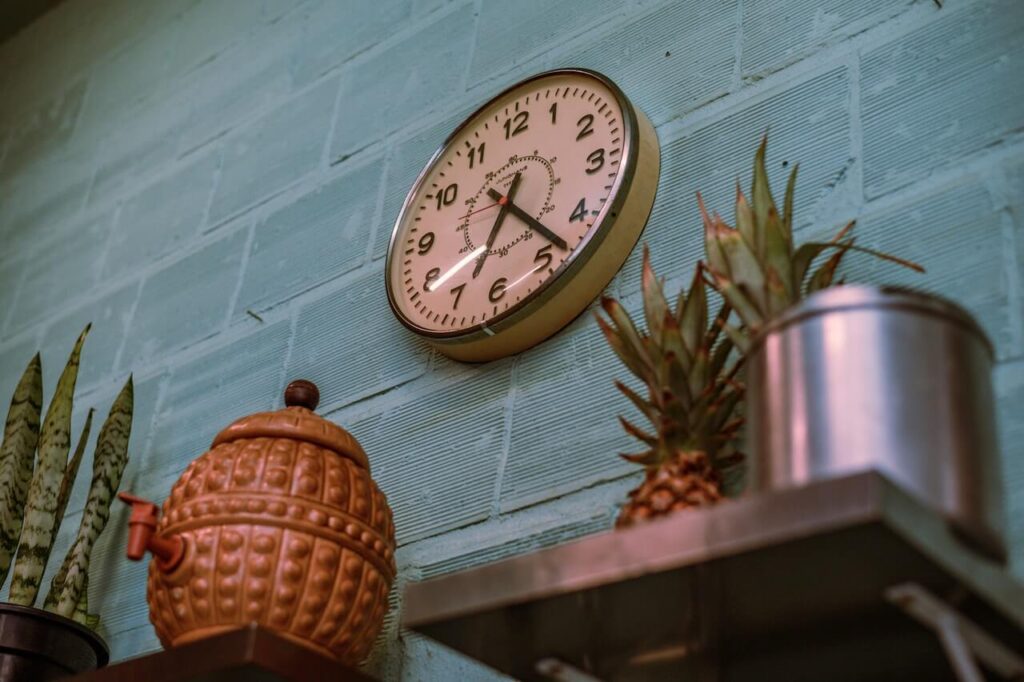
Feng Shui directions correspond with different elements, colors, and areas of life. If you use the Bagua when decorating, the clock can be chosen to complement the element of its location.
| Direction | Association | Element | Suitable Clock |
|---|---|---|---|
| East | Family, health | Wood | Wooden, green, brown |
| Southeast | Wealth, abundance | Wood | Wooden, green, purple |
| South | Recognition, reputation | Fire | Wood, red or warm accents |
| Southwest | Relationships | Earth | Ceramic, beige, yellow, earthy tones |
| West | Children, creativity | Metal | Round, white, gray, metallic |
| Northwest | Helpful people, travel | Metal | Round, silver, white, gray |
| North | Career, life path | Water | Black, dark blue, metallic |
| Northeast | Knowledge | Earth | Square, ceramic, beige or ochre |
Where in the House Should You Hang It?
The living room is one of the easiest places for a wall clock because it is an active shared space. Hang it where the time can be checked naturally without making the clock the dominant object in the room.
A home office also suits a clock because timekeeping already belongs to the purpose of the room. The North can be particularly appropriate if you are also considering Bagua directions and career symbolism.
Clocks can work in the kitchen and dining area as well. Keep them away from excessive heat, steam, and grease, and choose a size appropriate for the room.
A hallway can accommodate a clock provided it is clearly visible and does not create an oversized focal point in a narrow passage.
Clocks Near the Front Door
Avoid hanging a large clock directly opposite the main entrance. The front door is considered the primary entry point for chi, and placing a prominent symbol of passing time directly in front of it can create an association with rushing, deadlines, and time leaving the home.
If you want a clock in the entryway, hang it on a side wall where it remains useful without confronting you immediately upon entering.
Wall Clocks in the Bedroom
A bedroom needs more yin energy than a living room or office, so a large ticking wall clock is usually a poor choice.
If you want one there, choose a silent clock and avoid hanging it directly above the bed or headboard. A huge clock facing the bed can also make time too visually prominent in a room intended for sleep. Small and unobtrusive works better here.
The Best Clock Shapes
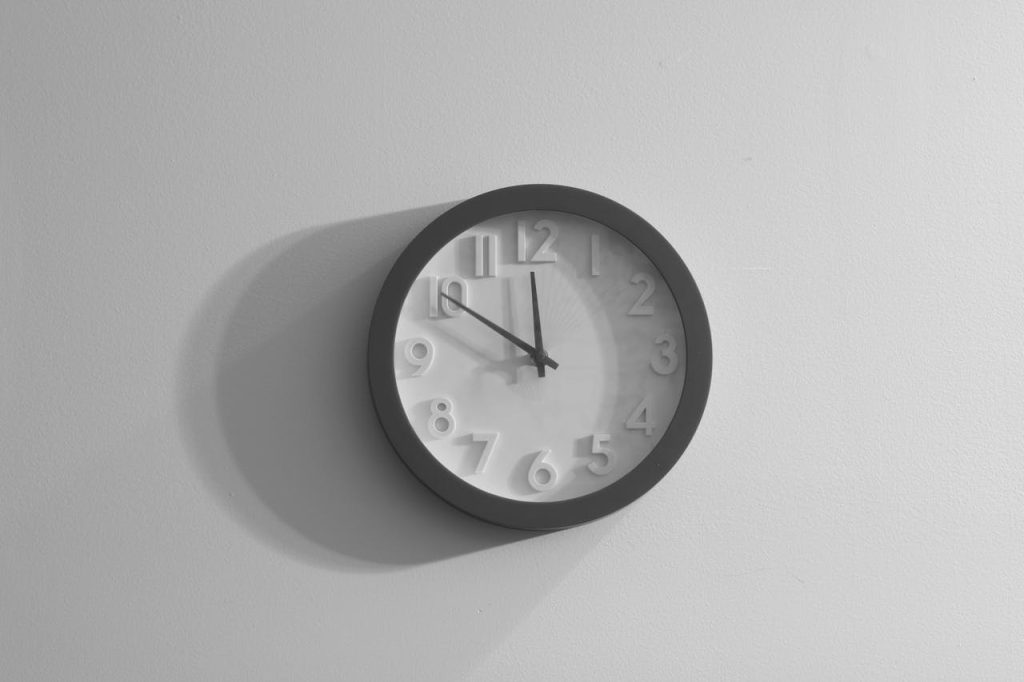
Shape corresponds with the Five Elements in Feng Shui.
Round and oval clocks belong to Metal and work especially naturally in the West and Northwest. Their curved form also makes them easy to incorporate into most rooms.
Square clocks correspond with Earth and suit the Southwest and Northeast.
Rectangular wooden clocks connect with Wood and can work well in the East and Southeast.
Highly irregular clocks with sharp points or aggressive angular designs introduce more visual activity. For an object already associated with constant movement, a simpler shape is usually easier to place.
Choosing a Color
Color can reinforce the element associated with a particular direction. Green and brown belong to Wood, red and strong warm shades to Fire, beige and yellow to Earth, white, gray, silver, and metallic shades to Metal, and black and dark blue to Water.
You can use these correspondences when buying a new clock, but placement and condition still come first. There is little benefit in choosing the “correct” green clock for the East if it is oversized, broken, or permanently five minutes slow.
How Many Clocks Are Too Many?
One clock in every room is unnecessary. Because clocks continually mark passing time, filling the house with them can make schedules and deadlines visually dominant.
Keep clocks where you actually check the time. A living-room clock, kitchen clock, and office clock may all serve a purpose. Several clocks covering the same wall usually add clutter without adding anything useful.
Keep Time Moving
The strongest Feng Shui rule for clocks is also the easiest to remember: keep them running. Replace dead batteries, correct inaccurate time, repair broken mechanisms, and remove clocks you no longer use.
Choose a location suited to activity, keep large clocks away from the bed and directly opposite the front entrance, and use direction, color, and shape as additional guidance when selecting a new one.
More Feng Shui Placement Tips
- Grandfather Clock in Feng Shui: Placement Rules & Symbolism
- Feng Shui and Deceased Belongings: Should You Keep Them?
- Feng Shui Crystal Ball: Placement, Energy, and Purpose
- Cactus Plant: Spiritual Meaning, Symbolism & Feng Shui
- Feng Shui Car Plates: Numbers That Bring Luck (and Those to Avoid)