

In Feng Shui, the stove represents wealth, nourishment, health, and the Fire element, making its placement one of the most important considerations in the kitchen. Where it sits in relation to the door, sink, refrigerator, windows, and bathroom can change how its Fire energy interacts with the rest of the home.
The ideal stove has a solid wall behind it, allows the cook to know who is entering the kitchen, and has some separation from strong Water elements.
The Stove and the Command Position
The person cooking should ideally be able to see the kitchen entrance without standing directly in line with it.
Having your back completely toward the door is traditionally considered unfavorable because you cannot see approaching people. In Feng Shui, this is known as being outside the command position.
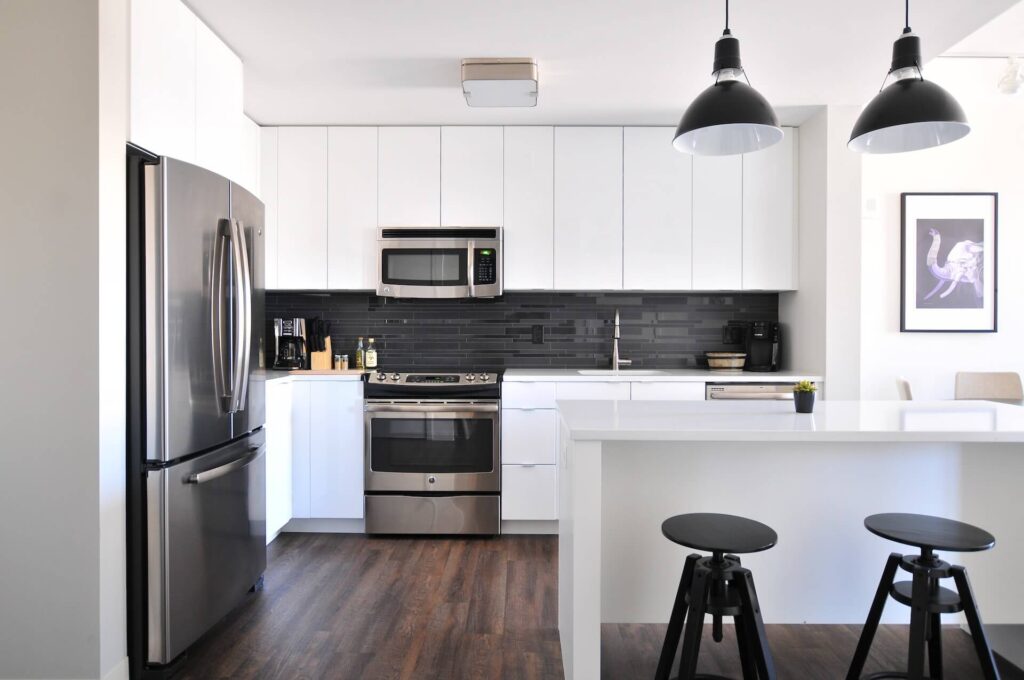
If the layout cannot be changed, a reflective backsplash or another reflective surface can sometimes provide a view of the entrance from the stove.
Avoid placing an ordinary mirror immediately behind the burners where heat, grease, and cooking activity make it impractical.
Stove Facing the Kitchen Door
A stove directly aligned with the kitchen doorway is generally avoided. The stove represents wealth and nourishment, and a strong line between the burners and a door creates fast-moving chi through an important part of the kitchen.
This is especially undesirable when the front door can be seen directly from the stove, creating an uninterrupted line between the home’s entrance and its Fire element.
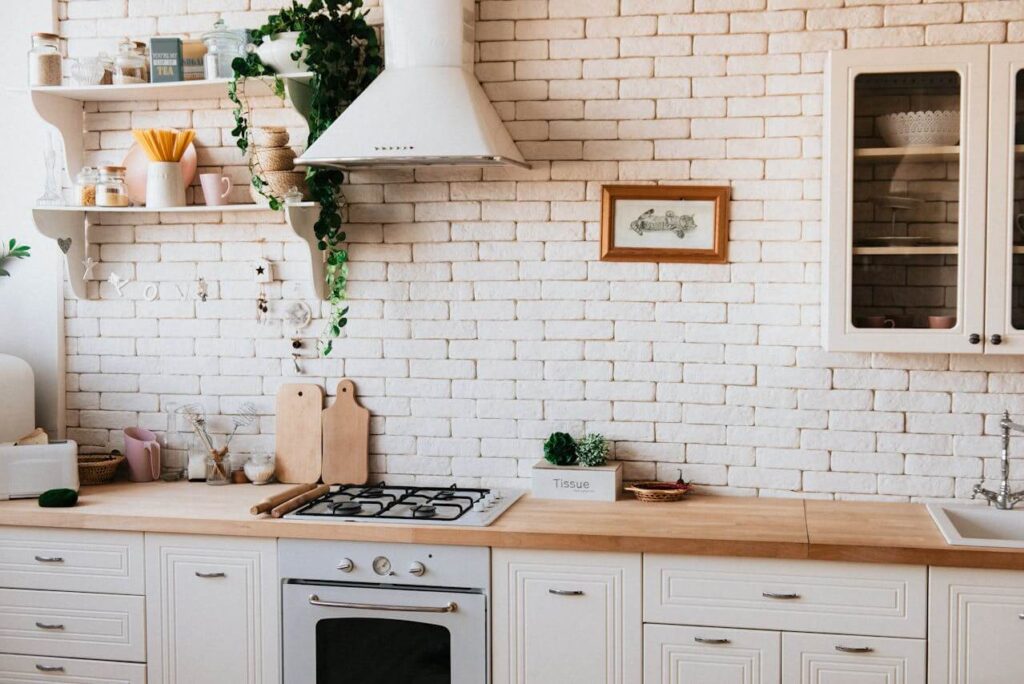
A kitchen island, counter, or another existing feature between the stove and doorway can help interrupt a strong alignment.
Stove Opposite the Sink
The stove belongs to Fire, and the sink belongs to Water. When they directly face each other, the arrangement creates a classic Fire-Water clash.
The same concern applies when a stove directly faces a dishwasher or, in some interpretations, a large refrigerator.
If you are designing a kitchen from scratch, avoid placing the stove and sink immediately opposite each other across a narrow aisle.
If your kitchen already has the stove and sink facing each other, a renovation is usually unnecessary. Wood can help balance Water and Fire because it sits between the two in the Five Element cycle: Water nourishes Wood, and Wood feeds Fire. Wooden cabinets, a cutting board, or green accents between the stove and sink can introduce that balancing element.

Stove Next to the Sink
A stove and sink immediately beside each other create the same elemental conflict on a smaller scale.
Some separation between them is preferable. A section of countertop provides a natural buffer and also makes the arrangement more practical for cooking.
If they are already side by side, a wooden cutting board placed in the counter space between them is one of the simplest Feng Shui adjustments.
Avoid a Stove Under a Window
A solid wall behind the stove is generally preferred to a window. The stove symbolizes resources and stability, so placing it against an opening provides less symbolic support. Windows also introduce drafts and movement around an appliance associated with Fire.
If your stove already sits beneath a window, keep the window area clean and avoid filling the sill with clutter. Curtains or other flammable window coverings should be kept safely away from the cooking surface.
Avoid a Beam Above the Stove
An exposed structural beam directly above the stove is traditionally considered pressing or oppressive chi.
This rule also appears with beds, desks, and other important locations where someone spends considerable time.
If possible, avoid installing a stove directly beneath a prominent beam during a renovation. With an existing kitchen, visually integrating the beam into the ceiling can reduce its prominence.
Stove Sharing a Wall With a Toilet
A stove directly against the same wall as a toilet is generally considered unfavorable, especially when the two fixtures sit back-to-back.
The stove represents food and nourishment, whereas the toilet represents waste and drainage. Traditional Feng Shui keeps these functions separated whenever the floor plan allows it.
The same concern applies to a bathroom directly above the stove, particularly when the upstairs toilet sits over the cooking area.
This is mainly something to consider when designing or renovating a home, since moving either fixture afterward can be expensive.
What About a Stove on a Kitchen Island?
An island stove has one obvious Feng Shui weakness: there is no solid wall behind it.
On the positive side, an island often allows the cook to face into the room and easily see anyone entering, which provides an excellent command position.
If you are planning an island cooktop, a substantial island, proper ventilation, and enough counter space around the burners can create a more contained setup.
Use All of Your Burners
Burners are traditionally associated with wealth opportunities and available resources.
Using only one burner continuously and ignoring the others is sometimes discouraged in Feng Shui. Rotate between burners when practical and make sure every one works correctly.
A burner that no longer ignites should be repaired instead of remaining broken indefinitely.
Keep the stovetop clean as well. Grease, burnt food, broken knobs, and unused objects piled across the burners interfere with the stove’s role as an active Fire element.
Directions and the Fire Element
The stove itself already carries strong Fire energy, so compass direction is only one part of its placement.
The south corresponds with Fire, and the east and southeast correspond with Wood, which feeds Fire in the Five Element cycle. These relationships can be supportive, but they do not automatically make those directions ideal for every kitchen.
The north corresponds with Water, creating a stronger elemental conflict with Fire.
Classical Feng Shui can become much more specific about stove direction based on the house and occupants, so broad rules such as “every stove must face southeast” oversimplify the system.
The Most Important Stove Rules
If you already have a fixed kitchen layout, focus on the things you can actually change. Keep every burner working, clean the stove regularly, repair damaged knobs or ignition systems, and avoid cluttering the cooking surface.
Where possible, keep some distance between the stove and sink, maintain a view of the kitchen entrance, and avoid strong alignment with doors.
A perfectly chosen compass direction cannot compensate for a stove with broken burners, leaking plumbing beside it, or a cooking surface permanently covered with clutter.
More Feng Shui Tips for the Kitchen
- Feng Shui Bathroom: Placement, Colors & Rules to Follow
- Feng Shui Money Frog: Missing Coin, Damage & What to Do
- 8 Feng Shui Symbols for Fertility, Conception & Pregnancy
- Feng Shui Money Corner: How to Find It & Attract Wealth