


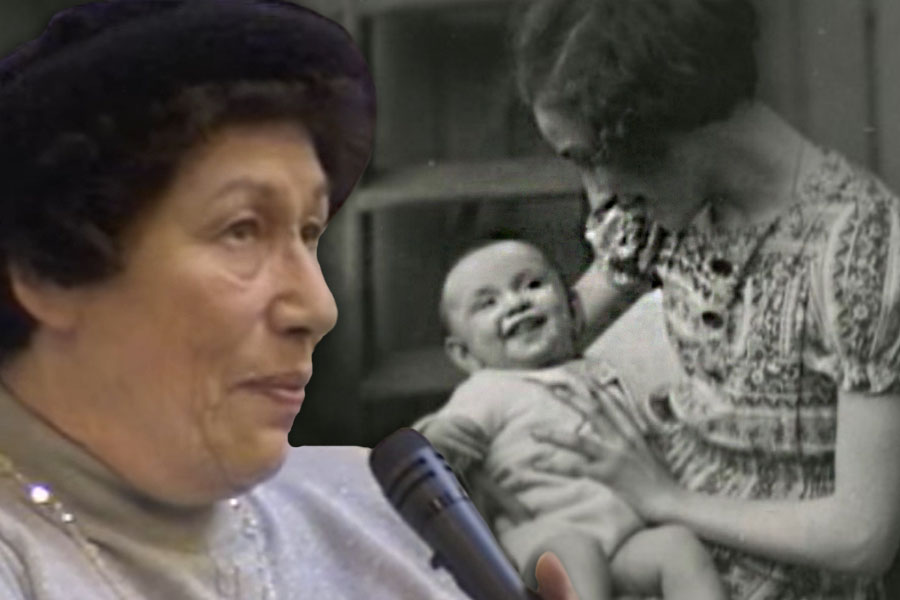
Gabi Goslar is one of the last living people connected to Anne Frank’s story. As a Holocaust survivor, she experienced hiding, arrest, deportation, concentration camps, and liberation firsthand. Her memories provide a rare glimpse into events that are often reduced to dates, statistics, and historical records.
Decades after the war ended, Gabi continued sharing her experiences with younger generations, helping preserve the stories of those who could no longer tell them themselves.
Who Is Gabi Goslar?
Gabi Goslar was born in Amsterdam on October 25, 1940, during the German occupation of the Netherlands.
Like many Jewish children living under Nazi rule, her childhood was shaped by increasing restrictions, fear, and uncertainty. What began as an ordinary family life gradually became a struggle for survival as anti-Jewish measures intensified across occupied Europe. Her family eventually went into hiding to avoid arrest and deportation.
As of 2026, Gabi Goslar is reportedly still alive. She will celebrate her 86th birthday on October 25, 2026.
Her Connection to Anne Frank
Gabi’s story is closely connected to Anne Frank. The two girls knew each other before the war, and their families lived within the same broader community of Jewish families in Amsterdam. Gabi’s older sister, Hannah Goslar, was one of Anne Frank’s closest friends.
Years later, after both families had been arrested and deported, Hannah encountered Anne again inside the Bergen-Belsen concentration camp. The meeting, conducted through a fence separating different sections of the camp, became one of the best-known firsthand accounts of Anne Frank’s final months.
Arrest and Deportation
In August 1944, the Goslar family was arrested by the Gestapo. Like thousands of other Jewish families, they were deported to Nazi concentration camps. Gabi and her family were eventually sent through Auschwitz-Birkenau and other camps, where they faced hunger, disease, forced labor, and constant uncertainty.
During her imprisonment, Gabi suffered from a severe ear infection that required medical treatment under extremely difficult conditions. Survival depended on endurance, luck, and circumstances that changed daily.
Life After the Holocaust
Liberation arrived in 1945, but surviving the camps did not end the challenges facing Holocaust survivors.
Many returned to discover that relatives had been killed, homes had disappeared, and entire communities no longer existed.
After the war, Otto Frank helped Gabi relocate to Switzerland, where she lived with relatives and began rebuilding her life.
Like many survivors, she faced the difficult task of creating a future while carrying memories of the past.
Holocaust Education and Public Speaking
For decades, Gabi Goslar has shared her experiences with students, educators, historians, and audiences around the world.
Her testimony provides insight into everyday life under Nazi persecution, the realities of concentration camps, and the lasting effects of the Holocaust on survivors and their families.
As the number of living Holocaust survivors continues to decline, firsthand accounts like hers have become increasingly important for preserving historical memory.
Gabi Goslar’s Legacy
Gabi Goslar’s experiences provide a personal account of one of history’s darkest periods.
Through her testimony, later generations gain insight into the realities of persecution, deportation, concentration camps, and survival.
Her connection to Anne Frank also preserves an important link to a generation whose firsthand memories are becoming increasingly scarce.
More Famous People Biographies
- Nolan Pentz Martinez, Nona Gaye’s Son
- Christine Dawood
- Eugene Santoscoy
- Valentina Fornaro Galliano
- Ivy Bodiford
- Beryl Christie Harris (Kamala Harris’ Grandmother)