
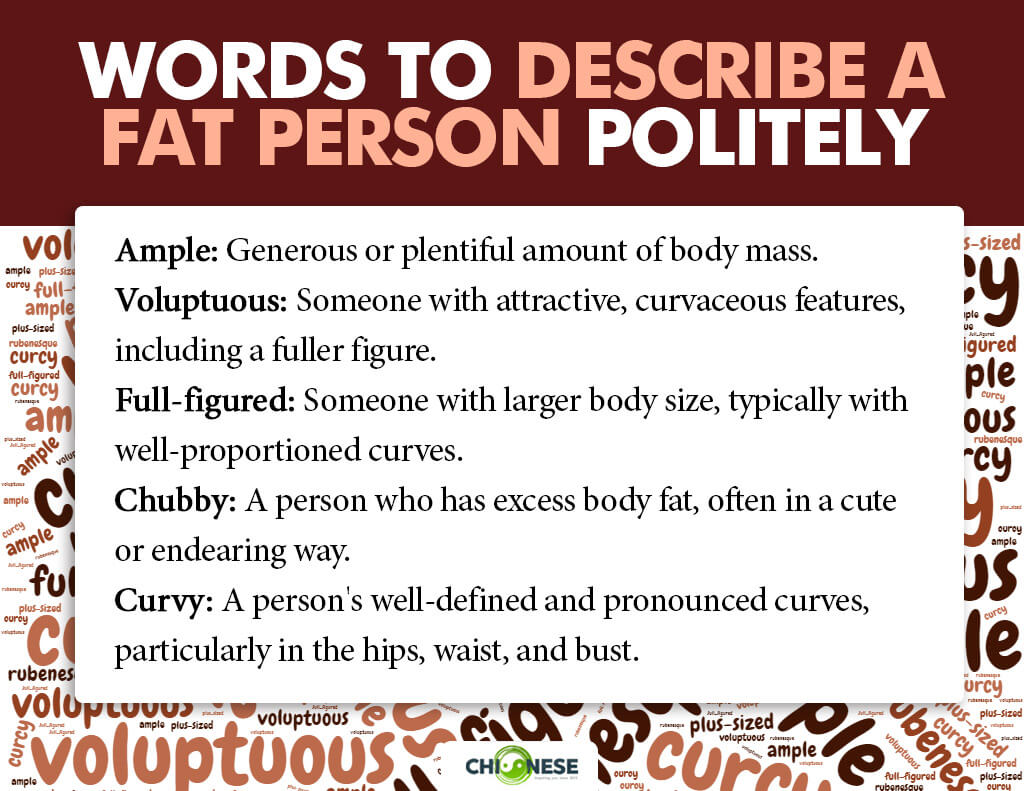
The most respectful way to talk about someone’s body size is usually to avoid mentioning their weight unless it is relevant. If you need to describe a fat person, neutral terms such as plus-sized, full-figured, curvy, larger-bodied, heavyset, or stocky may be appropriate.
The best word depends on the person and the context. Some terms describe body size, while others refer more specifically to shape, height, or build.
Polite and Neutral Words for a Larger Person
| Word | Meaning and Use |
|---|---|
| Plus-sized | Common in fashion and clothing to describe sizes above a retailer’s standard range. It is generally more suitable for discussing clothing than directly describing someone in conversation. |
| Full-figured | Describes a fuller body shape, particularly a body with noticeable curves. Common in fashion and descriptive writing. |
| Curvy | Refers to a body with defined curves, often around the hips, waist, or bust. It describes shape rather than weight alone. |
| Larger-bodied | A straightforward, neutral description for someone with a larger body. Useful when body size genuinely needs to be mentioned. |
| Voluptuous | Describes a full, rounded, curvaceous figure. It often carries an attractive or sensual connotation, so context is important. |
| Plump | Means pleasantly rounded or somewhat full in shape. It is more common in descriptive or literary writing than direct conversation. |
| Heavyset | Describes someone with a broad, large, or substantial build. It is fairly factual, though it can still feel personal when said directly to someone. |
| Stocky | Describes a broad, thick, compact build, often combined with shorter height. A stocky person may be muscular, heavy, or naturally broad. |
| Thickset | Similar to stocky, referring to a broad and solid body frame. It describes overall build rather than simply body fat. |
| Broad-built | Describes someone with a naturally wide or substantial frame, especially across the shoulders or torso. |
| Solidly built | Refers to a strong, substantial physical build. It can work well when exact body weight is irrelevant. |
| Sturdy | Describes a strong, solid build. The word focuses more on physical structure and strength than weight. |
| Well-built | Usually refers to a strong or substantial physique. Depending on context, it may suggest muscularity rather than a larger body size. |
| Rubenesque | A literary or artistic term for a full, rounded figure associated with the women depicted in paintings by Peter Paul Rubens. It can sound dated in everyday conversation. |
| Statuesque | Describes someone who is tall and impressively proportioned. It refers primarily to height and presence, so it is not a synonym for overweight. |
| Well-proportioned | Describes a body whose features look balanced in relation to one another. It refers to proportions rather than size or weight. |
| Chubby | Describes a soft, rounded body with some extra weight. Although common, it can sound overly familiar or childish when used for an adult. |
| Rotund | Means noticeably round in body shape. It is mainly found in literary or humorous writing and can sound impolite when directed at a person. |
| Big-boned | An informal expression for someone with a naturally larger frame. Because bone structure and body weight are different things, it is best used only when frame size is actually relevant. |
Words That Describe Body Shape and Build
Some words commonly associated with larger bodies actually describe body shape or build, so they are not interchangeable with “fat” or “overweight.”
Curvy and curvaceous describe pronounced curves. Stocky and thickset describe a broad, compact build. Statuesque usually suggests height and striking proportions, while well-built often suggests strength or muscle.
Using a more specific word can make a description both clearer and more respectful.
Which Words Are Best to Use?
For clothing and fashion, plus-sized is one of the most established terms. In descriptive writing, full-figured, curvy, larger-bodied, heavyset, stocky, and solidly built can work depending on the person you are describing.
Words such as chubby, plump, rotund, Rubenesque, and big-boned require more care. Their tone can change considerably depending on who says them, who they describe, and whether they are used in conversation or writing.
If you know how a person describes their own body, using their preferred terminology is usually the safest choice.
Is “Fat” a Rude Word?
The word fat can be neutral when someone chooses it to describe their own body, and some people actively prefer it over euphemisms. In other situations, especially when commenting on another person’s appearance without invitation, it can come across as insulting.
Context makes a major difference. When body size has no relevance to the conversation, leaving it out entirely is usually the most respectful option.
Which Term Should You Use?
If you need a polite word for a fat or larger person, plus-sized, full-figured, curvy, larger-bodied, heavyset, stocky, and solidly built are among the more neutral choices, depending on what you actually mean.
A precise description works better than replacing “fat” with a flattering-sounding word that describes something else. When size has no relevance, there is usually no need to mention it at all.
More Descriptive Words
- Words To Describe Someone You Love
- Positive Words To Describe Black Skin
- Words to Describe Someone Who Is Determined
- Words to Describe Feeling Bad for Someone