

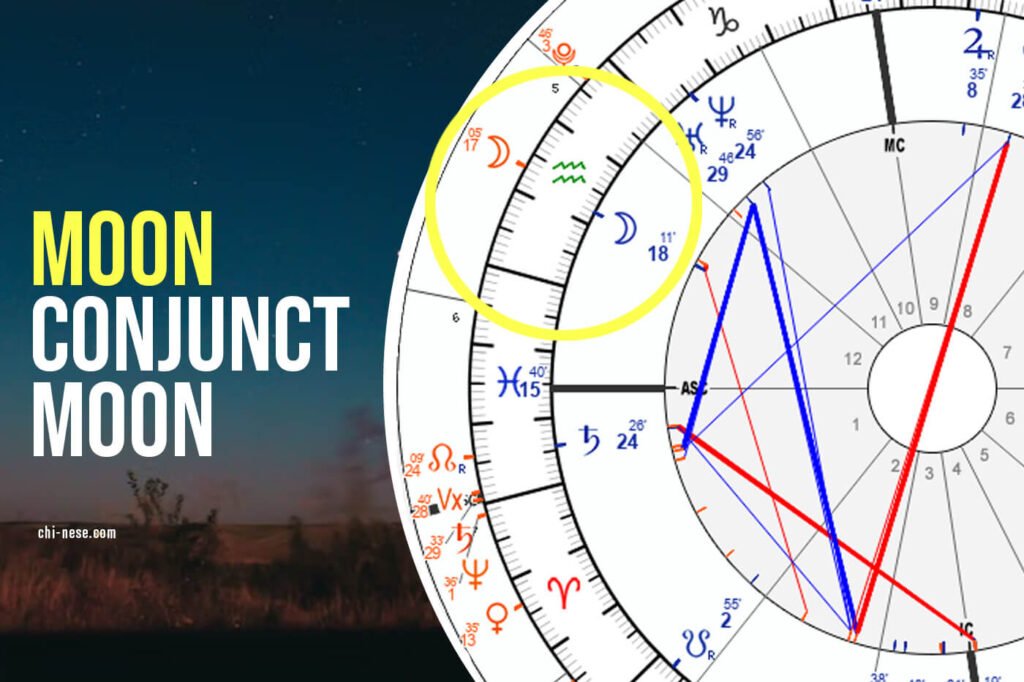
Moon conjunct Moon is associated with emotional familiarity, similar instincts, shared moods, comfort, and the feeling that another person understands your reactions without requiring much explanation.
The Moon represents emotions, habits, memories, comfort, family, home, instincts, and the way we react when we have little time to think. When two Moons come together by conjunction, all of these themes become stronger.
This aspect has two particularly important meanings in astrology. When the transiting Moon returns to the exact position of your natal Moon, it is known as a lunar return. In synastry, Moon conjunct Moon means that two people have their Moons in the same part of the zodiac, often creating a strong sense of emotional similarity and familiarity.
Moon Conjunct Moon Transit: The Lunar Return
A Moon conjunct Moon transit happens once every month, when the transiting Moon reaches the same zodiac degree as your natal Moon. This is your lunar return.
Because the Moon moves quickly, the conjunction itself lasts for a relatively short time. Still, you may notice a familiar emotional state around your lunar return. Your feelings, needs, habits, memories, and private life can become more noticeable.
Some people feel more emotional during their lunar return. Others want to spend time at home, see family, eat familiar food, sleep more, or return to activities and places that make them feel comfortable.
The natal Moon describes what makes you feel emotionally secure, so when the transiting Moon comes back to this position, those needs can temporarily become stronger.
If you have a Taurus Moon, for example, your lunar return may increase your desire for comfort, good food, physical affection, stability, or rest. With a Gemini Moon, you may feel a stronger need to talk, write, read, exchange messages, go somewhere, or have someone around who keeps your mind occupied.
Memories can also become stronger around this transit. You may think about childhood, family, an old relationship, a former home, or someone connected with your past.
You may also spend time with your mother, female relatives, or another woman who plays an important role in your life. Since the Moon rules comfort, rest, home, and emotional needs, you may feel a stronger desire to slow down, sleep longer, stay at home, cook, relax, or spend time with people who make you feel comfortable.
Since this transit happens every month, Moon conjunct Moon on its own is usually a small and short-lived influence. It becomes much more interesting when it activates another transit that is already affecting your natal Moon.
For example, you may have transiting Saturn opposite your natal Moon for several weeks without anything particularly noticeable happening on a specific day. Then the transiting Moon reaches your natal Moon and temporarily completes that Saturn-Moon opposition from the other side. This can act as a trigger, bringing the longer Saturn transit into the foreground through an event, conversation, mood, family situation, responsibility, or interaction with another person.
This is one reason the Moon is worth watching in transit astrology. It moves quickly, but as it crosses sensitive natal degrees, it can activate slower planetary transits and coincide with the moment when their themes become more tangible.
Moon Conjunct Moon in Synastry
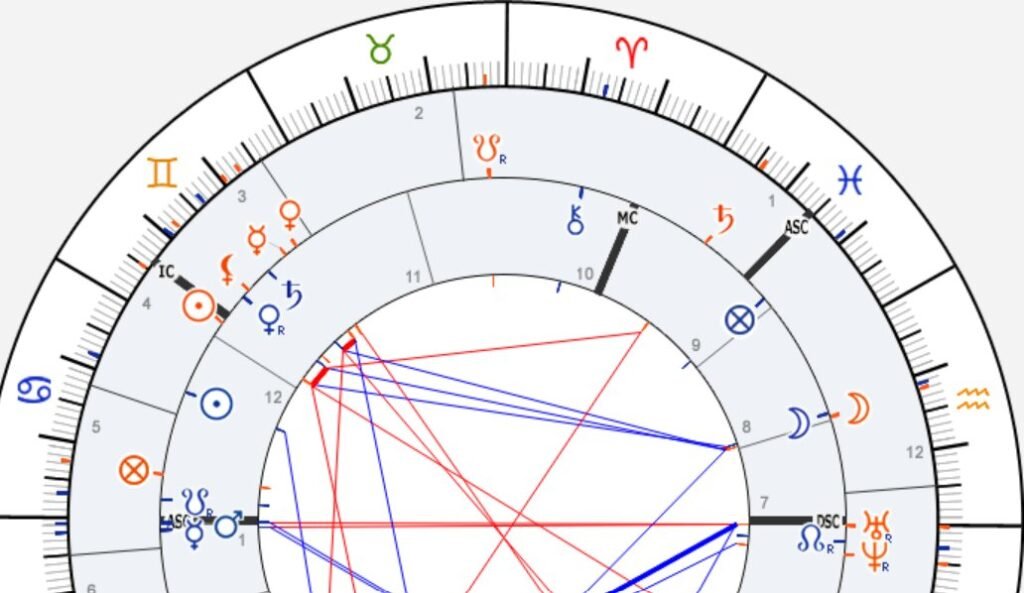
In synastry, Moon conjunct Moon creates a strong feeling that two people are emotionally on the same wavelength. There is often something immediately familiar about the connection, even when they have only recently met.
This is an important synastry aspect because the Moon moves very fast, around 12 to 13 degrees per day. Meeting someone whose Moon falls in the same sign and especially close to the same degree as yours is quite special. Both of your Moons occupied almost the same part of the zodiac at the time of birth.
You tend to understand each other’s reactions, moods, habits, and emotional needs naturally. You may laugh at the same things, react similarly to situations, or immediately understand what the other person means without a long explanation.
There is usually a strong desire to talk and simply be together. You can spend hours talking, eating together, watching something, going somewhere, lying in bed talking, or doing completely ordinary things and still enjoy each other’s company. The Moon rules memories, childhood, family, home, and private life, so conversations often become personal quickly. You may share childhood stories, talk about your families, previous relationships, or experiences you rarely discuss with other people.
The attraction can be strong too, although it feels different from Mars or Venus attraction. Moon conjunct Moon is more about being attracted to someone’s presence and how comfortable you feel around them. You want to hear from them, tell them about your day, send them something funny, have dinner together, or see them again soon.
In romantic relationships, both people often want plenty of closeness. They may text frequently, spend more and more time together, cuddle, sleep next to each other, share meals, stay at each other’s homes, and naturally become part of each other’s everyday routines.
The Moon sign describes how this connection feels. Two Gemini Moons may talk endlessly and message throughout the day, while two Cancer Moons may bond through family, food, memories, home, and emotional closeness. Two Sagittarius Moons may love traveling, laughing, exploring, and sharing experiences together.
Having the same Moon also means sharing similar emotional sensitivities. When one person becomes upset, the other may easily fall into the same mood. Two Scorpio Moons, for example, may understand each other’s intensity and need for trust extremely well, while both may also become jealous or suspicious at the same time.
The tighter the conjunction, the more significant I would consider it. The Moon changes signs approximately every two and a half days and stays on one particular degree for only a short time. Finding someone whose Moon is within one or two degrees of yours is therefore especially interesting.
Even when the rest of their charts are very different, Moon conjunct Moon often gives two people a simple feeling of we get each other. They enjoy talking, spending time together, sharing their lives, and having the other person close.
The Heart of Moon Conjunct Moon
Moon conjunct Moon brings two emotional worlds into the same place.
As a transit, it marks your monthly lunar return, when the transiting Moon comes back to the position it occupied when you were born. Feelings, habits, memories, home, family, and personal needs can become more prominent around this time.
In synastry, it can create emotional recognition and a strong desire to spend time together. Both people often feel that they understand each other naturally. They want to talk, share things, stay close, and become part of each other’s everyday lives.
There is often attraction, but perhaps the most noticeable quality is familiarity. You feel comfortable around this person. Their reactions make sense to you. Their moods make sense to you. Being together can feel surprisingly natural.
The tighter the conjunction, the more noticeable it tends to be. For synastry, I would pay particular attention to Moon conjunctions within about 3 degrees, with very tight conjunctions often feeling especially strong.
More Moon and Synastry Aspects
- Moon Conjunct Mars Synastry: Passion With Emotional Depth
- Moon Conjunct Midheaven Synastry: Emotions, Ambition, and Destiny
- Moon Square Venus Synastry: Attraction with Emotional Friction
- Moon–Lilith Aspects in the Natal Chart: Power, Instinct, and Shadow
- Moon in the 12th House: The Empath’s Burden and Gift