

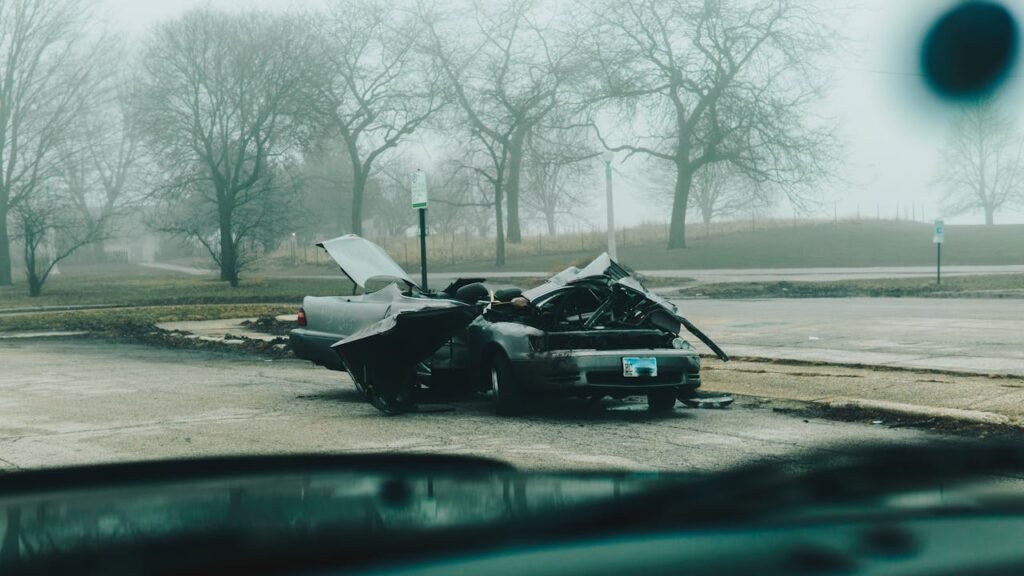
Most people only become interested in the astrology of car accidents after they’ve experienced one themselves or narrowly avoided one. It’s understandable. A frightening event naturally raises questions about timing and whether the birth chart showed any warning signs.
Astrology cannot predict that a car accident will happen. The same planetary combinations that coincide with accidents also appear during countless days when nothing serious occurs. What they often describe is a temporary change in attention, reaction time, judgment, or external circumstances that increases the likelihood of mistakes.
After analyzing many accident charts, the same astrological patterns keep repeating. Mars, Mercury, Uranus, and the 3rd house dominate far more often than chance would suggest.
Mars: The Strongest Accident Indicator
If one planet repeatedly appears in accident charts, it’s Mars.
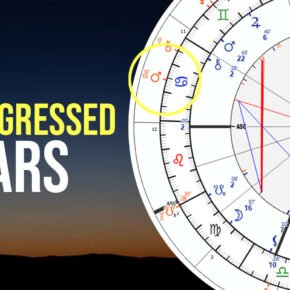
Mars rules action, speed, instinct, machinery, engines, and the way we respond under pressure. When Mars is strongly activated by transit or progression, people often move faster than usual, react more impulsively, become impatient, or try to squeeze into situations that leave very little room for error.
Many Mars transits pass without incident. Sometimes they simply coincide with driving faster, feeling rushed, exercising, or becoming more competitive. Other times, that same energy is expressed through a scratched bumper, a parking mistake, or a collision caused by reacting a fraction of a second too late.
Hard aspects such as conjunctions, squares, and oppositions deserve the closest attention because they tend to express Mars with greater intensity.
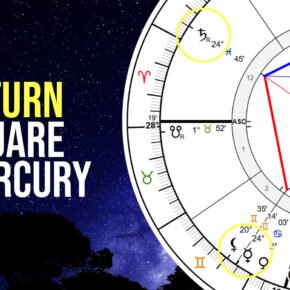
One experience from my own chart illustrates this well. Transit Mars in Pisces moved through my 12th house while squaring my natal Mercury in Gemini in the 3rd house. My GPS directed me into an unfamiliar area with narrow, unlit streets, and I ended up scraping my car against an obstacle I simply couldn’t see clearly. The symbolism matched the event remarkably well: the 12th house concealed what was hidden, Mercury ruled driving, and the 3rd house described the local journey itself.
Another example involved transit Mars in Cancer squaring a natal Sun in Aries. Mars is in its sign of fall in Cancer, but it was forming a tight square to the Sun in Aries, a sign ruled by Mars, making the Martian symbolism especially strong. During that transit, my client accidentally drove into a trash bin just outside their home. The symbolism was remarkably literal. Cancer rules the home and the area immediately surrounding it, and the accident happened only a few meters from the house.
Mercury Deserves Just as Much Attention

Driving is a Mercury activity. Every second you’re processing road signs, traffic lights, distances, mirrors, pedestrians, GPS instructions, and the behavior of other drivers. The mind is constantly collecting information and making decisions.
When Mercury is heavily activated, concentration can slip for only a moment. A driver misses a slowing car. A junction is misjudged. GPS instructions are misunderstood. Attention shifts to the wrong place at exactly the wrong time. Sometimes a single second is enough.
Mercury-Mars aspects are among the combinations I pay the closest attention to. Fast thinking combines with fast reactions, but speed doesn’t always leave enough time to make the best decision.
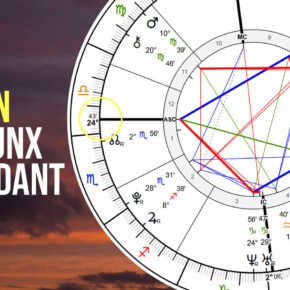
Mercury-Uranus works differently. The symbolism points to sudden changes, unexpected distractions, or situations where everything changes before the mind has time to catch up. In some charts, I’ve also seen Mercury-Uranus connected with more serious car accidents.
Mercury retrograde deserves a mention as well. Wrong turns, missed exits, GPS confusion, forgotten documents, and simple driving mistakes fit Mercury retrograde symbolism remarkably well. Most of these situations end as inconveniences rather than accidents, but they reinforce how closely Mercury is connected with driving itself.
Mars and Uranus: A Classic Accident Combination
Mars acts. Uranus interrupts. Together they describe situations that change almost instantly. Another driver brakes unexpectedly. A vehicle suddenly changes lanes. An obstacle appears where there wasn’t one moments earlier.
Natally, this combination often belongs to people who react extremely quickly or enjoy speed, machinery, and excitement. During transits, it often coincides with periods when life feels less predictable and events unfold faster than expected.
That doesn’t automatically mean an accident. More often it describes circumstances where quick reactions become necessary.
The 3rd House Rules Everyday Driving
The 3rd house rules local travel, driving, roads, vehicles used for everyday transportation, navigation, communication, and everything involved in moving through your immediate surroundings.
Transits from Mars, Uranus, Saturn, Neptune, or Pluto through the 3rd house frequently coincide with periods when driving requires extra attention.
Mercury placed in the 3rd house becomes especially sensitive whenever challenging transits activate it.
The 8th house certainly has its place, particularly in more serious situations involving trauma or life-changing events, but everyday driving incidents often appear through the 3rd house first.
Saturn: Obstacles, Delays & Restricted Movement
Saturn operates very differently from Mars. Mars pushes forward. Saturn slows things down, creates obstacles, and demands precision.
In accident charts, I’ve repeatedly seen Saturn connected with parking mistakes, concrete pillars, walls, tight garages, barriers, heavy traffic, and other situations where there simply isn’t enough room to maneuver.
Timing also changes under Saturn. The reaction may be correct, but it comes a fraction of a second too late. A parking space looks wider than it really is. A turn is taken too tightly. A stationary object is clipped because there wasn’t quite enough clearance.
Hard Mars-Saturn aspects create obvious friction. Mars wants movement. Saturn blocks it. In real life, that symbolism can be remarkably literal, with the “Saturn” showing up as a wall, a pole, a parked vehicle, a gate, or another physical obstacle standing directly in the way.
Neptune and Misjudging Reality

Neptune rules fog, poor visibility, confusion, distraction, illusions, and anything that makes reality harder to read clearly.
In accident charts, I’ve seen Neptune connected with situations where the driver simply failed to register what was right in front of them until the last moment. A deer steps onto the road. A cyclist blends into the darkness. Dense fog hides the next bend. A train reaches the crossing before the driver fully realizes how close it is.
Neptune can also coincide with misjudging distance, overlooking road signs, following incorrect GPS directions, or driving while mentally preoccupied. The eyes are open, but the mind isn’t fully processing everything it sees.
Heavy rain, fog, darkness, glare, fatigue, medication, alcohol, and poor visibility all fit Neptune’s symbolism. When Neptune strongly activates Mercury, the 3rd house, or planets connected with driving, I pay much closer attention because perception itself becomes part of the symbolism.
Accident Transits Usually Describe Near Misses
One of the biggest mistakes in accident astrology is assuming that every difficult transit leads to a crash. It doesn’t. The same Mars, Mercury, Uranus, Saturn, or Neptune transits can coincide with a close call, a hard brake, a wrong turn, scraping a wheel while parking, or another situation where the outcome could have been much worse. The symbolism is still there, but it expresses itself on a much smaller scale.
That’s why I never look at a single transit and conclude that someone is going to have a car accident. Astrology describes periods when attention, timing, reaction speed, or external circumstances require extra care, not fixed outcomes. If I see Mars, Mercury, Uranus, or the 3rd house under strong activation, my advice remains the same: leave a little earlier, avoid rushing, keep distractions to a minimum, and give yourself more room to react than you normally would. Very often, that extra margin is enough for the transit to pass without anything more serious than a story you’ll laugh about later.