

In Feng Shui, nightstands help create balance and stability around the bed. Their height, shape, position, and what you keep on them all influence the bedroom because they sit so close to you during sleep.
Two bedside tables are especially favorable for couples because they create equal space on both sides of the bed. They can differ in style, but similar height and size keep one side from looking heavier or more dominant than the other.
Do You Need Two Nightstands?
For a shared bedroom, two nightstands are generally preferable. One on each side creates symmetry and gives both partners their own space.
They do not have to be identical. Two tables of similar height and visual weight can work perfectly well even when their designs differ.
For someone single who wants a relationship, keeping both sides of the bed accessible is also a common Feng Shui recommendation. A bed pushed tightly against a wall with a nightstand on only one side can symbolically leave room for only one person.
If the bedroom is too small for two full-sized tables, a narrow shelf, stool, or compact bedside table on the second side can create more balance.
The Best Height
The top of a nightstand should ideally sit around the same height as the top of the mattress or slightly below it.
A very tall bedside cabinet can loom over the bed, especially when it has hard corners pointing toward your head. A table far below mattress level can look disconnected from the bed and may also be inconvenient to use.
Choose a height that lets you reach your lamp, water, or other essentials comfortably without creating a large object beside your head.
Watch for Sharp Corners
Sharp furniture corners directed toward the bed are traditionally called poison arrows, or sha chi, in Feng Shui.
A square nightstand is perfectly usable, but check where its corners point. A hard corner aimed directly toward your head or upper body is less desirable than one positioned farther from the mattress.
Nightstands with rounded corners or curved edges avoid this issue completely and work particularly well in smaller bedrooms where furniture sits close to the bed.
Keep the Surface Simple
A nightstand easily becomes a collection point for glasses, receipts, chargers, medication, jewelry, books, tissues, and half-empty cups.
In Feng Shui, clutter beside the bed creates too much visual activity in an area associated with yin energy and rest.
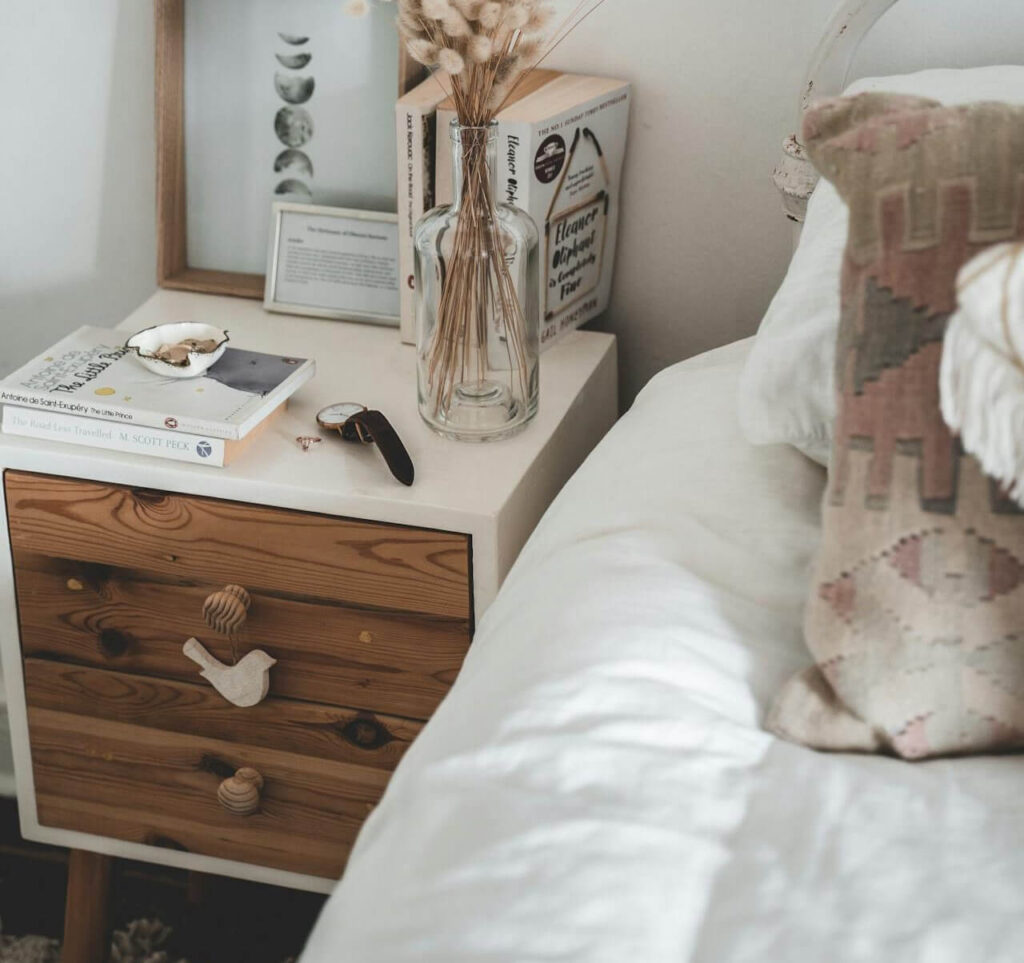
You only need a few useful or meaningful objects on top. A lamp, water, current book, or one decorative object is plenty. Everything else can go into a drawer or another storage area.
The space underneath deserves attention too. Avoid stuffing bags, paperwork, shoes, or miscellaneous objects between the nightstand and bed.
What to Keep on Your Nightstand
A bedside lamp is one of the best choices. For couples, a lamp on each side strengthens the symmetry around the bed. Similar lamps also prevent one side from visually dominating the other.
Fresh flowers can work in moderation, although large arrangements beside the head create unnecessary activity. Crystals, photographs, and sentimental objects are fine when they have a positive association for you.
For relationship Feng Shui, pairs can be used deliberately: two lamps, two similar decorative objects, or artwork featuring a couple.
Avoid turning the surface into a miniature altar filled with lucky objects. The bedroom benefits from simplicity.
Electronics Beside the Bed
Phones, tablets, laptops, chargers, and work devices belong to the active, yang side of daily life, whereas the bedroom is primarily a yin space.
Keeping several glowing or buzzing devices on the nightstand increases that active quality directly beside the bed.
If your phone serves as an alarm, keeping it on the bedside table is practical. Dim the screen, silence unnecessary notifications, and keep other work-related electronics elsewhere when possible.
Laptops, work documents, unpaid bills, and office supplies are especially poor bedside choices because they bring work visually into the sleeping area.
Nightstand Materials
Wood is a natural choice for bedroom furniture and introduces the Wood element. It also pairs easily with upholstered beds and other softer bedroom materials.
Metal nightstands introduce the Metal element and can work well when their design suits the room.
Glass requires more consideration because transparent furniture provides less visual solidity beside the bed, and sharp glass corners can create obvious poison arrows. A glass nightstand with rounded edges and a stable base is very different from a fragile table with pointed corners.
Material alone does not determine whether a nightstand has good Feng Shui. Shape, proportion, condition, and placement are more important.
What to Remove
Broken lamps, dead plants, dried flowers collecting dust, empty medicine packaging, old dishes, damaged furniture, and objects associated with unpleasant memories have little reason to remain beside the bed.
Also check inside the drawers. A clean tabletop above a drawer packed with forgotten rubbish only hides the clutter.
Keep bedside storage for things you actually use in the bedroom.
The Bedside Setup That Works Best
Good Feng Shui nightstands should support the bed without overpowering it. Keep them close to mattress height, avoid sharp corners aimed at the sleeper, leave both sides of a shared bed accessible, and limit what accumulates on top.
For couples, two nightstands reinforce equality and balance. For singles, an open second side can symbolically create space for partnership.
The tables themselves can be simple. Their relationship to the bed is far more important than having a particular color, expensive material, or collection of Feng Shui objects.
More Feng Shui Tips for the Bedroom
- Feng Shui Stove Placement: Best & Worst Positions in the Kitchen
- Feng Shui and Deceased Belongings: Should You Keep Them?
- Why a Bed in the Corner Is Bad Feng Shui (And How It Affects You)
- Mirror Facing Bed: Superstitions, Paranormal Beliefs, and Feng Shui