

The Tree of Life tattoo has been around forever, but it hasn’t lost its pull. It keeps coming back because it speaks to something basic and personal at the same time. Roots, growth, cycles, survival. It isn’t showy symbolism. It’s foundational.
While the design isn’t strictly feminine, many women connect with it through themes like creation, endurance, and deep connection to nature. A Tree of Life tattoo often reflects where you come from, what shaped you, and how you keep growing even when life isn’t gentle. Placement-wise, it works almost anywhere, but the back, shoulders, ribs, and spine tend to carry the most presence.
The Meaning Behind the Tree of Life
The Tree of Life captures the idea that everything is connected, even when it doesn’t look that way on the surface.
At its simplest, the tree represents growth over time. Roots hold you steady. The trunk carries weight. Branches reach outward, changing direction as needed. That mirrors real life more accurately than most symbols. Growth isn’t neat. It spreads, twists, and adapts.
Many people choose this tattoo as a reminder to stay grounded while still moving forward. It reflects ambition without losing stability. Expansion without losing connection to where you started.
There’s also a strong balance element. Roots stay buried. Branches stretch upward. Neither works without the other. That tension between grounding and reaching is often what gives the Tree of Life its emotional pull.
Feminine Tree of Life Tattoo Designs That Feel Personal

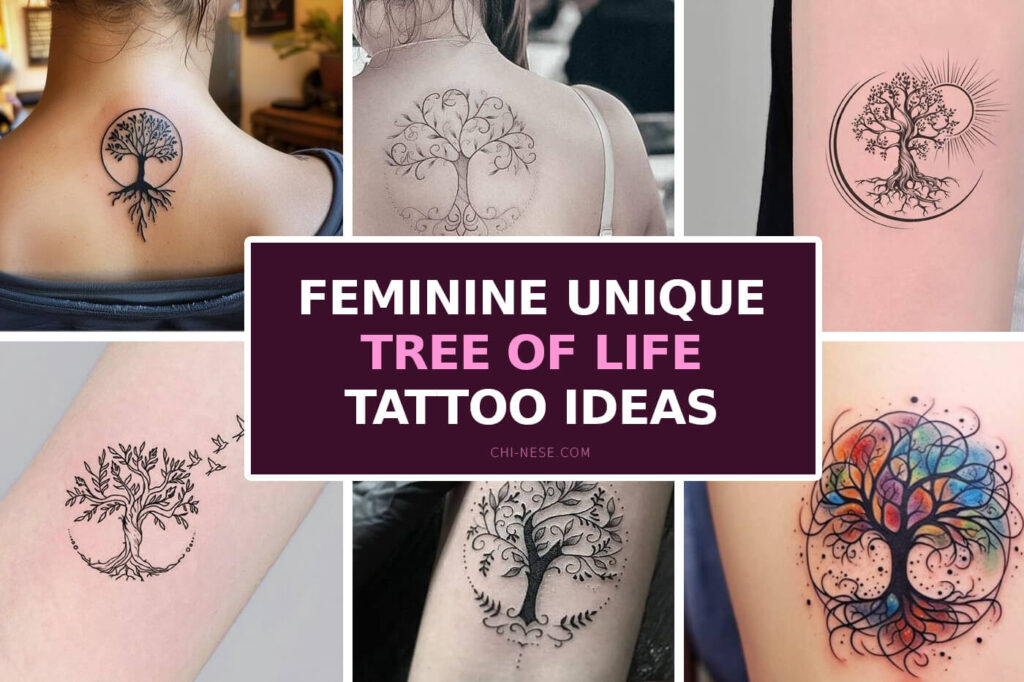
The upper back is a prominent location that allows the tattoo to be easily visible, yet still somewhat private and intimate. It’s like wearing a symbolic reminder of your connection to the world around you, without being too in-your-face about it. The circular shape is also meaningful, as it suggests the never-ending cycle of life.

The sun at the top sets the tone right away. It’s the source of energy, growth, and momentum. Everything on this planet depends on it in some way, so placing it above the tree naturally ties the design to vitality and forward movement.
At the base, the crescent moon shifts the focus inward. The moon has long been linked to cycles, intuition, and the body’s natural rhythms. It brings contrast to the sun, not as an opposite, but as a counterweight.
When the tree, sun, and moon come together, the design feels complete. Growth above, grounding below, and life moving between the two. It’s less about decoration and more about how everything stays connected, from roots in the earth to forces that shape time and change.

For me, this design points to what happens beyond the physical chapter of life. The birds lifting away from the tree feel like release rather than escape. They suggest movement beyond limits, a continuation rather than an ending.
What makes this tattoo work so well is how naturally the elements come together. The Tree of Life shows up across countless cultures, always tied to continuity and connection. Birds have carried meaning just as long, often linked to movement between worlds, states, or phases of existence. Put together, the image feels layered without needing explanation.

A large Tree of Life across the back doesn’t feel like decoration. It feels intentional. It reflects an understanding that nothing exists in isolation, that lives intersect and influence each other in ways we don’t always see.
This kind of piece often speaks to respect for life as a whole, not just personal history. It carries the idea that growth, loss, and connection are shared experiences, woven together whether we acknowledge it or not.

Adding cosmic elements like planets or stars shifts the whole feel of the design. The Tree of Life stops being only about roots and soil and starts reaching beyond the ground it grows from.
With those details, the tattoo suggests a wider sense of connection. Not just to life here, but to something much larger moving around us. It hints at scale, perspective, and the idea that personal growth doesn’t exist in isolation. It’s part of a much bigger picture.

This design centers on a Tree of Life framed by a circle around its upper branches. The circle changes how the whole piece reads. It contains the movement without limiting it, giving the tree structure while still letting it grow outward.
The meaning comes through without explanation. The tree holds growth, strength, and continuity. The roots stay anchored. The branches move in different directions, shaped by experience rather than intention. The circle brings it together, suggesting a life shaped by change but held within something steady.

Color changes how the Tree of Life feels on the body. It’s not about making it brighter or more decorative. It’s about mood. Some people choose warm tones because the design ties to emotion, movement, or intensity. Others lean toward cooler shades because the tree feels calmer, more reflective, or tied to inner life.
Color also adds specificity. It pulls the tattoo out of the abstract and into something personal. The same tree can feel completely different depending on the palette, which is why color choices often come from instinct rather than symbolism charts. When it works, the design stops feeling symbolic in general and starts feeling like it belongs to one person only.

An upper back placement works well when you want the design to feel personal rather than constantly on display. It gives the Tree of Life room to breathe and lets the branches move naturally with your body.
This spot also gives you control. You can show it when you want, and keep it private when you don’t. For many women, that balance matters. The tattoo becomes something you carry with you, not something you have to explain or present all the time.

The branches and roots give the design movement and structure at the same time. Nothing feels ornamental. Everything connects back to the trunk, which carries the weight of the piece and keeps it grounded.
That central trunk often becomes the anchor of the tattoo, holding together the ideas of strength, endurance, and staying rooted even as everything else spreads outward.

This design stands out because of its structure, not because it’s trying to grab attention. The outward-reaching branches give it movement, and the dotted circle adds contrast without overpowering the tree itself.
It’s one of those designs that adapts well to different placements. On a larger area like the back, it feels expansive and intentional. On the wrist or ankle, it reads more contained and personal. The core idea stays the same, even as the scale changes.
Placement Ideas for Your Tattoo
Wrist – Works well for smaller designs that feel personal. The tree can wrap naturally, almost like a bracelet, with roots and branches following the line of the wrist.
Back or shoulder – Best for larger pieces with detail. Branches can spread across the shoulders or run along the spine, giving the design room to expand and feel intentional.
Ankle or foot – A more unconventional placement that flows with movement. Roots across the foot and branches rising upward tend to follow the natural shape of the leg.
Lower back – Often chosen for its connection to creativity and emotional center. A Tree of Life here feels grounded, intimate, and tied to both stability and growth.
Ready For Your Tattoo?
Choosing a Tree of Life tattoo usually comes down to timing rather than trends. It’s the kind of design people circle back to after living a bit, not something picked on impulse. The details matter because they carry your version of the story, not because they look nice in a reference photo.
Take your time with it. Sit with the design. Pay attention to what keeps drawing you back, whether that’s the shape of the branches, the roots, or how much space the tree takes up. Find an artist who understands flow and proportion, because this symbol relies on balance more than decoration.
When it’s done well, the Tree of Life doesn’t feel like a statement you have to explain. It settles in. It becomes part of how you carry yourself, quietly marking where you’ve been and how you keep moving forward.