



The lymphatic system doesn’t get much attention until something feels off. It quietly moves fluid through the body, helps clear waste, and supports immune function. When everything runs smoothly, you don’t think about it at all. When it doesn’t, your body lets you know.
People describe lymphatic imbalance in similar ways. Swelling. A heavy feeling in the limbs. Joint stiffness. Ongoing bloating. Skin acting up. Or just the sense that things aren’t clearing the way they should. It’s hard to put into words, but once you’ve felt it, you recognize it immediately.
For me, it’s very specific. I tend to get a noticeable lump on the left side of my neck. When that shows up, I know my body is struggling with something. That’s usually the moment I slow down and reach for natural support instead of pushing through.
Supporting the lymphatic system usually starts with the basics: movement, hydration, rest, and circulation. What you drink plays a role too. Certain teas can support fluid flow, help with inflammation, and take pressure off organs closely connected to the lymphatic system, especially the liver and kidneys.
There are plenty of herbal options out there. These are the four teas I keep coming back to because they’ve helped me feel less swollen, more comfortable in my body, and generally more balanced over time.
Echinacea Tea

Echinacea has a long history of use, especially in Indigenous North American traditions. It was commonly used to support immune response and help the body handle infections and inflammation.
As a tea, echinacea is often chosen during periods when the body feels run down or reactive. It’s associated with immune support, which indirectly affects lymphatic flow since the lymph system is closely tied to immune function.
When I drink echinacea tea, it’s usually during times when my body feels under stress or after repeated minor illnesses. It helps me feel more regulated rather than depleted.
Echinacea tea is commonly used for:
- Immune system support
- Respiratory discomfort
- General detox support
- Lymphatic circulation assistance
It’s not something I drink daily year-round, but I keep it in rotation when my system feels overwhelmed.
Ginger Tea

Ginger tea is one of the simplest and most effective teas for lymphatic support. Ginger encourages circulation and fluid movement, which is key for lymph flow. The lymphatic system doesn’t have its own pump. It relies on movement, warmth, and circulation to keep things moving.
Ginger also supports digestion and inflammation response, both of which matter when dealing with lymph congestion.
You can make ginger tea easily at home:
- Boil water
- Add about 2 teaspoons of freshly grated or finely chopped ginger
- Let it steep for 5–10 minutes
- Add honey or lemon to taste, though lemon is usually considered cooling in traditional systems.
Ginger tea works especially well in the morning or after long periods of sitting. It has a warming quality that helps the body feel more awake and less heavy.
Turmeric Tea

Turmeric tea has been used traditionally across many Asian cultures, not just for comfort but for long-term support of inflammation and digestion.
The active compound in turmeric, curcumin, is widely known for its anti-inflammatory properties. In the context of lymphatic health, this matters because inflammation can slow fluid movement and contribute to congestion.
Turmeric tea is often used to support:
- Joint discomfort
- Digestive balance
- Respiratory health
- Mental clarity
- Inflammation response
It’s also commonly included in routines aimed at supporting detox processes, especially when the body feels swollen or weighed down.
To make turmeric tea:
- 1 cup water
- 1 teaspoon turmeric powder or fresh turmeric root
- Sweeten if needed
Simmer for about 5 minutes, strain if necessary, and drink warm. Some people add black pepper to improve curcumin absorption.
Dandelion Tea
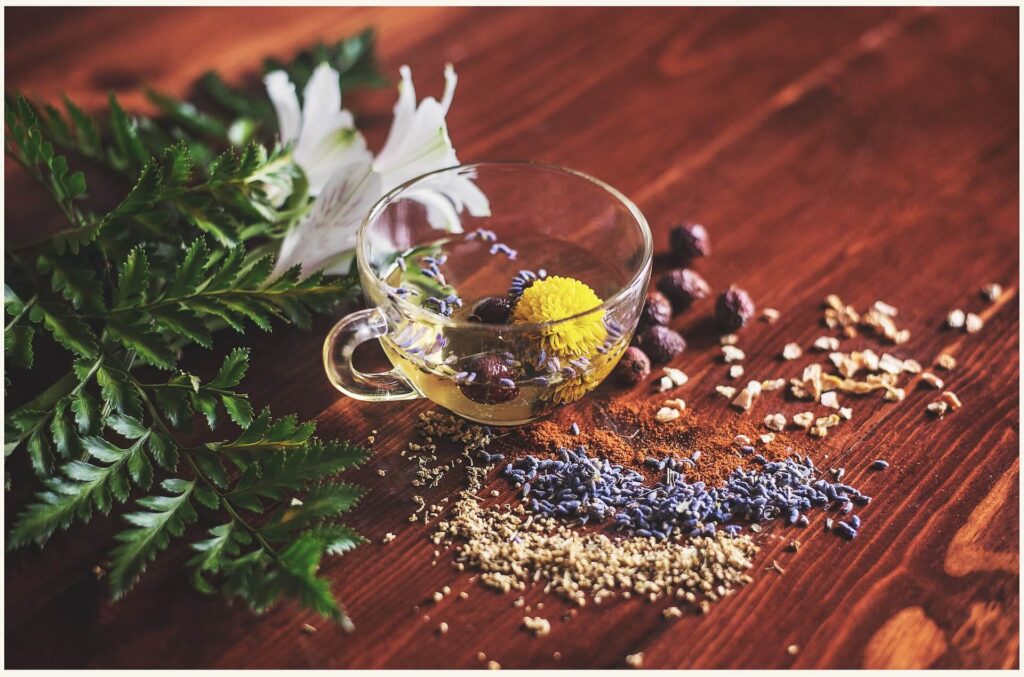
Dandelion tea is one of the most underrated options for lymphatic support. Although many people see dandelion as just a weed, it’s been used for centuries in herbal traditions, particularly for liver and kidney support.
Dandelion acts as a natural diuretic, helping the body release excess fluid. This can be especially helpful when lymph congestion shows up as puffiness or water retention.
It’s often chosen to support:
- Fluid balance
- Liver function
- Digestive health
- Waste elimination
Because the liver and lymphatic system work closely together, supporting one often helps the other.
Dandelion tea is easy to prepare:
- Add 1 tablespoon of dried dandelion to a cup
- Pour boiling water over it
- Steep for about 5 minutes
- Strain and drink
It’s widely available in tea bags as well, which makes it easy to include regularly.
Why I Keep Coming Back to These Teas
None of these teas are quick fixes. What they do is support systems that already exist in the body. Over time, that support adds up.
For me, dandelion tea stands out the most when my body feels swollen or sluggish. Ginger is my daily staple for circulation. Echinacea and turmeric come in when my system needs extra support.
If your lymphatic system feels off, tea alone won’t solve everything, but it can be a helpful part of a broader routine focused on movement, hydration, and rest. And if I had to choose just one to start with, I’d still say dandelion tea.