

When people talk about “beautiful words,” the same ideas usually come up. Love. Romance. Flowers. Sunsets. Ocean waves. Beauty tends to get boxed into soft, obvious things.
I never related to that much.
I grew up drawn to words that felt a little off-center. Words that described states of being rather than objects. Words that quietly explained why someone prefers the night, the rain, solitude, or staring at the sky instead of making small talk.
When I first learned the words in this list, it felt unsettling in the best way. More than half of them described parts of my personality with uncomfortable accuracy. Not in a flattering way. In a precise way.
These aren’t words you hear in everyday conversation. Most people won’t recognize more than a few of them. But once you learn them, you start spotting these traits everywhere.
Lisztomania
Lisztomania originally referred to the intense public fascination with composer Franz Liszt in the 19th century. It described crowds reacting emotionally to his music in ways that were considered excessive at the time.
Today, the word has shifted. It’s used to describe a deep, ongoing need to listen to music. Not casually, but as a constant presence.
For many people, music isn’t background noise. It’s regulation. Focus. Escape. Sometimes it’s the only way to shut the world out long enough to function.
Selenophile
A selenophile is someone who feels drawn to the moon.
Not astrologically. Not symbolically. Just visually and emotionally.
Selenophiles tend to find the moon grounding. They look for it without thinking. They notice its phases. There’s something stabilizing about knowing millions of people are looking at the same moon at the same moment, from completely different lives.
Astrophile
An astrophile loves the stars, space, and everything related to the night sky.
This doesn’t require scientific knowledge. It’s about the feeling of scale. Sitting outside at night, looking up, and feeling small in a way that’s calming rather than threatening.
Astrophiles often find peace in perspective. The sky reminds them their problems aren’t the center of everything.
Nyctophilia
Nyctophilia describes a comfort with darkness and nighttime.
For nyctophiles, the dark isn’t scary. It’s protective. The world slows down. Expectations drop. There’s less pressure to perform or respond.
Darkness offers privacy. Space. Time to recharge without interruption.
Aesthete
An aesthete has a refined sensitivity to beauty and design.
This doesn’t mean flashy taste. Often it’s the opposite. Clean lines. Balanced colors. Thoughtful details.
Aesthetes notice when something feels off, even if they can’t explain why. They respond to atmosphere more than trends.
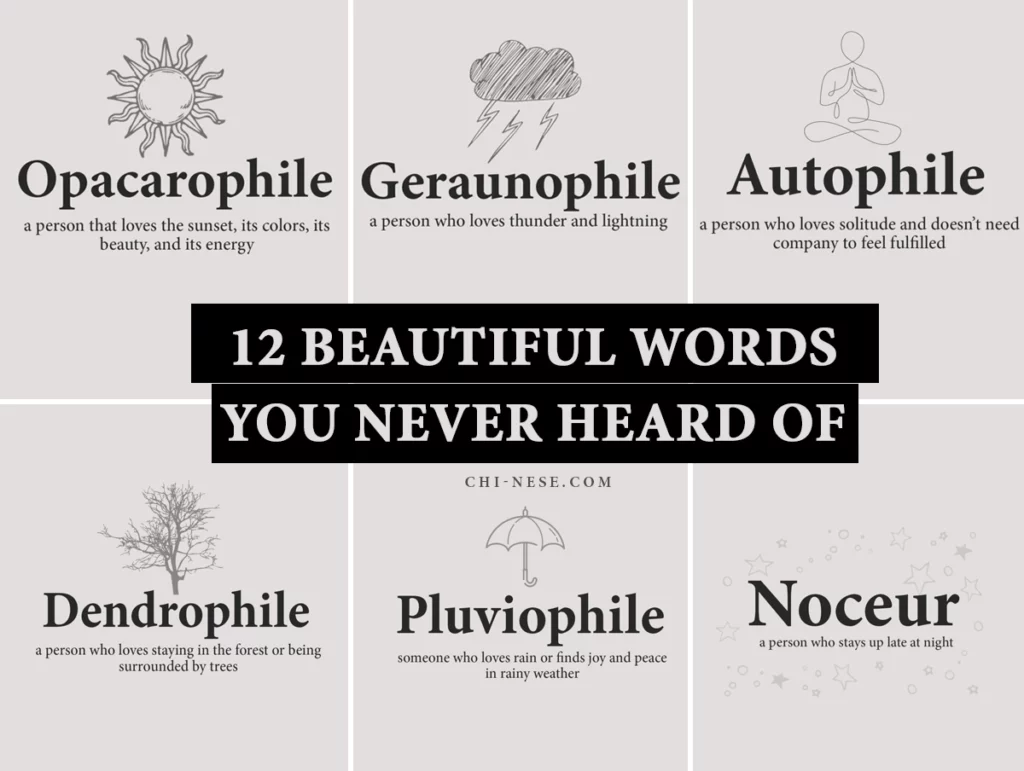
Noceur
A noceur is someone who stays up late, often by choice.
This isn’t always about partying. Many noceurs are night workers, thinkers, or creators. The hours after midnight feel uninterrupted. Emails stop. Notifications slow. Focus sharpens.
Nighttime becomes productive rather than exhausting.
Pluviophile
A pluviophile loves rain.
Rain changes everything. Sound. Light. Pace. Streets empty. Thoughts shift.
Some pluviophiles watch rain from windows. Others walk through it. The appeal isn’t sadness. It’s the permission rain gives to slow down.
Dendrophile
A dendrophile feels drawn to trees and forests.
Being around trees brings a sense of steadiness. Forests don’t rush. They don’t demand attention. They exist without explanation.
Some dendrophiles talk to trees or touch them. Not because they’re strange, but because it feels grounding and familiar.
Autophile
An autophile enjoys solitude.
This isn’t isolation or avoidance. It’s comfort with one’s own company. Autophiles recharge alone. They think more clearly without constant interaction.
I wouldn’t call myself an autophile, but I work best alone. Silence sharpens focus.
Mångata
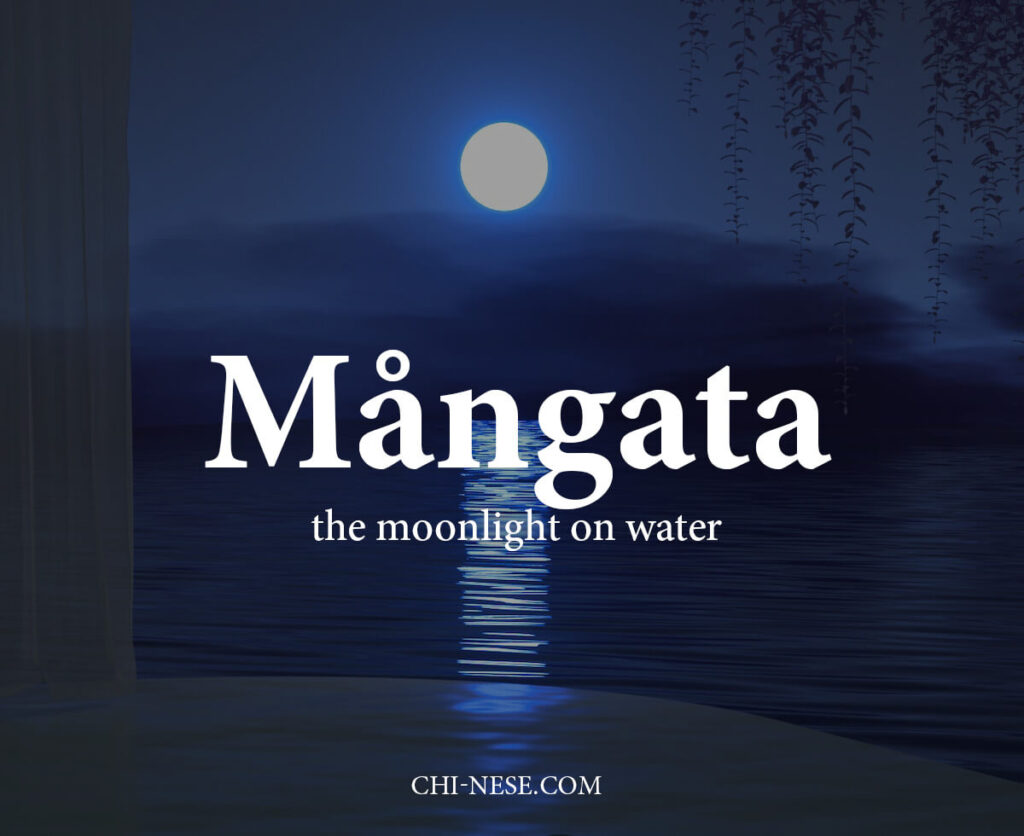
Mångata is a Swedish word meaning “the road the moon creates on water.”
It describes the long reflection of moonlight stretching across lakes or oceans.
There’s no exact English equivalent. That’s part of its beauty. The word exists because someone noticed something worth naming.
Geraunophile
A geraunophile loves thunder and lightning.
Storms feel immersive. The air changes. Sound rolls through space. Everything feels heightened.
There’s something absorbing about storms at night, when you can lie still and listen to the sky move.
Opacarophile
An opacarophile is drawn to sunsets.
Not just the colors, but the timing. The pause between day and night. The awareness that something is ending, but not abruptly.
Sunsets feel like punctuation marks. They close one part of the day and open another.
If I had to pick one word from this list, it would probably be dendrophile. Forests have always felt right to me. The smell of trees after rain, the way the air changes, the quiet weight of old trunks standing there long before us. Nothing tries to impress you. Nothing rushes you. You’re just there, breathing it in.
That’s why words like these matter to me. They give shape to things many people feel but never quite name. Once you know the word, the feeling stops being vague. It becomes something you recognize, something you can return to.
And maybe that’s the point of beautiful and aesthetic words in the first place. Not to sound poetic, but to make sense of the parts of ourselves that already existed, just unnamed.