

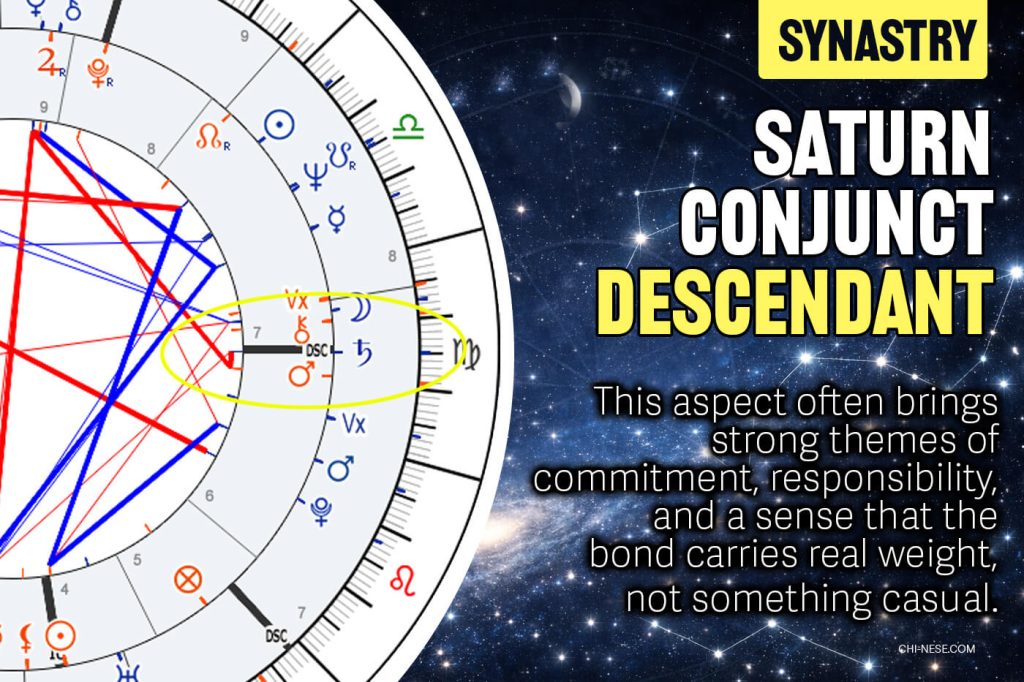
Saturn conjunct Descendant in synastry points to long-term relationships, marriage, delayed commitment, and obstacles that test a couple’s patience. Saturn rules time, responsibility, restrictions, and commitment, while the Descendant represents marriage and serious partnerships. Together, they describe a relationship where timing, obligations, and decisions about the future play a major role.
I’ve personally seen this conjunction in couples who stayed married for twenty years or longer. I’ve also seen it in relationships complicated by age differences, family disapproval, or one person already being married. Sometimes two people know each other for years before anything romantic begins.
The Saturn person often becomes someone the Descendant person considers a potential spouse. Even if the relationship ends, the Saturn person may remain difficult to forget, especially after years of shared responsibilities, postponed plans, or attempts to build a future together.
A Relationship That Develops Slowly
With Saturn on the Descendant, romantic interest may develop gradually. Two people might know each other through work, school, or mutual friends for years before beginning a relationship.
Sometimes the attraction is there from the beginning, but circumstances prevent anything from happening. One person might already be married, live in another country, have children to care for, or be unwilling to enter another serious relationship.
The Saturn person may hesitate to express affection or discuss their intentions. The Descendant person, meanwhile, can become frustrated by the lack of progress, especially if they are ready for commitment.
Unlike Uranus conjunct Descendant, which is associated with sudden attraction and unexpected developments, Saturn brings delays, hesitation, and responsibilities that complicate the relationship before it has a chance to develop.
Marriage and Long-Term Commitment
Saturn conjunct Descendant is commonly associated with marriage and relationships that last for many years. Saturn governs obligations, contracts, and endurance, all of which have obvious connections to formal partnerships.
For example, a couple might remain together through financial difficulties, unemployment, illness, or years spent raising children. They may take their marriage vows seriously and consider separation only after exhausting other possibilities.
However, Saturn can also delay marriage. A couple might spend years saving for a home, waiting for a divorce to be finalized, or resolving immigration and legal issues before they can marry.
The sign of Saturn can describe some of these complications. In Cancer, family obligations or parental disapproval may interfere. In Sagittarius, cultural differences, religious beliefs, or living in different countries could complicate marriage. In Gemini, disagreements over legal arrangements, communication, or competing plans may require attention.

Age Differences and Unequal Responsibilities
An age gap is another possible expression of this conjunction. The Saturn person may be considerably older, have more relationship experience, or carry responsibilities that the Descendant person has yet to encounter.
For instance, Saturn might already own a home, have children from a previous marriage, or support elderly parents. The Descendant person may have to accommodate those commitments before the couple can live together or make plans for the future.
Even among partners of similar ages, Saturn may assume the role of the responsible one. They might manage the finances, organize household expenses, or insist on discussing long-term plans before making major decisions.
Problems can develop if Saturn begins treating the Descendant person as someone who needs supervision. Constant advice about spending, career choices, or personal habits can gradually become criticism.
Family Disapproval and Outside Obstacles
The Descendant also represents open opponents, so Saturn’s conjunction can sometimes describe opposition from people outside the relationship.
Parents may disapprove of an age difference, relatives might object to a partner’s background, or an ex-spouse could complicate the couple’s plans through custody arrangements or financial obligations.
Social and legal restrictions can play a role too. For example, a same-sex couple living somewhere without legal recognition of their relationship may encounter obstacles involving marriage, residency, or shared property.
In other cases, the problem is geographical. One person may have a secure career or family responsibilities that prevent relocation, leaving the couple separated by distance for years.
A Bond That Stands the Test of Time
Saturn conjunct Descendant can describe a couple who spends years waiting for the right circumstances to be together, marries after a long courtship, or stays committed through responsibilities that would strain many relationships.
It can also describe a partnership held together by duty long after affection has diminished. Shared property, children, financial dependence, or fear of starting over may make separation difficult.
Longevity alone says little about the quality of a relationship. Some couples with this conjunction build marriages based on loyalty and mutual respect. Others remain together because leaving would create complications neither person wants to confront.
Saturn’s influence becomes especially valuable if both partners take responsibility for their commitments without allowing criticism, control, or obligation to dominate the relationship.
More Saturn Synastry Aspects
- Saturn Conjunct Saturn Synastry: Shared Life Lessons & Timing
- Venus Square Saturn Synastry: When Love Feels Heavy but Lasts
- Saturn Conjunct Moon Synastry: A Fated, Karmic Connection
- Saturn Conjunct Lilith Synastry: Attraction, Boundaries, and Powerful Lessons