

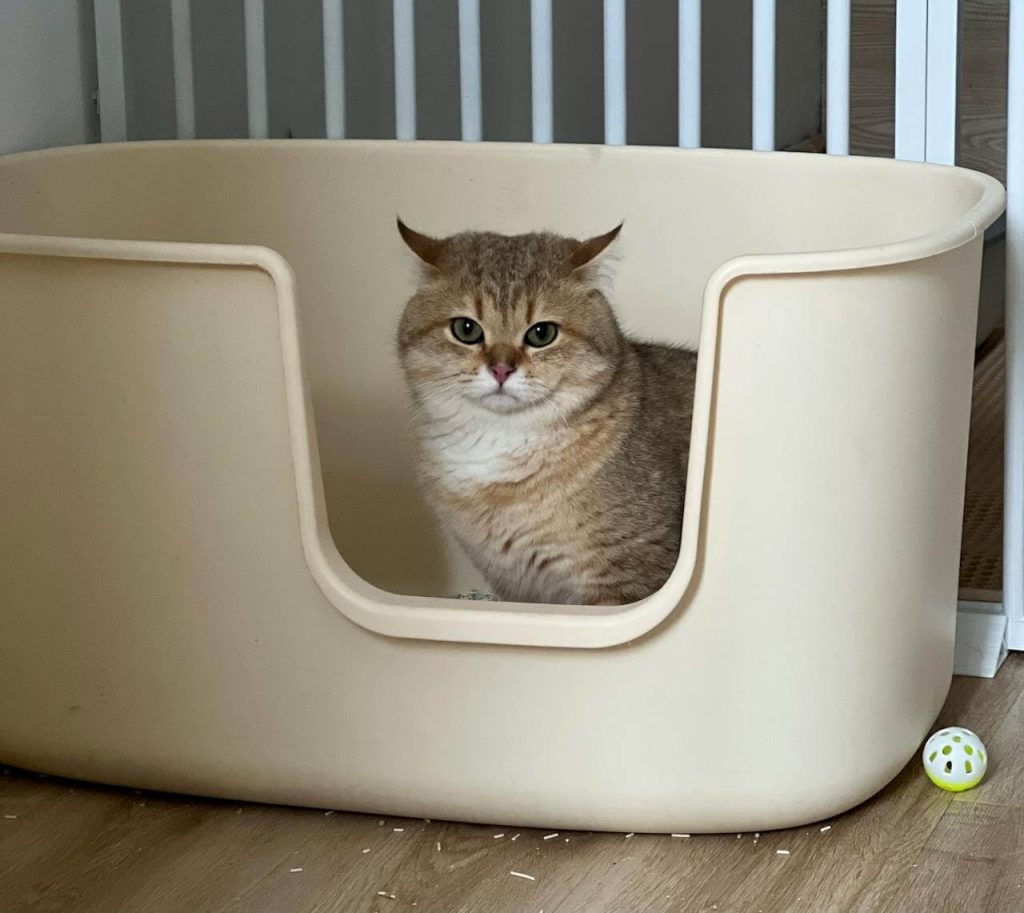
In Feng Shui, a cat litter box is associated with waste, elimination, and stagnant chi, so its placement deserves some attention. Ideally, it belongs somewhere discreet, well ventilated, easy to clean, and separate from the areas where you sleep, eat, or spend most of your time.
Your cat still comes first. A perfectly placed litter box according to Feng Shui is useless if your cat dislikes the location or has difficulty reaching it.
The Feng Shui of a Litter Box
A litter box collects something the body has eliminated, which gives it a natural association with energy that is leaving the home. When waste sits too long, odors spread and litter gets tracked across the floor, that unwanted energy extends beyond the box itself.
Regular scooping therefore has a Feng Shui purpose as well as an obvious hygienic one. Remove waste every day, wash the box regularly, sweep up scattered litter, and keep the surrounding floor clean.
A litter mat can also help define the area and prevent litter from traveling into other rooms.
Where to Put the Litter Box
A bathroom, utility room, laundry area, or quiet ventilated corner can work well. These locations already have some association with cleaning, drainage, or household maintenance, making the litter box less intrusive there.
Privacy is important for cats, so choose somewhere away from heavy foot traffic, loud appliances, and doors that are constantly opening and closing.
A furniture-style litter box enclosure can hide the box visually, but ventilation is essential. Avoid sealing it inside a cabinet with poor airflow simply to make the room look better.
Places to Avoid
The kitchen and dining room are poor choices because they bring waste too close to food preparation and eating. Beyond Feng Shui, separating a litter box from food areas also makes sense hygienically.
A bedroom is another location worth avoiding when another suitable space is available. Bedrooms are associated with rest and intimacy, whereas the litter box represents elimination and waste.
The front entrance deserves attention too. In Feng Shui, the main door is where chi enters the home. A litter box beside the entrance places waste, odor, and dirty litter directly in that path.
Avoid putting the box directly beside your cat’s food and water bowls as well. Cats prefer their toilet area separated from where they eat and drink.
What About the Wealth Corner?
You may have heard that a litter box should never sit in the southeast because it will “flush away” your money.
This advice comes from Feng Shui systems that associate the southeast with wealth and prosperity. Under that approach, placing a toilet, trash bin, or litter box there is considered undesirable because the area contains something associated with waste and removal.
If your home’s layout leaves the southeast as the only sensible location, cleanliness becomes more important than trying to force the box into an inconvenient place. A clean litter box your cat reliably uses is preferable to an awkward location chosen solely to satisfy a bagua rule.
Should the Litter Box Be Hidden?
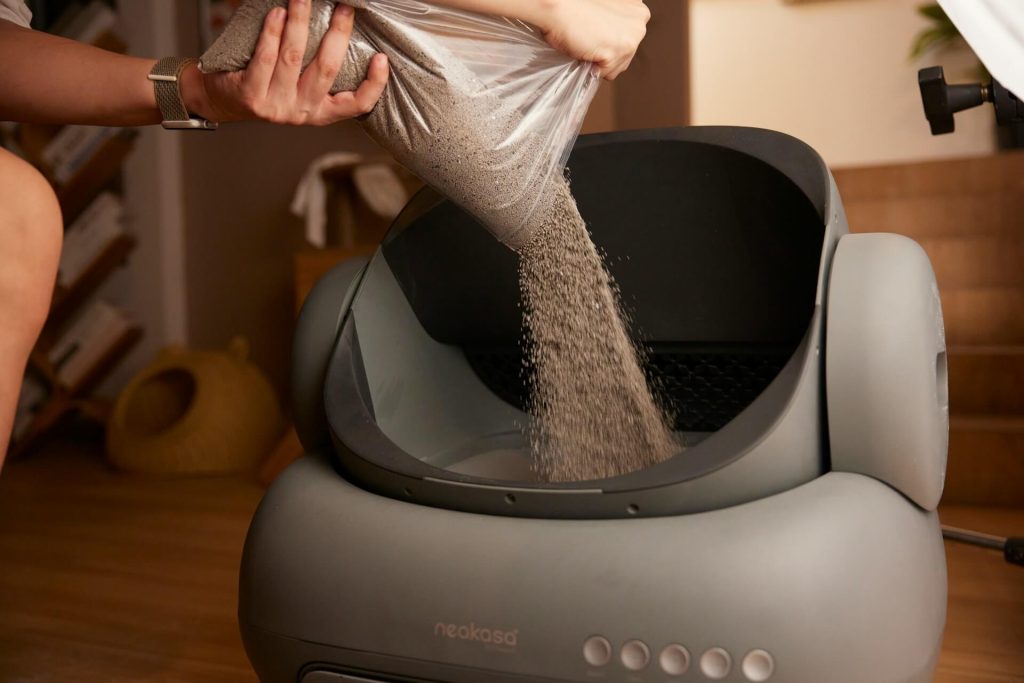
Visually concealing the box can work well in Feng Shui because it reduces the presence of waste in the room. A screen, cabinet enclosure, or dedicated litter-box furniture can separate it from the surrounding space.
Your cat needs an easy entrance and exit, however. Some cats dislike enclosed boxes, particularly when odor becomes trapped inside.
If your cat prefers an open box, keep it open. You can still position it somewhere less visible without enclosing it.
Color and Material
Color has far less importance here than cleanliness, location, and accessibility. A neutral litter box can blend into the room, but there is no need to replace a perfectly functional bright-colored box solely for Feng Shui.
The same applies to material. Choose something easy to clean and appropriate for your cat. A dirty beige box creates worse Feng Shui than a spotless blue one.
Multiple Cats and Multiple Boxes
A multi-cat household may need several litter boxes, which makes perfect Feng Shui placement harder. Spreading them between suitable areas is preferable to clustering every box in one small room.
Cats can become territorial around litter boxes, and one cat may block another from using a shared location. Giving them more than one option can reduce tension and accidents elsewhere in the home.
Keep the Area Clean and Active
The strongest Feng Shui improvement you can make has little to do with lucky colors or decorative cures. Scoop the litter, control odors, provide ventilation, clean scattered litter, and replace the box when it becomes badly scratched or difficult to wash.
Once you have found a location your cat happily uses, avoid moving the box around unnecessarily. Cats benefit from knowing exactly where their toilet is, and a stable location also keeps the waste area contained to one part of the home.
The best placement works for both sides of the household: the litter box stays away from food, sleep, and the main entrance, and your cat gets a clean, private toilet they can reach whenever they need it.
More Feng Shui Tips for Your Home
- Bird Nest at Your Front Door: Feng Shui & Spiritual Meaning
- Feng Shui for Your Dog’s Bed: Placement, Colors, and Comfort
- Dolphins in Feng Shui: Symbolism, Placement & Use
- Feng Shui Money Frog Without a Coin (or Broken): Dos and Don’ts