



Some names sound beautiful the moment you hear them, yet the stories behind them are anything but light. Tragic names like Ophelia, Desdemona, or Guinevere carry elegance and depth, but their origins are shaped by loss, betrayal, or endings that didn’t come easily.
This list explores dark female names with tragic roots. Not to warn you away from them, but to show what gives them their emotional weight. Many of these names were once linked to beauty, devotion, or power, until the stories attached to them changed how they’re remembered.
Perdita
Perdita comes from Shakespeare’s The Winter’s Tale. She is the abandoned daughter of Queen Hermione, cast away as an infant because of her father’s jealousy. Her name comes from Latin and means “lost woman.”
Saved by a shepherd, Perdita grows up far from her royal origins. She becomes kind, loyal, and strong, eventually falling in love with Prince Florizel. Her story is painful at the start, but it also carries the idea that what is lost can return, changed but intact.
Deire
In Greek mythology, Deire was a Naiad nymph who loved Paris long before the Trojan War made him famous. When Paris left her for Aphrodite, Deire’s grief consumed her.
The name carries themes of abandonment and longing. It’s soft in sound, but emotionally heavy, tied to a love that was never chosen back.
Umbrielle

Umbrielle has Latin roots connected to shadow and shade. In one legend, she was a fairy who fell in love with a mortal man. When he died, her grief led her to break the laws of her realm.
As punishment, she was cast out and forced to wander unseen. Umbrielle became a figure tied to loneliness, memory, and places forgotten by time. The name feels dark without being harsh, filled with imagery rather than explanation.
Jadis
Jadis comes from French and means “long ago” or “former times.” In modern culture, it’s strongly associated with the White Witch from The Chronicles of Narnia, a ruler who froze the land in endless winter.
The name sounds elegant, but its associations lean toward destruction, isolation, and the weight of something that refuses to let go of the past.
Aphra
Aphra means “dust” or “ashes.” The most famous bearer, Aphra Behn, was a 17th-century playwright whose life was marked by illness, debt, and controversy despite her success.
Because of this, the name often appears in fiction attached to characters shaped by struggle, talent that goes unrecognized, or lives that never unfold as expected.
Guinevere
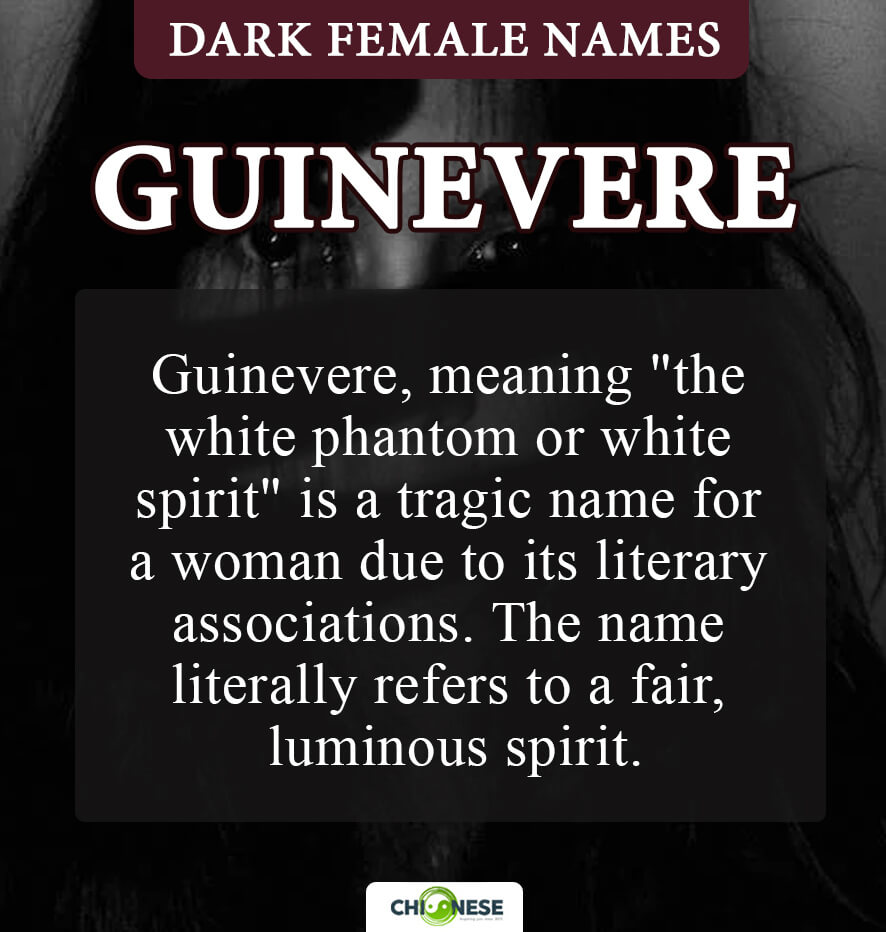
Guinevere is often translated as “white spirit” or “white phantom.” In Arthurian legend, her love for Lancelot leads to betrayal, heartbreak, and the collapse of Camelot.
The name carries themes of forbidden love, regret, and the price of desire. It’s graceful on the surface, but tied to consequences that reshape an entire kingdom.
Lystra
Lystra means “she who dissolves.” In myth, Lystra was a priestess who angered Demeter by praising her own beauty above the goddess’s.
As punishment, she was transformed into a lark, condemned to sing endlessly. Her story speaks of pride, loss, and transformation, as well as a strange kind of immortality through nature.
Other Tragic Girl Names
These names are linked to sorrowful myths, literary tragedies, and historical stories that left lasting marks:
- Ophelia — the heroine of Hamlet, undone by grief and emotional isolation.
- Desdemona — Othello’s devoted wife, killed because of jealousy and manipulation.
- Iseult — part of a doomed love story defined by separation and longing.
- Lavinia — a figure wrongfully accused and punished, symbolizing innocence destroyed.
- Juliet — whose devotion leads to one of literature’s most famous tragic endings.
- Aurora — meaning “dawn,” yet tied to a goddess who loved deeply and lost repeatedly.
- Cassandra — cursed to speak the truth while never being believed.
- Dido — the queen of Carthage abandoned by Aeneas, ending her life in despair.
- Helen — remembered as the spark that ignited the Trojan War.
- Isolde — another tragic lover bound to fate rather than choice.
- Roxana — wife of Alexander the Great, murdered amid political chaos after his death.
- Virginia — tied to a Roman tale of honor ending in violence.
- Xanthe — meaning “golden,” yet linked to sacrifice and loss.
Behind the Sorrowful Histories
Tragic girl names carry stories of betrayal, punishment, love, and loss, but they’re not empty or bleak. Many represent endurance, emotional depth, or transformation through hardship.
If you’re drawn to names like these, it’s often because they feel layered rather than simple. Sometimes the names shaped by darker stories are the ones that linger the longest, remembered not for perfection, but for meaning.