


You’ve probably come across the name Guinevere at some point, especially if Arthurian legends ring a bell. It’s one of those names that instantly feels familiar, even if you’ve never met anyone who actually carries it.
What makes Guinevere interesting is that it sits right on the line between legend and real-world use. It has deep roots, a clear story behind it, and a sound that feels elegant without being overly ornate. If you’re considering Guinevere for a child, or you’re simply curious about name meanings, this one has more layers than it first appears.
The Legendary Origins of the Name Guinevere
Guinevere is best known from the legends surrounding King Arthur and Camelot. In these stories, Guinevere is Arthur’s queen, admired for her beauty and status, but also remembered for her complicated emotional life.
According to legend, Guinevere was the daughter of King Leodegrance of Cameliard. Her marriage to Arthur was meant to strengthen political alliances, but her story quickly became more personal than political. She fell in love with Lancelot, Arthur’s most trusted knight, and that relationship became one of the most famous love triangles in Western mythology.
Because of this, Guinevere is often portrayed as a tragic figure. She represents conflict between duty and desire, loyalty and emotion. Over centuries, writers and artists have reinterpreted her character again and again, sometimes emphasizing her strength, sometimes her vulnerability, and sometimes her role in Camelot’s collapse.
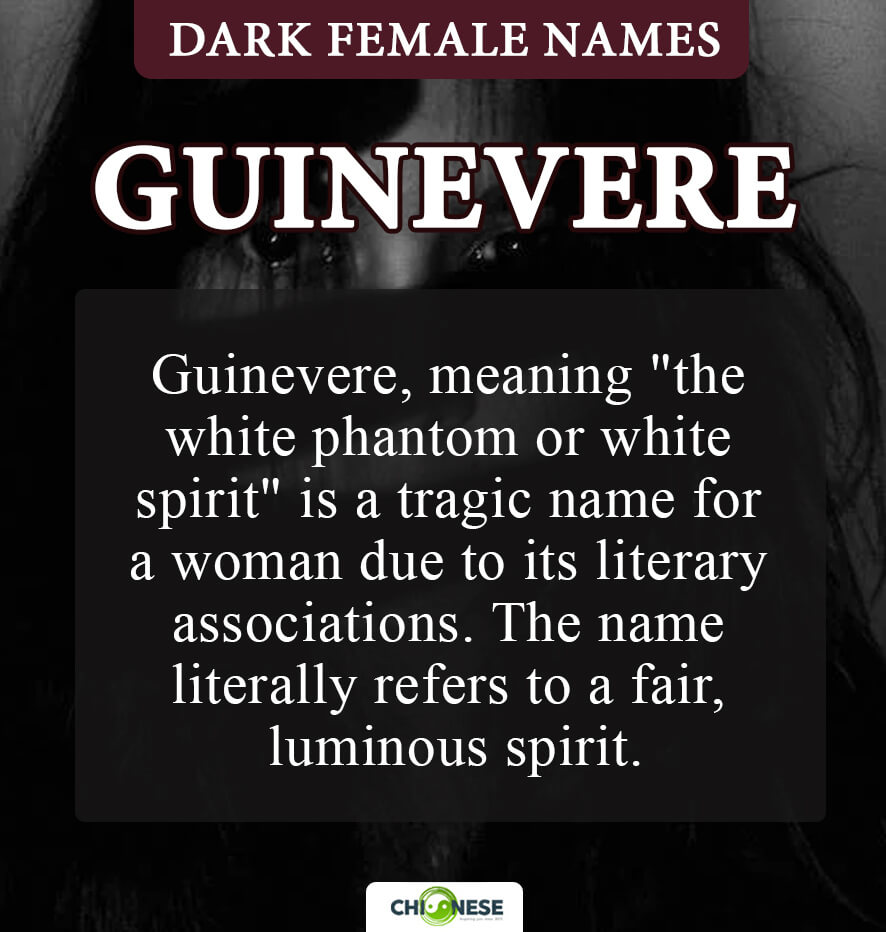
The name Guinevere comes from Welsh roots and is often interpreted as meaning “white phantom” or “white wave.” Both meanings point toward something striking, otherworldly, and memorable rather than plain or ordinary.
Guinevere Today and Popularity
In modern times, Guinevere remains rare. It has never become a common chart-topper, which is part of its appeal. You are unlikely to encounter many Guineveres in a classroom, workplace, or friend group.
Despite its rarity, the name doesn’t feel unfamiliar. Most people recognize it instantly, even if they can’t place where they first heard it. That combination of recognition and uniqueness gives Guinevere a quiet confidence as a name choice.
There are no widely known historical figures named Guinevere outside of Arthurian tradition, which keeps the name closely tied to its legendary roots. For some parents, that connection is exactly what makes it appealing. For others, it’s simply the sound and presence of the name that draws them in.
How to Pronounce Guinevere
Guinevere looks complicated on paper, but the pronunciation is more straightforward than it seems.
- The first syllable sounds like “gwin”, rhyming with twin.
- The second syllable is “eh”, similar to the e in met.
- The final syllable is “veer”, rhyming with beer.
Put together, it’s commonly pronounced gwin-eh-veer.
Some speakers add a very soft extra sound in the middle, making it sound closer to gwin-eh-neh-veer. Both versions are widely accepted, and most people will understand the name once they hear it spoken.
Why Guinevere Works as a Name Choice
Choosing a name often comes down to more than meaning alone. Sound, rhythm, association, and longevity all matter.
Guinevere has a strong rhythm with its three syllables, giving it presence without feeling heavy. It sounds refined, but not stiff. Traditional, but not dated. It works just as well for a child as it does for an adult.
The name also carries a sense of individuality. It’s distinctive without being hard to recognize or spell. People may ask about it, but they won’t struggle to remember it.
While the Arthurian Guinevere is a complex figure, that complexity can be seen as a strength. She is not a flat or passive character. She is remembered because she was human, emotional, and central to the story rather than decorative.
Why Guinevere Still Holds Its Appeal
Guinevere may feel old at first glance, but it doesn’t belong to the past. Its sound, story, and symbolism give it lasting relevance.
If you’re drawn to names with history, literary depth, and a sense of presence, Guinevere is worth considering. It stands apart without trying to shock, and it carries a story that people have been retelling for centuries.
Whether you love its Welsh roots, its legendary background, or simply how it sounds when spoken aloud, Guinevere remains a name that leaves an impression.