

Spiritually, a solar eclipse is associated with turning points, endings, and changes that can redirect your life in ways you weren’t expecting. The Sun disappears behind the Moon for a short time, and symbolically, that temporary darkness has long been linked with things coming to an end, hidden issues becoming visible, and plans taking a different course.
Solar eclipses also happen at a New Moon, so there is always a beginning tied into the story. One door may close while another opens, sometimes through a decision you make yourself and sometimes through circumstances outside your control. In astrology, where the eclipse falls in your birth chart can point to the area of life where this change is most likely to unfold.
The next solar eclipse takes place on August 12, 2026, together with a New Moon in Leo at 17:36. The eclipse occurs at 20°01′ Leo, placing particular emphasis on confidence, creativity, self-expression, recognition, love, and the courage to live more openly as yourself.
Spiritual Meaning of a Solar Eclipse
Spiritually, a solar eclipse represents a reset and a change of direction. Something that has occupied your attention for months or even years may suddenly feel finished, while another possibility starts becoming more important.
Eclipses have traditionally carried a reputation for bringing events that feel significant or difficult to reverse. From an astrological perspective, they are often associated with turning points involving relationships, work, home, personal identity, priorities, or long-term plans.
Sometimes the change is visible immediately. Other times, the eclipse marks the beginning of a process whose importance becomes clear weeks or months later.
A solar eclipse can be associated with:
- endings that make room for a different path
- unexpected changes in plans or priorities
- stronger emotions and intuition
- realizations about relationships or personal goals
- letting go of an identity or role you have outgrown
- opportunities that redirect your attention
- a desire to start again in one area of life
The house where the eclipse falls in your birth chart can give you a better idea of which area of life may be affected most.

The Sun and Moon During a Solar Eclipse
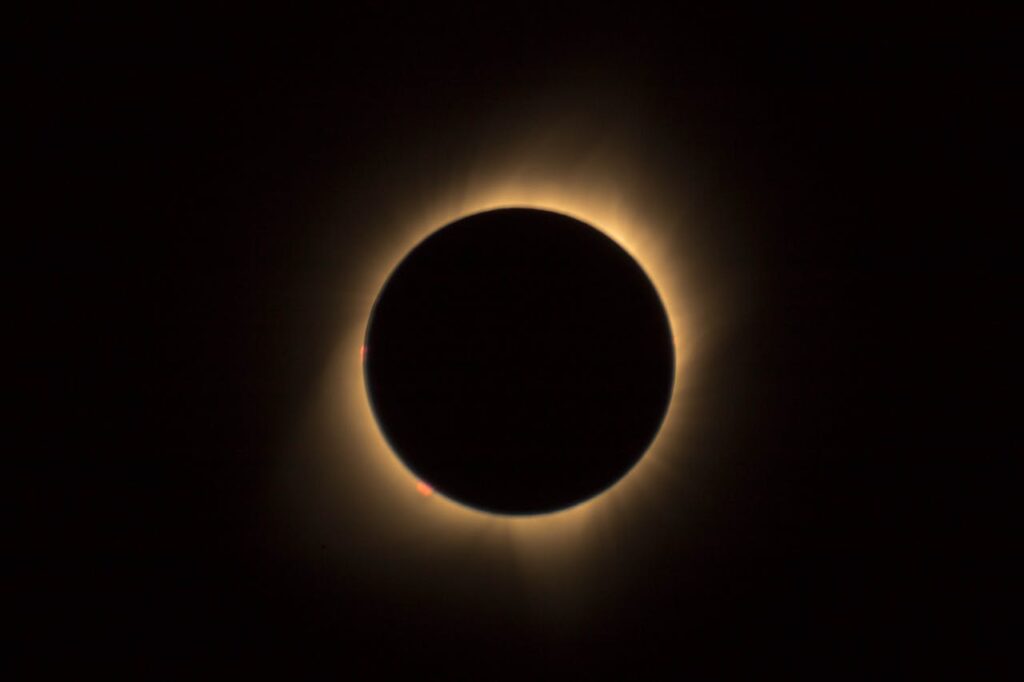
A solar eclipse happens when the Moon passes between Earth and the Sun, temporarily obscuring part or all of the Sun from our perspective.
Symbolically, the Sun and Moon represent very different parts of life. The Sun is associated with identity, vitality, purpose, confidence, and conscious direction. The Moon is connected with emotions, instincts, habits, memories, and private needs.
During a solar eclipse, the Moon covers the Sun. Spiritually, this has often been interpreted as a moment when feelings, instincts, or previously hidden concerns temporarily become stronger than the plans and identities we consciously maintain.
You may reconsider something you felt certain about. An ambition that once seemed important may lose its appeal. A feeling you kept dismissing may become impossible to overlook.
This symbolism is one reason eclipses are associated with change: the usual relationship between light and darkness is temporarily reversed.
August 12, 2026 Solar Eclipse and New Moon in Leo
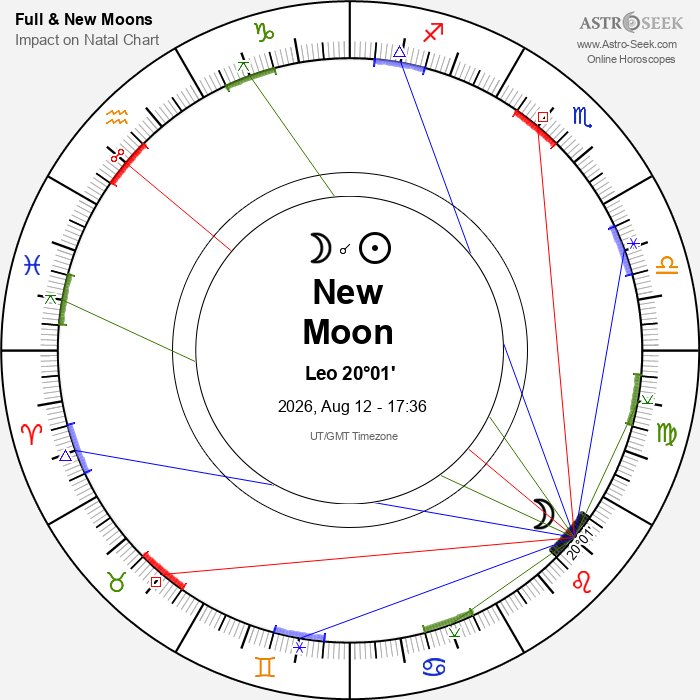
The August 12, 2026 solar eclipse occurs alongside the New Moon at 17:36, at 20°01′ Leo.
Leo is associated with the heart, creativity, confidence, romance, pleasure, visibility, leadership, and personal expression. This makes the upcoming eclipse especially connected with questions about where you want to be seen, what brings you genuine excitement, and whether you feel free to express who you are.
The Leo eclipse may bring greater focus to themes such as:
- confidence and self-worth
- creativity and personal projects
- romance and dating
- recognition and visibility
- leadership
- children
- hobbies and passions
- taking pride in your abilities
- expressing yourself more openly
For some people, this may coincide with a new creative direction or stronger desire to pursue something personally meaningful. For others, it may highlight situations where approval, pride, attention, or fear of being judged has influenced their choices.
Where 20° Leo falls in your natal chart can show which area of life receives the strongest emphasis.
What to Do During a Solar Eclipse
You don’t need to perform a ritual or make something happen during a solar eclipse. In fact, eclipse periods are often more interesting when you watch what happens without trying to direct every outcome. A plan may change, someone may make an unexpected decision, an opportunity may come from a direction you hadn’t considered, or something you were certain about may suddenly lose its importance.
Check where the eclipse falls in your birth chart, especially the house containing the eclipse degree. That house can tell you much more than a general eclipse reading. An eclipse in the 7th house may coincide with developments in relationships or commitments, while one in the 10th can bring career, reputation, or professional direction into focus.
Also, keep an eye on what develops after the eclipse. The eclipse date itself may be completely uneventful. A conversation, decision, ending, offer, meeting, or change connected with it can unfold later and make the significance of that period much clearer in hindsight.
For the August 12, 2026 solar eclipse at 20°01′ Leo, find 20° Leo in your natal chart and note which house it falls in. That is the area of life I would watch most closely in the weeks and months surrounding the eclipse.
More About Eclipses and Astrology
- Why You Shouldn’t Look At Eclipse: The Spiritual Dangers
- Why You Shouldn’t Manifest During a Solar or Lunar Eclipse
- Why the World’s Richest and Billionaires Secretly Use Astrology
- Blood Moon Lunar Eclipse: Spiritual Meaning, Symbolism, and Rituals