

Astrology transits can be surprisingly unpredictable in their intensity. Saturn might be 4° away from opposing your natal Sun, yet you’re already dealing with major life changes. Meanwhile, Mars could be almost exactly conjunct your Moon, and absolutely nothing happens. So why do some transits hit so hard, even several degrees before exactness?
Applying transits are generally the most powerful, as their influence builds toward the exact aspect. But the orb alone never tells the whole story. The planet involved, the type of aspect, retrograde motion, and the natal planets being activated all influence how strongly a transit affects you and how long its effects last.
Applying, Exact, and Separating Transits
An applying transit occurs as a planet moves closer to an exact aspect with a natal planet or point. This is generally the most powerful stage, as the transit is building toward its peak. For example, if your natal Moon is at 15° Pisces and transiting Mars is at 13° Pisces, Mars is applying to a conjunction with your Moon. At just 2° away, the transit is already active, and you may experience an argument, emotional reaction, or another event associated with Mars and the Moon before the conjunction becomes exact.
An exact transit occurs at 0° orb, as the transiting planet reaches the precise degree of the aspect. Many people expect the biggest event to happen on this day, but the event itself may have already taken place. For example, you could receive a breakup text as Mars approaches an exact opposition to your Venus. By the time Mars reaches 0° orb, you may already be processing the breakup or realizing that the relationship is truly over. The exact hit can mark the peak of a situation that began earlier.
A separating transit occurs as the planet moves away from the exact aspect. The strongest activity has usually passed, and you’re dealing with the consequences. After a breakup, for example, this could mean moving out, dividing belongings, or adjusting to life without your partner. With slower planets, these developments can continue for months after the exact transit.
Retrograde motion adds another dimension to transit timing. Planets can cross the same natal degree three times. The first direct pass may introduce a situation, the second retrograde pass brings it back, and the final direct pass can lead to a resolution. From my experience, the second contact, during retrograde motion, is usually the strongest. A situation that began during the first pass can become much more intense as the planet returns to the same degree.
Conjunctions, Squares, Oppositions, Trines, and Sextiles
The type of aspect determines how a transit operates.
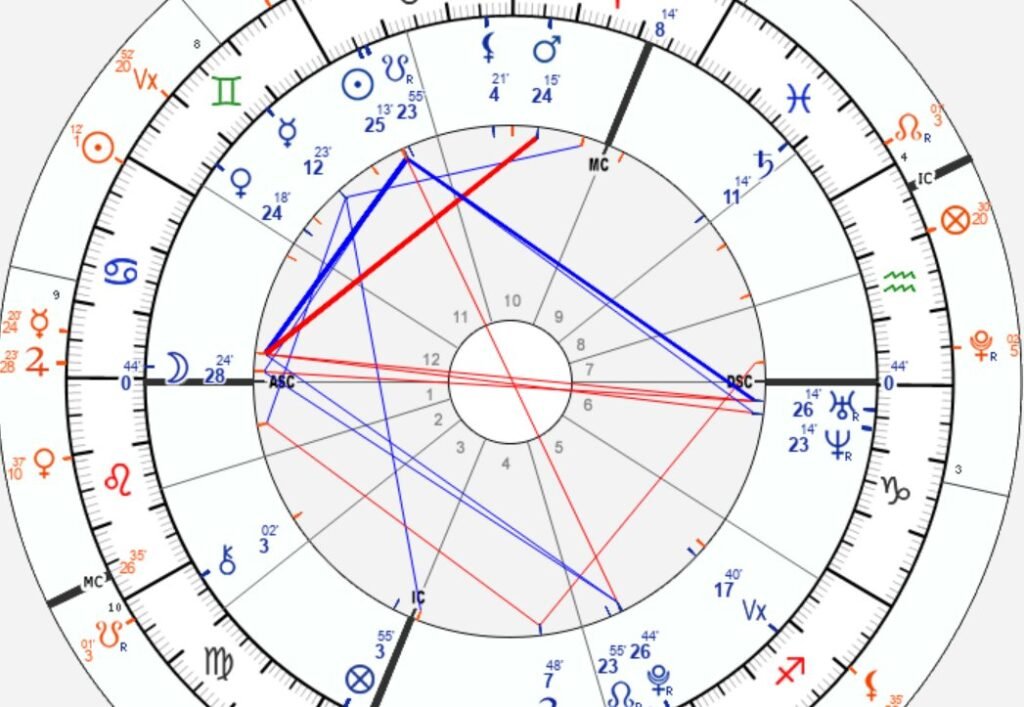
- Conjunction (0°): A neutral aspect that intensifies the planets involved. A Jupiter conjunction can expand opportunities, whereas Saturn conjunct the Moon may increase emotional responsibilities. The conjunction itself is neither positive nor negative. Its expression depends on the planets, houses, and natal chart.
- Opposition (180°): Usually operates through other people. A partner, colleague, friend, or even an opponent may become the person through whom the transit unfolds. Oppositions can bring relationship developments, confrontations, negotiations, or decisions involving two sides.
- Square (90°): Creates pressure that demands action. Obstacles, disagreements, delays, or competing responsibilities become harder to ignore. Squares are especially powerful for triggering concrete events.
- Trine (120°): Supports progress, cooperation, and opportunities with less resistance. A trine from Jupiter to natal Venus might coincide with a promising relationship or financial improvement.
- Sextile (60°): Opens possibilities that usually require your participation. An invitation, conversation, or new contact may lead somewhere valuable if you act on it.
Conjunctions, oppositions, and squares usually produce the most obvious developments. Trines and sextiles can be powerful too, particularly if they involve an important natal planet or angle.
Fast-Moving Planets: Mercury, Venus, and Mars
Transits from Mercury, Venus, and Mars develop quickly and generally last from a few days to a couple of weeks, depending on retrograde motion.
- Mercury activates communication, paperwork, travel arrangements, decisions, and conversations. A Mercury transit to natal Mercury might coincide with serious news, an important document, or a difficult discussion.
- Venus activates relationships, attraction, pleasure, finances, and social encounters. Venus conjunct the Descendant can coincide with meeting someone or spending more time with a partner.
- Mars brings action, ambition, competition, physical activity, and conflict. Mars square natal Mercury might trigger an argument, whereas Mars trine the Sun can provide motivation to finish a demanding project.
These transits are especially noticeable within a tight orb, usually around 1° to 2°. Mars can also act as a trigger for a longer Saturn or outer-planet transit already affecting your chart.
Jupiter and Saturn: Expansion and Responsibility
Jupiter and Saturn move more slowly, giving their transits time to develop.
Jupiter expands whatever it touches. A transit to Venus can coincide with romance, financial opportunities, or increased spending. Jupiter square the Moon might amplify emotional reactions or family responsibilities. Although Jupiter is a slower-moving planet, in my experience, its transits are most noticeable within a tight orb, usually around 1° to 2°. This is quite different from Saturn, whose influence can already be strong several degrees before the exact aspect.
Saturn brings responsibilities, limitations, commitments, and long-term decisions. Saturn conjunct the Midheaven might coincide with a promotion, a demanding new position, or a career change that requires serious planning.
Saturn transits can become noticeable at a 4° applying orb, especially if they contact the Sun, Moon, Ascendant, Descendant, IC, or Midheaven. The pressure usually increases as Saturn approaches the exact degree.
A retrograde Saturn transit may return you to an unresolved responsibility, relationship issue, or professional decision.

Uranus, Neptune, and Pluto: Long-Term Changes
Trans-Saturnian planets move slowly enough to influence the same natal point for months or years. Their transits can be noticeable within a 4° orb, particularly during the applying stage.
- Uranus brings sudden changes, independence, unexpected opportunities, and disruptions. Uranus opposing natal Venus might coincide with an unexpected attraction, a relationship breakup, or a partner demanding more freedom.
- Neptune affects dreams, ideals, imagination, uncertainty, and disillusionment. Neptune square Mercury can coincide with confusing information, unrealistic expectations, or difficulty making a clear decision.
- Pluto brings power struggles, endings, obsession, and major transformations. Pluto conjunct the Ascendant can coincide with profound changes in identity, appearance, relationships, and the way others respond to you.
The exact aspect can mark a turning point, but the applying stage may already have brought substantial changes. Retrograde passes can reopen situations that began months earlier.
How Wide Should a Transit Orb Be?
An orb is the distance between the transiting planet and the exact aspect to your natal chart.
Personally, I never use an orb wider than 5° for transits. For Saturn and the trans-Saturnian planets, a 4° applying orb can already be powerful, especially around the angles and personal planets.
My general approach is:
- Mercury, Venus, and Mars: Approximately 1° to 2° for the strongest influence.
- Jupiter: Around 2° to 3°, sometimes wider for major natal placements.
- Saturn: Up to 4° can be noticeable, with increasing intensity closer to exactness.
- Uranus, Neptune, and Pluto: Up to 4° for important natal contacts, particularly applying aspects.
- 5°: My absolute maximum, reserved for especially important transits.
A planet approaching exactness at 2° orb can have a stronger influence than a planet already separating at the same distance.
Why Some Transits Are More Powerful Than Others
A transit tends to be more powerful if it activates an important planet or point in your birth chart. The Sun, Moon, Mercury, Venus, Mars, Ascendant, Descendant, IC, and Midheaven are particularly sensitive. Transits to the four angles can coincide with major developments in relationships, home life, career, or personal direction.
Your natal aspects also play a role. For example, if you were born with a Moon-Saturn square, a transit to your Moon can activate natal Saturn at the same time. This means a single transit may affect several areas of your life.
From my experience, planets in the 1st house and your chart ruler are especially sensitive to transits, too. For example, someone with Saturn in Cancer in the 5th house may experience transiting Saturn conjunct their Ascendant differently from someone with Capricorn Rising. For Capricorn Rising, Saturn rules the entire chart, so its transits carry additional personal importance, even if natal Saturn is located in a less prominent house.
Multiple transits happening at once can also increase the intensity. Pluto squaring your Sun at the same time as Saturn opposes your Moon, for example, may coincide with major personal changes, family responsibilities, and difficult decisions unfolding together.

House Transits and House Cusps Are Important Too
A planet moving through a natal house activates the topics associated with that house, even without forming an exact aspect to a natal planet.
Saturn entering the seventh house may bring greater responsibilities in relationships. Jupiter entering the tenth can coincide with career opportunities, and Uranus entering the fourth may accompany changes in living arrangements.
If you know your exact time of birth and degrees of your houses, you might evel feel the transit, like Mars moving from your 5th to 6th house. From being playful, having adventure, enjoying life, in a day, you can focus on work.
Crossing a house cusp can mark the beginning of a new development, particularly at the four angular cusps: Ascendant, IC, Descendant, and Midheaven.
The Most Powerful Stage of a Transit
The applying phase is generally the most powerful, particularly as the transiting planet moves within 1° of an exact conjunction, square, or opposition to an important natal planet or angle.
Saturn, Uranus, Neptune, and Pluto can already be active around 4° from exactness, and retrograde motion may produce multiple powerful contacts.
Pay particular attention to oppositions involving the Descendant, Venus, Moon, or seventh-house ruler. These transits can unfold through partners and other people, sometimes through events initiated entirely by someone else.
The exact hit is an important date, but the biggest development can arrive beforehand. By the time a slow-moving planet reaches 0° orb, the situation may already be well underway.
More About Astrology Transits and Birth Charts
- How Applying and Separating Aspects Work in Astrology
- Minor Aspects in Astrology: Degrees, Effects, and Real-Life Examples
- Fated Synastry Aspects in Relationships That Leave a Mark
- How to Read a Yod in Astrology: The Finger of God or Just a Quirk?
- T-Square in Astrology: Three Planets, One Powerful Source of Tension
- Mystic Rectangle in Astrology: How This Pattern Works in a Chart