

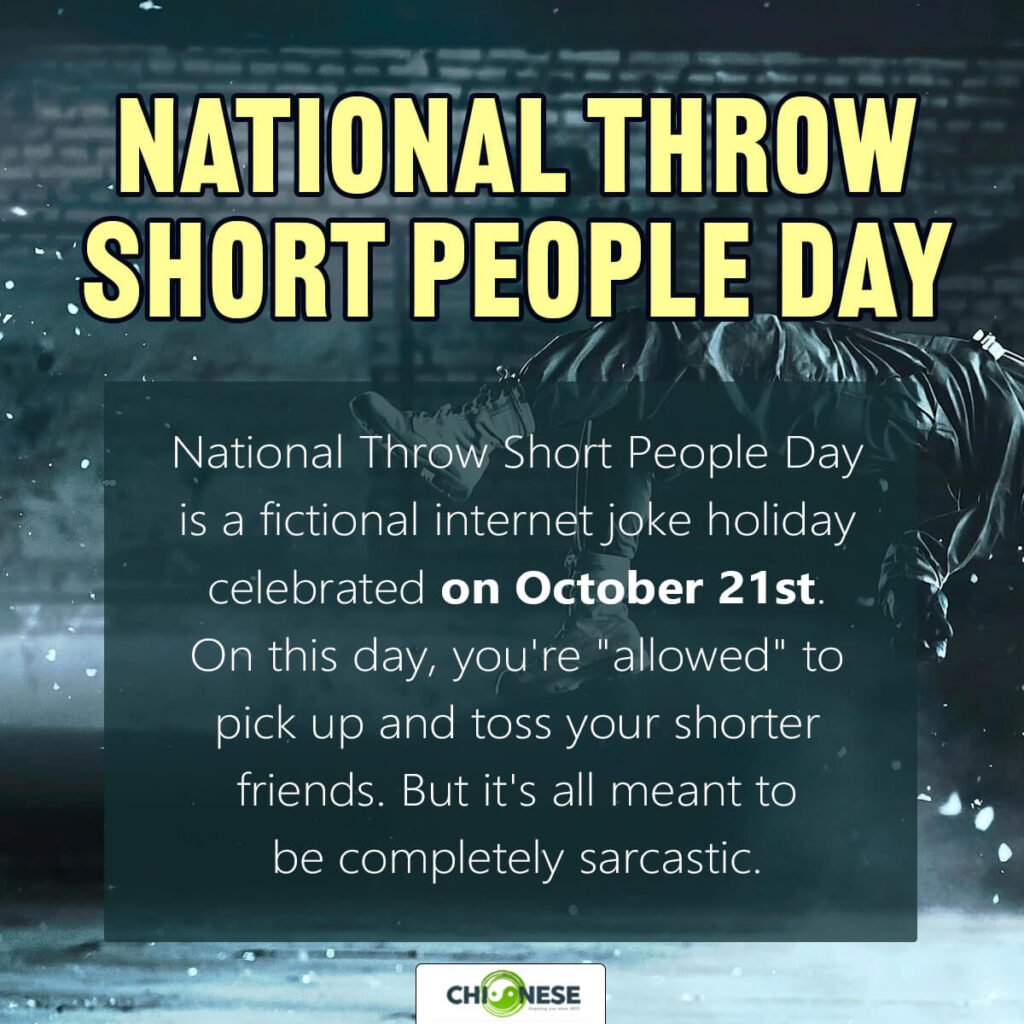
If you’ve spent any time online, you’ve probably seen the memes. Someone lifting their shorter friend. A badly edited photo of a person flying through the air. The caption proudly announcing “National Throw Short People Day.”
Before anyone panics, or worse, tests their upper body strength, it’s worth clearing something up. This isn’t a real holiday. No one is expected to be thrown. And no official calendar recognizes it.
What exists is an internet joke that resurfaces every year, usually in meme form.
Where This Came From
National Throw Short People Day is one of those things that only works on the internet. It didn’t start as a tradition, an event, or any kind of movement. It began as a joke that people kept repeating until it stuck.
Memes play up the idea of tall people casually tossing their shorter friends onto beds, couches, or straight into imaginary space. The humor comes from exaggeration and absurd visuals, not from anyone actually doing it.
There’s no real origin story, no first celebration, and no official beginning. People usually reference October 21st as the date, but even that comes from online repetition rather than history. Like most internet jokes, it spread simply because people found it funny and kept sharing it.
What “Short” Even Means Here
Part of the joke works because the definition of “short” is completely flexible.
Online, people usually throw out numbers like under 5’5″, but that changes depending on who’s talking. Someone tall might consider average height short. In other places, that same height might be completely normal.
The inconsistency is the point. The meme plays with how subjective height is and how often people joke about it anyway.
When People Post About It
Most memes reference October 21st as the unofficial date. There’s no reason behind it. It’s not tied to history, awareness campaigns, or cultural events.
It’s just a date people agreed on because the internet likes structure, even for jokes that aren’t serious.
What the Joke Is Supposed to Be
At its best, the joke stays light and mutual. Friends teasing each other. Couples poking fun at height differences. Short people leaning into the humor themselves.
It’s meant to stay verbal, visual, or clearly staged. Think memes, Photoshop, exaggerated poses, captions that make it obvious no one is actually being lifted against their will.
Where It Can Go Wrong
Not everyone enjoys jokes about their body. Height can be a sensitive topic, especially for people who have been teased about it for years.
Also, jokes that involve physical actions cross a line fast. Even playfully lifting someone can feel uncomfortable or unsafe if they didn’t agree to it.
What works between close friends doesn’t always work in public or online spaces where tone gets lost.
How People Usually Keep It Harmless
Most people who engage with the day do it online only. Sharing memes. Posting funny height comparison photos. Making jokes that stay clearly hypothetical.
Some turn it into a chance to hype up the “short kings” and “short queens” in their lives or poke fun at everyday struggles, like reaching high shelves or adjusting car seats.
National Throw Short People Day is an internet inside joke that stuck around longer than most. Nothing official. Nothing serious. Just another example of how online culture creates traditions out of thin air.
If it pops up in October, enjoy the memes if that’s your thing. Laugh if it lands. Scroll past if it doesn’t.
And leave the actual throwing to Photoshop, where nobody gets hurt and everyone keeps their feet on the ground.