

Earlier this year, my life was full in every possible way. I was fostering four newborn kittens, juggling work, raising my own kids, and running on almost no sleep. I was present everywhere and nowhere at the same time.
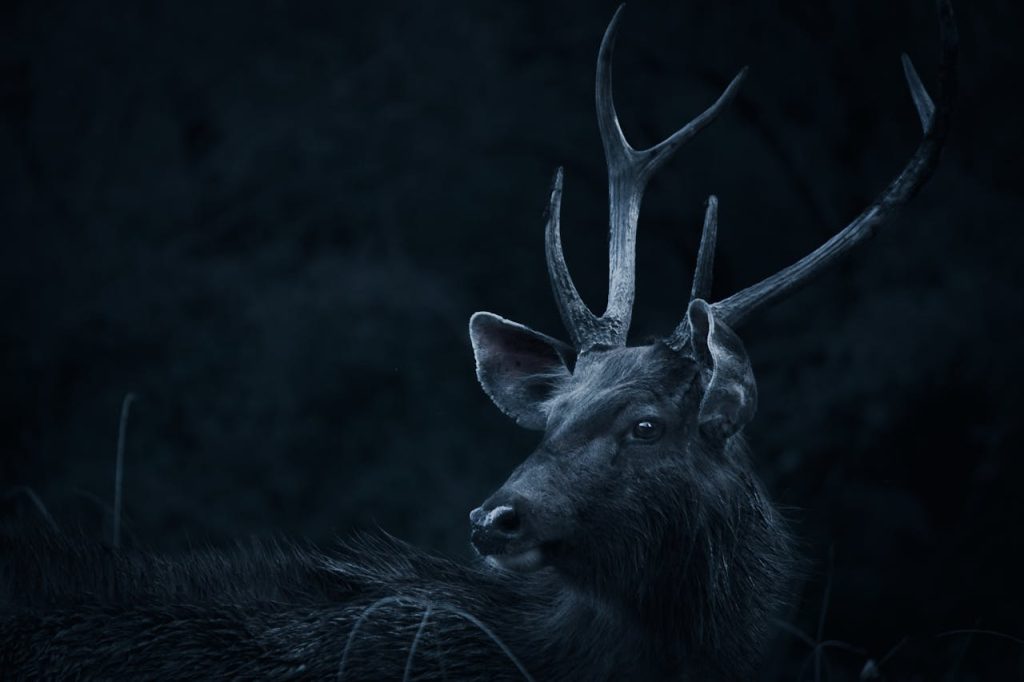
One night around 3 a.m., barefoot in the backyard, exhausted and half on autopilot, I noticed movement at the edge of the garden. A deer stood there. Completely still. Watching me.It didn’t run. It didn’t lower its head to graze. It just looked at me.
And then it happened again. Night after night. Same spot. Same stillness. The longer it went on, the stranger it felt. Not frightening. Just disorienting, like the roles were reversed and I was the one being observed.
Over time, the feeling shifted. During a period when I felt stretched thin and unseen, that deer became a presence that registered me. No words. No spectacle. Just recognition.
When a Deer Holds Your Gaze
A deer doesn’t hold eye contact casually. Its instincts are built around escape. In most situations, a deer runs first and thinks later. Standing still and looking directly at you goes against that pattern.
Spiritually, when a deer stares at you, it’s often linked to interruption. Something in your life has been pushed aside, delayed, or avoided, and this moment forces a pause. These encounters tend to happen when you’ve been moving on autopilot, powering through stress, or circling an issue without dealing with it directly.
The deer itself isn’t the point. It’s not a sign to freeze or study the animal. It’s a mirror for your situation. Something has been standing in front of you for a while, and you’ve been stepping around it instead of addressing it.
When the stare happens, everything else drops away. Your body stops. Your thoughts break their usual loop. For a few seconds, there’s no past to replay and no next step to plan. There’s only what’s right in front of you.
That pause is where the meaning sits. Spiritually, a deer staring at you points to clarity through stillness. Something in your life needs to be looked at directly, without rushing past it or dressing it up with explanations.
When You’ve Been Carrying Too Much

Sometimes the stare has nothing to do with insight or realization. It’s a response to pressure that’s already in the air.
Animals react to what’s actually present, not to what we tell ourselves we’re handling. When you’re carrying stress, grief, or emotional overload, it leaks into posture, movement, and pace. You might not register it consciously, but a wild animal does.
A deer stopping and holding its gaze can be a reaction to that state. Not as evaluation or threat. Simply recognition of tension.
That’s why the moment feels uncomfortable. The gaze reflects what you’ve been carrying without distraction or narrative. It interrupts the habit of pushing forward and forces a pause you didn’t plan to take.
The deer stands still. Your body slows. Breathing changes. The pressure eases slightly, even if nothing else does.
That shift isn’t symbolic. It’s physical. And for a moment, it tells you exactly how much you’ve been holding.
Protection Without Words
Across many traditions, deer are associated with angelic protection and guidance. Not because they step in or change outcomes, but because they appear when safety and reassurance are present, even if things feel heavy.
When a deer locks eyes with you, the moment often feels steady. Nothing rushes. Nothing reacts. The animal doesn’t advance and doesn’t flee. It stays long enough for the situation to settle.
That’s why these encounters are often understood as protective. The deer’s presence signals that, in that moment, you’re not in danger. You’re not being pushed forward. You’re allowed to stop.
The protection isn’t about action. It’s about stillness holding long enough for you to catch your breath.
After the Moment Passes
The deer leaves the same way it arrived. Without explanation. Without staying long enough to turn the moment into a story.
What stays with you isn’t meaning. It’s the interruption. The fact that something cut through your momentum and forced you to stop for a few seconds. No fixing. No answers handed over.
You don’t need to interpret the encounter or assign it a lesson. The only thing worth noting is what changed in you right after it happened. What you stopped ignoring. What slowed down. What you couldn’t unsee once you noticed it.
Encounters like this don’t point forward or backward. They bring you back into the present, briefly and unmistakably.
And sometimes, that pause is enough to shift how you continue on from there.