


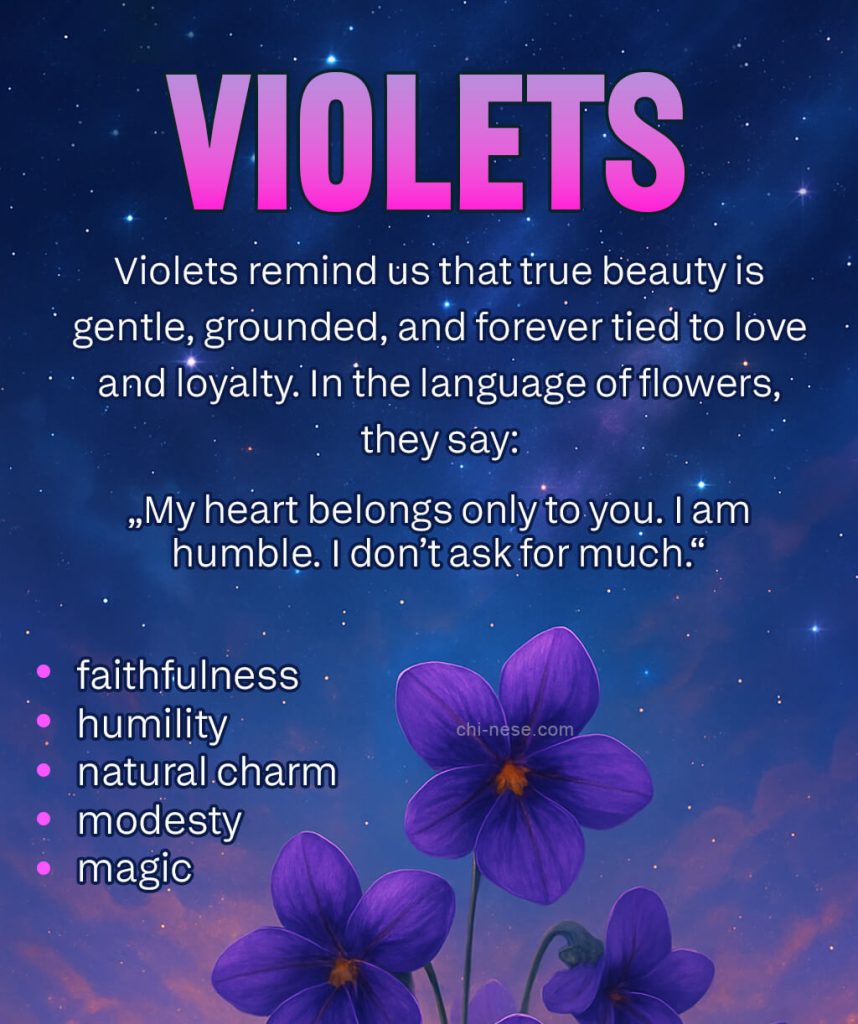
When I was a child, violets were my favorite flowers. I used to pick a heart-shaped leaf, lick it, and press it onto my finger so it stuck like a fake nail. It felt special every time. Even now, violets still carry that same sense of familiarity and personal meaning for me.
Violets do not dominate a space. They grow low to the ground, often half-hidden, easy to miss if you are not paying attention. That quality is exactly why they have carried symbolic meaning for centuries. Across cultures, violets have been associated with devotion, restraint, memory, and inner values rather than display.
What Violets Symbolize Spiritually
Spiritually, violets are associated with modesty, humility, and a form of attraction that does not rely on visibility or excess. Their symbolism is rooted in how they grow and present themselves. Violets stay close to the ground, bloom in small clusters, and rarely dominate their surroundings. Because of that, they have long been connected to inner values rather than outward display. They represent the idea that meaning and beauty can exist without needing to be noticed immediately.
In the traditional language of flowers, violets express devotion, loyalty, and emotional sincerity. They are often linked to messages such as “my heart belongs to you” or “I am faithful without asking for recognition.” This symbolism places violets in the category of long-term bonds rather than brief attraction. They reflect attachment built on consistency, trust, and emotional presence instead of intensity or performance.
Violets have also been used symbolically as protective plants. In folk traditions, they appeared in charms and personal objects meant to support emotional balance, especially during periods of vulnerability, grief, or withdrawal. Their association with protection is not about defense through force, but about maintaining emotional boundaries and stability.
It is no coincidence that the goddess Aphrodite was connected with violets in mythology. In that context, violets symbolized love rooted in closeness, attachment, and emotional depth, rather than spectacle. They represented affection that grows through presence and continuity, not display.
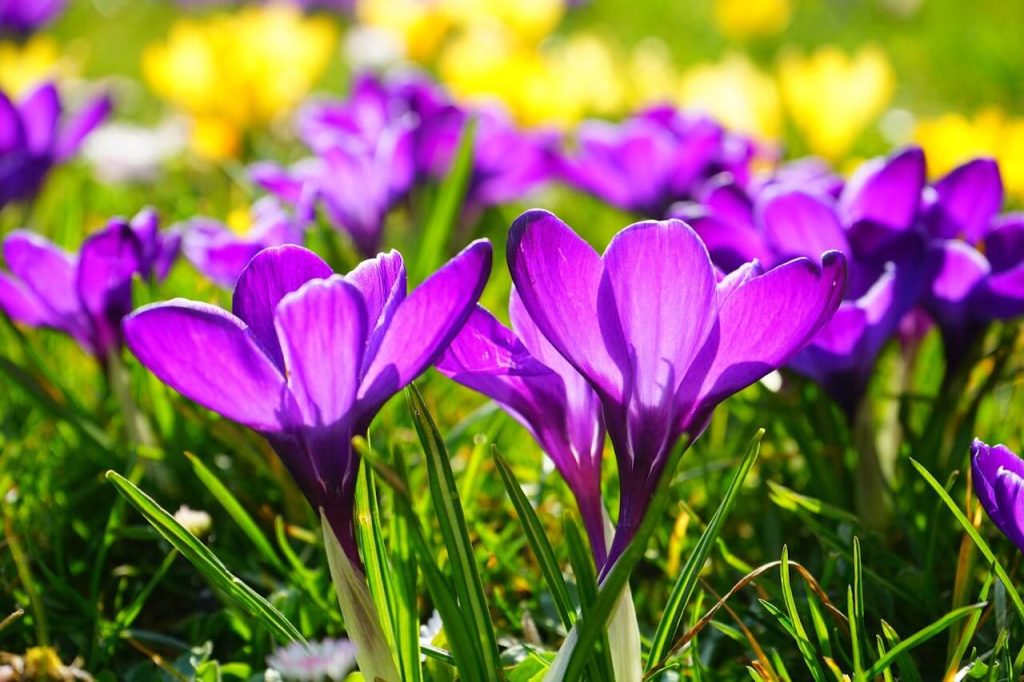
The Symbolic Use of Violets
Violets were valued not only for their appearance but also for their perceived influence. In older traditions, violet perfume was prized, and their scent was believed to support emotional balance.
In folk magic and symbolic practice, violets were used for:
- Love rituals, often focused on loyalty and mutual affection
- Protection, by placing dried violets near entrances or personal objects
- Emotional support, especially during grief or periods of withdrawal
- Wish-focused practices, where violet petals were paired with written intentions
Color associations were also used symbolically, depending on intention, including red for love, white for protection, green for health, and mixed colors for general well-being.
Astrologically, violets were linked to Aphrodite and Venus, making them especially associated with themes of attraction, harmony, and emotional connection.
Violets in the Kitchen and Home

Violets are edible and have long been used in food, herbal traditions, and home practices.
- Violet syrup is made by steeping fresh blossoms in hot water, then cooking the infusion with sugar. It has traditionally been used for coughs and is also enjoyed in drinks and desserts.
- Candied violets are created by coating blossoms in egg white, dusting them with sugar, and allowing them to dry. They are often used as decorative sweets.
- Violet sugar is made by layering petals with sugar in a sealed jar until the fragrance transfers.
- Fresh leaves and blossoms can be added to salads, soups, desserts, or fruit bowls.
A violet-infused bath, often combined with rose petals or other flowers, has also been used as a form of personal care and relaxation.
A Flower of Everyday Enchantment
Violets grow low to the ground and are easy to miss unless you are paying attention. They do not dominate space or draw the eye from a distance. Their impact comes from proximity rather than visibility, which is why they have long been associated with modesty, restraint, and emotional sincerity.
For me, violets are tied to small personal rituals. Stirring violet syrup into tea. Pressing a flower into a book. Noticing a patch of purple in the grass after winter fades. Each moment carries a sense of continuity.
Every time I see them, I remember being a child with a violet leaf stuck to my finger, convinced it was something special. Even now, they hold that same meaning. A reminder that small things can stay with us for a long time.