

Roses have always carried contradiction. They are associated with romance, fragrance, and devotion, yet they fade quickly, sometimes within days. That contrast is central to their symbolism. A rose is not about permanence. It represents intensity, desire, honesty, and beauty experienced fully in the moment. This may be why roses have remained so powerful for so long. They remind us that love is often precious precisely because it does not last forever in the same form.
The Mythological Rose
In Greek mythology, the rose is sacred to Aphrodite, the goddess of beauty and desire. According to legend, when she emerged from the sea foam, a rose bush with white blossoms grew nearby. As she stepped onto land, petals fell around her, and roses bloomed wherever she walked.
The rose became associated with Aphrodite not only because of its beauty, but because it reflects her dual nature. She governs tenderness and attraction, devotion and longing. Love, in her realm, is never simple or passive, and neither is the rose.
The flower also appears in poetry and myth through the image of the nightingale, whose song was said to be an offering to the rose. In this symbolism, the rose garden represents life itself, a place where abundance and barrenness alternate. Bloom and decay exist together.
Symbolism of Roses
Roses symbolize love, passion, beauty, and desire, but also secrecy, mortality, and the tension between pleasure and pain. Their petals express affection, openness, and vulnerability, while their thorns represent jealousy, loss, and emotional wounds.
Because roses bloom fully and then wither quickly, they have long been associated with the fleeting nature of youth, romance, and physical life. Spiritually, they also reflect cycles of renewal, where endings make room for new beginnings.
Roses traditionally symbolize:
- Love and passion, often intense and consuming rather than calm or enduring
- Honesty and secrecy, reflected in the phrase sub rosa, meaning confidential or unspoken
- Life and death, as roses appear in celebrations of love as well as in mourning rituals
- Beauty and pain, united in a single form
Wild roses, such as the dog rose, carry additional meaning. They are linked to independence, natural resilience, and healing. Their fruit, rose hips, shifts the symbolism from intensity to nourishment and recovery.
Colors and Their Messages
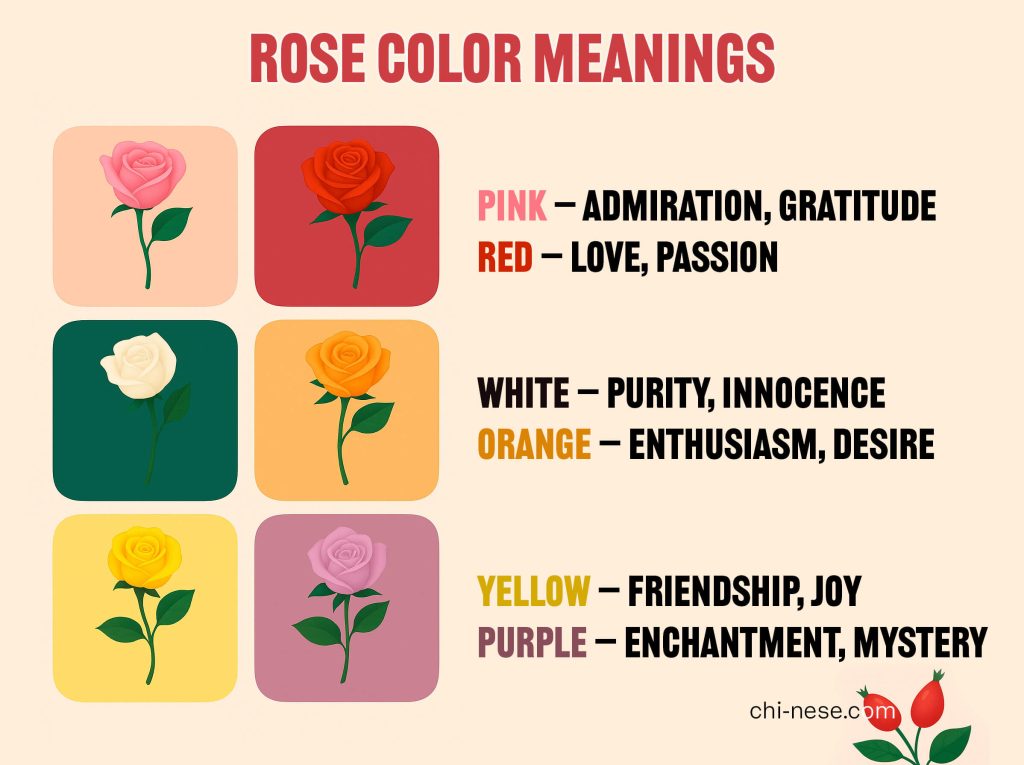
In flower symbolism, roses communicate clearly through color:
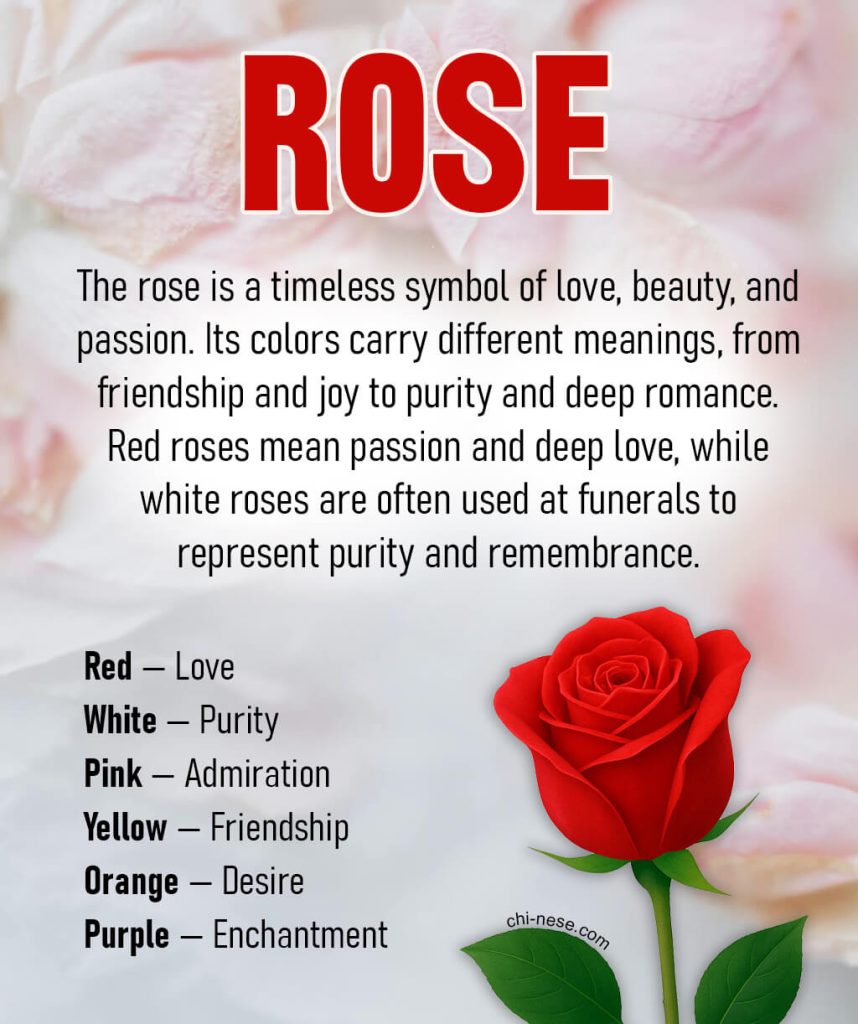
- Red roses symbolize passion, desire, and physical love.
- White roses represent purity, innocence, and spiritual sincerity.
- Yellow roses can indicate jealousy in older traditions, but are also linked to friendship and joy.
- Pink roses convey affection, care, and emotional warmth.
- Purple roses symbolize attraction combined with restraint and fascination.
- Rosebuds represent beginnings, confidentiality, and feelings not yet expressed.
Giving a rose has always been intentional. The flower itself carries meaning before a single word is spoken.
How Many Roses Mean What
The number of roses in a bouquet adds another layer of symbolism:
- 1 rose expresses desire or singular devotion
- 2 roses represent mutual affection
- 3 roses traditionally mean “I love you”
- 6 roses suggest attraction or infatuation
- 9 roses symbolize lasting commitment
- 10 roses express admiration and completeness
- 12 roses represent devotion and partnership
- 13 roses indicate a secret admirer
- 15 roses convey apology
- 24 roses symbolize constant devotion
- 50 roses represent unconditional love
Roses in Life Events
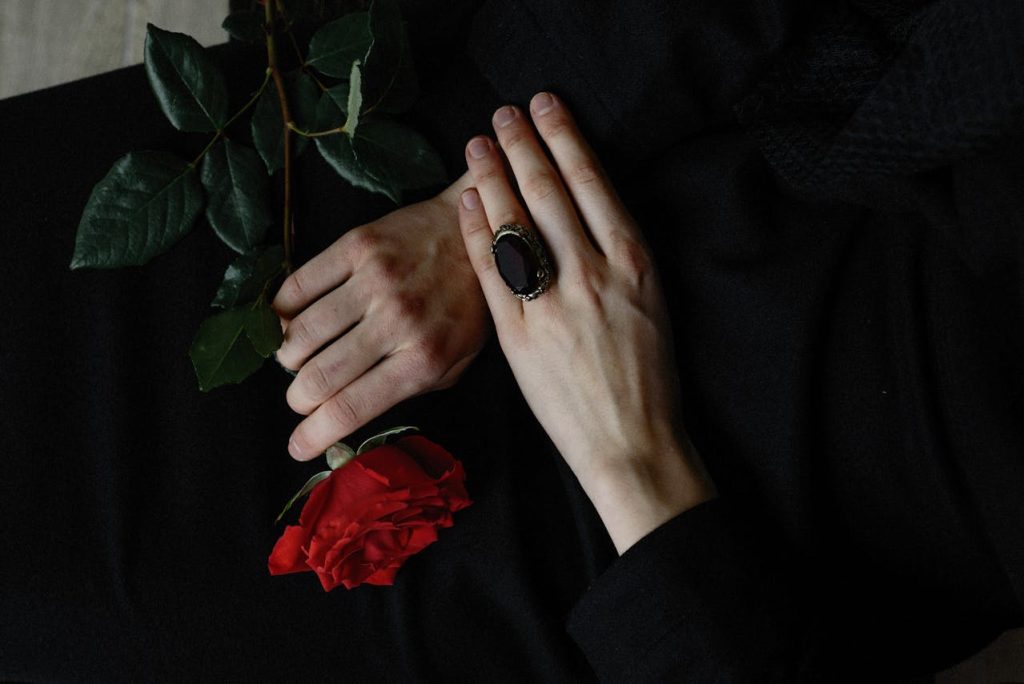
Roses are used at both beginnings and endings.
At weddings, white or pink roses symbolize commitment and shared life. At funerals, roses mark remembrance and farewell. A single rose placed on a coffin often represents enduring love beyond death.
Red roses express deep respect and attachment. White roses are associated with peace and innocence. Pink roses soften grief and express gratitude.
Because roses bloom and fade so quickly, they naturally became symbols of mortality. They honor not only loss, but the fullness of a life lived.
The Fragile Beauty of Roses
Beyond romance, the rose has also been seen as a cosmic symbol, representing truth, balance, and the center of existence. It is associated with Eros, embodying desire that is both divine and human.
At the same time, the rose carries the painful side of love. Its thorns remind us that intimacy leaves marks, and that attachment carries risk. Love, in rose symbolism, is never without consequence.
Roses in the Language of the Heart
A rose has never been a casual symbol. It is used when emotion needs to be expressed without explanation, whether that emotion is desire, devotion, regret, or farewell. Roses appear at beginnings and endings because they carry meaning without offering reassurance.
They do not represent stable or guaranteed love. They represent exposure. To give a rose is to acknowledge feeling without knowing how it will be received.
This is why roses endure as symbols. They do not soften love or promise permanence. They reflect love as it is: intense, honest, and subject to change.