

Czech has some wonderfully specific words that take an entire sentence to explain in English. There’s a word for the reddish sky at sunset, a funny name for a cushion you sit on, and even a ridiculously long adjective describing something extremely round.
As a native Czech speaker, I’ve always loved how expressive and playful my language can be. These seven Czech words are among my favorites, and although English has similar expressions for several of them, their exact meanings and personalities are difficult to capture in translation.
1. Nejkulaťoulinkatější
Meaning: The most adorably round.
Try saying nejkulaťoulinkatější three times without stumbling! Even native Czech speakers can struggle with this tongue-twister, which is much more likely to come up as a language challenge than in an ordinary conversation.
The word comes from kulatý, meaning round, and uses affectionate diminutive forms to exaggerate the roundness of something. Imagine a tiny, perfectly round pebble or a little ball so round and cute that simply calling it round seems inadequate.
English can express the same idea with several words, but Czech manages to squeeze it into one very long adjective.
2. Červánky

Meaning: The reddish or pinkish glow in the sky around sunrise or sunset.
Červánky is one of my favorite Czech words because it describes something almost everyone has seen, yet English has no equally precise everyday equivalent.
Imagine looking out of your window in the evening and seeing the clouds turn pink, orange, and deep red. In Czech, you can simply say Na obloze jsou červánky, meaning the sky has that beautiful reddish glow.
The word is related to červený, the Czech adjective for red. Unlike the English word afterglow, červánky can also describe the colorful sky around sunrise.
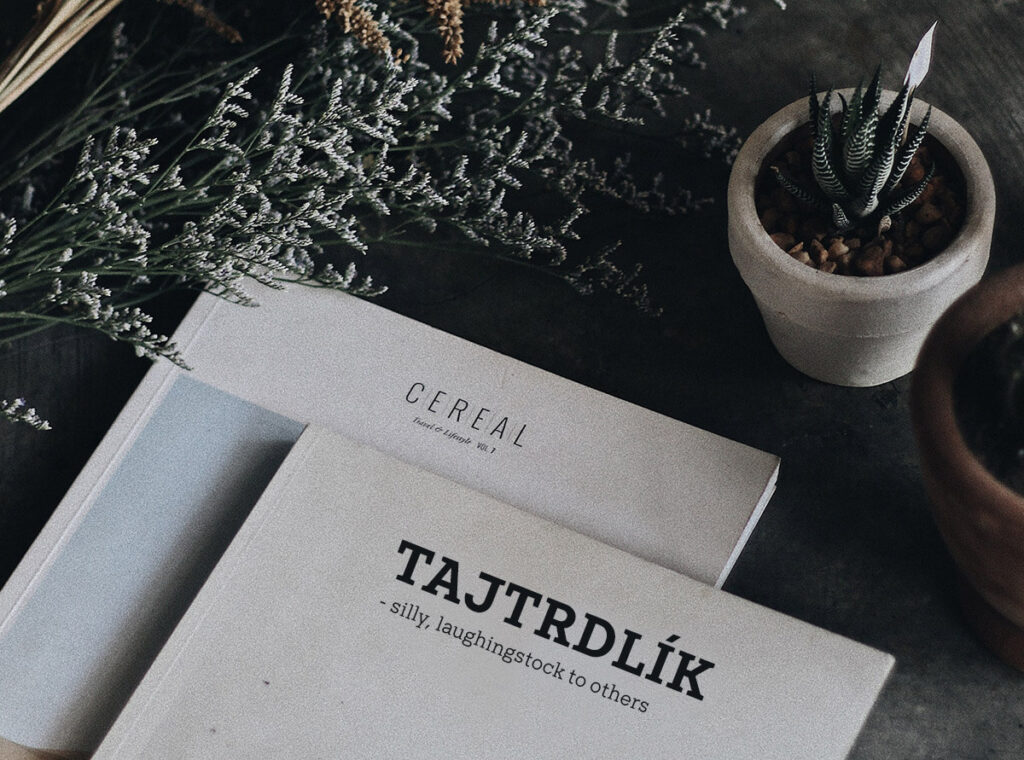
3. Tajtrdlík
Meaning: A silly person, little fool, or lovable goofball.
A tajtrdlík is someone who does silly things, acts clumsily, or makes everyone laugh through their ridiculous behavior. Imagine a child dancing around the kitchen with a saucepan on their head or a friend trying to impress everyone and accidentally tripping over their own feet.
You might say Ty jsi ale tajtrdlík!, which translates roughly to “You’re such a goofball!”
It’s a playful, teasing word that can sound affectionate between friends or family members. Tone is important, though, because calling someone a tajtrdlík during an argument could easily sound insulting.
4. Pošušňáníčko
Meaning: A delicious treat or something especially enjoyable.
Imagine tasting your grandmother’s homemade cake, taking another bite, and saying To je ale pošušňáníčko! You’re telling everyone how wonderfully delicious it is, with a little extra enthusiasm.
Pošušňáníčko is a playful, affectionate expression associated with pleasure and enjoyment, particularly delicious food. It has a cheerful, slightly old-fashioned sound that makes it especially charming.
You could translate it as what a treat or absolutely delicious, but neither quite captures its playful Czech character.
Speaking of delicious food, here’s a look at Czech cuisine and its reputation.
5. Udělátko
Meaning: A little gadget, contraption, or thingamajig.
You’ve probably needed an udělátko without knowing it had a Czech name. It’s that little tool in your kitchen drawer that does something useful, but you have absolutely no idea what it’s called.
The word comes from udělat, meaning to do or to make, with the ending -átko giving it the sense of a small device.
For example, you could say Podej mi to udělátko, meaning “Pass me that little gadget.” The other person will hopefully understand which object you want.
English has thingamajig and whatchamacallit, but udělátko is especially suited to an object designed to perform a particular task.
6. Podprdelník
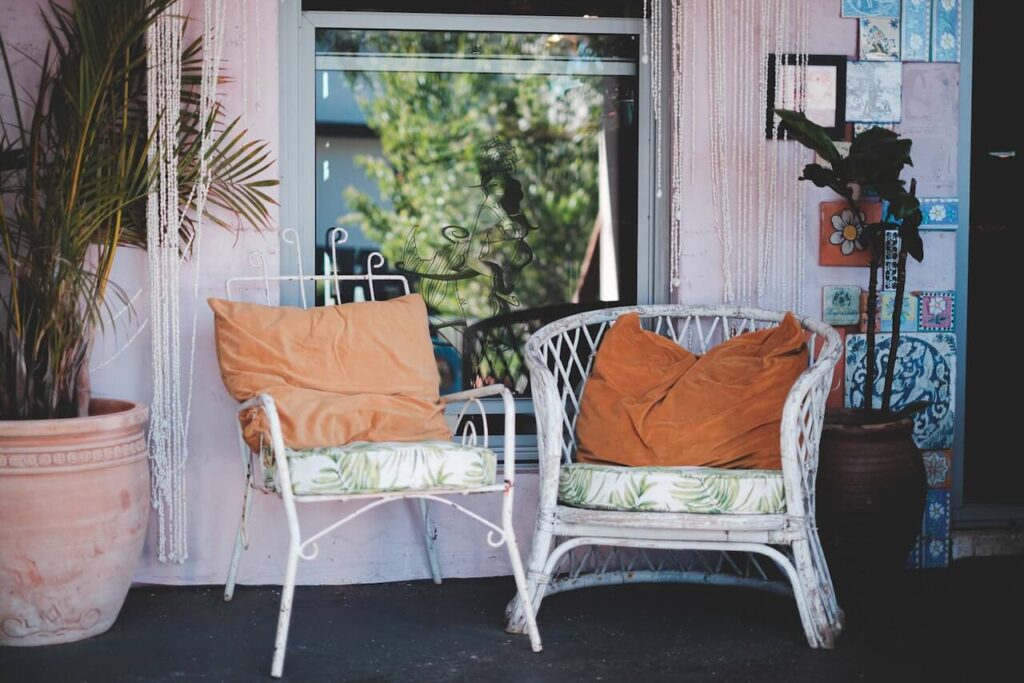
Meaning: A cushion or pad placed underneath your bottom.
This is probably the funniest word on the list, especially once you learn how it’s formed.
Pod means under, and prdel is a colloquial Czech word for butt or arse. Put them together, and you get podprdelník, an informal name for something you sit on to make a hard or cold surface more comfortable.
Imagine sitting outside on a wooden bench in autumn. Instead of sitting directly on the cold wood, you bring a small cushion or foam pad. That’s your podprdelník.
The word is humorous and a little vulgar because of prdel, so it’s better suited to casual conversations than formal situations.
7. Těhulka
Meaning: An affectionate, informal word for a pregnant woman.
The ordinary Czech word for a pregnant woman is těhotná žena, but těhulka sounds much more affectionate and familiar.
You might hear it among friends, family members, or expectant mothers discussing pregnancy. For example, Naše těhulka už se těší na miminko means roughly “Our mom-to-be is already excited about the baby.”
The closest English equivalent is mom-to-be, although těhulka has a distinctly Czech diminutive ending that gives it a playful, affectionate quality.
It’s best used with someone you know well, since a pregnant woman may prefer a more neutral description.
More About the Czech Language and Culture
Czech has plenty of other expressions that can surprise English speakers, especially its colorful idioms and traditional sayings. If you enjoyed these words, you might also like these articles:
- 7 Czech Proverbs With Meanings and Images
- How to Say Hello in Czech: 11 Common Greetings (With Meanings)
- Czech Swear Words and Insults: Meanings From a Native Speaker