


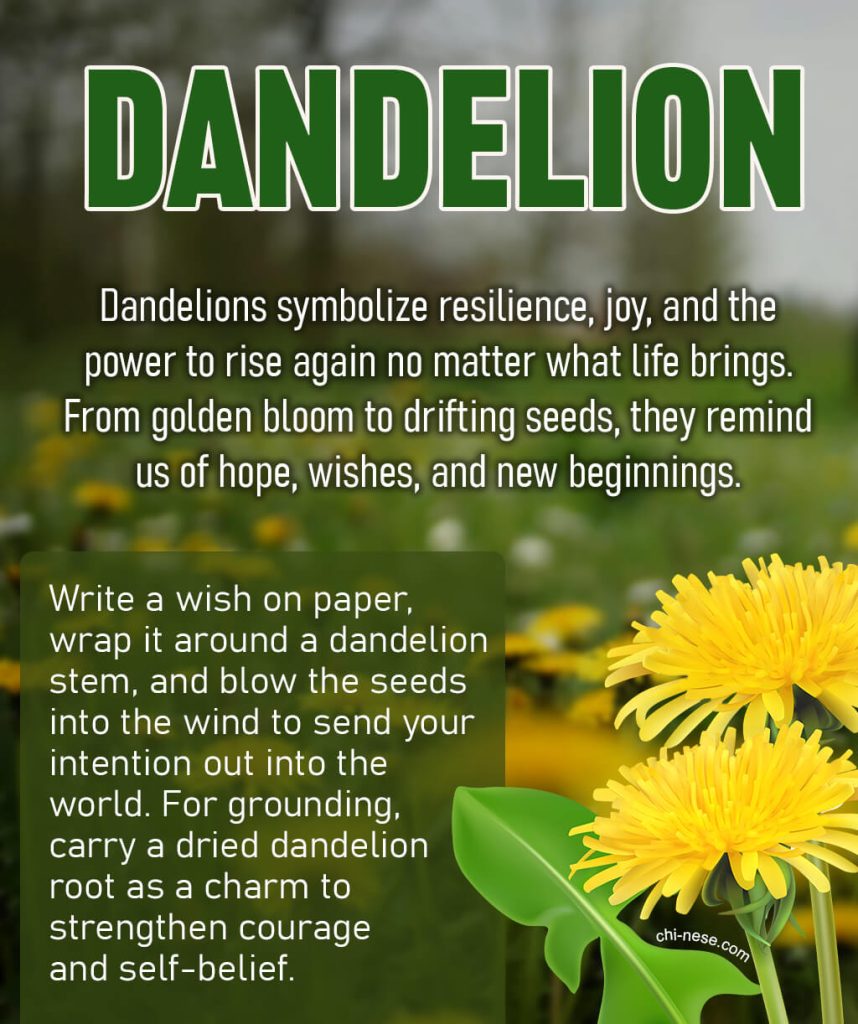
Dandelions rarely get much respect. Most people see them as weeds pushing through lawns and garden beds, something to remove rather than admire. Yet even their many names tell a different story: lion’s tooth, priest’s crown, witch’s milk, little lantern, creamy one. A surprising number of names for a plant most people try to pull out by the roots. That alone hints that dandelions carry more meaning than they are usually given credit for.
A Sun on Earth
The dandelion is closely associated with solar energy. When its yellow flowers open across grass and fields, they resemble small suns scattered across the ground. Their color and circular form directly mirror the sun, which is why dandelions have long been connected to vitality, renewal, and the return of light after winter.
Children are often drawn to dandelions instinctively. Making crowns, holding them under the chin, blowing the seeds. These simple interactions reflect the plant’s long-standing association with playfulness, growth, and uncomplicated joy. In symbolic terms, dandelions represent optimism, confidence, and the ability to recover after disruption.
Spiritually, dandelions are linked to expansion and resilience. They grow where other plants struggle, survive repeated cutting, and return again and again. This persistence made them symbols of endurance and self-trust in many folk traditions.
They are also an important source of nectar for bees and butterflies early in the season, reinforcing the idea that what is unwanted in one context may still be essential in another.
Myth and Magic
Dandelions appear in several older ritual systems. Among Celtic traditions, dried dandelion roots were burned as incense during Samhain, the festival marking the transition between the living world and the dead. The smoke was believed to support mental focus, inner cleansing, and reflection.
Dandelions are also associated with Hecate, a figure connected to thresholds, magic, and choice. Because of this link, traditional practices involving dandelions were sometimes performed at crossroads or during lunar transitions.
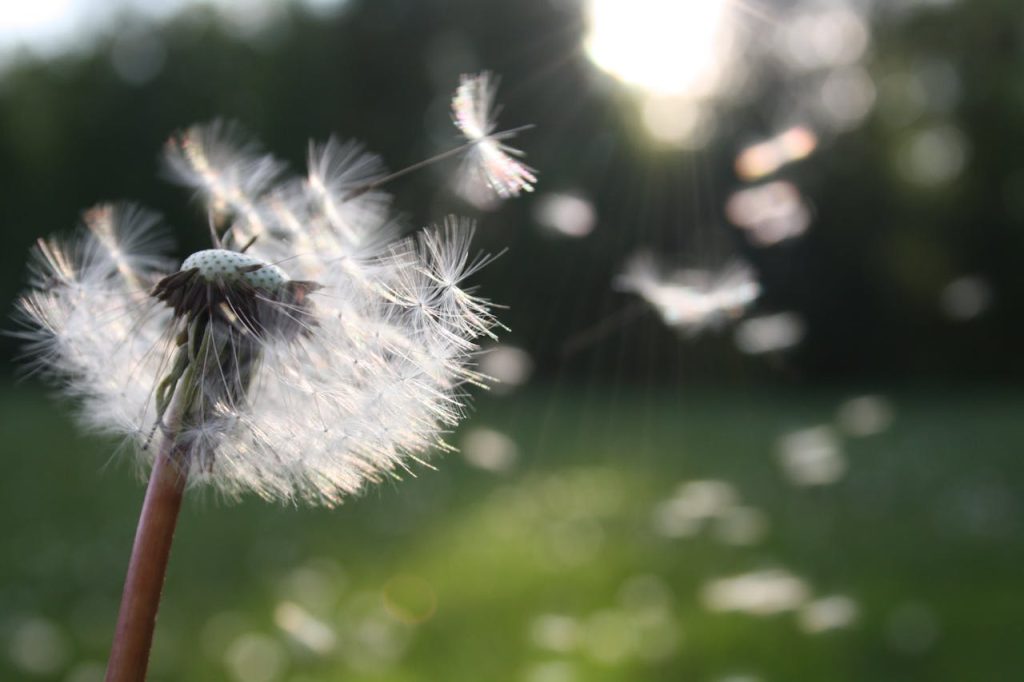
One folk ritual involves making a wish under the full moon and blowing dandelion seeds toward the four directions. The act symbolized releasing intention and allowing change to move outward rather than forcing an outcome.
Spiritual Symbolism of the Dandelion
Beyond myth, dandelions carry a layered symbolic meaning:
- Resilience and strength, shown by their ability to grow in poor conditions
- Wishes and hope, reflected in the universal act of blowing the seed head
- Mental clarity, as dandelion teas were traditionally used before divination
- Transformation, moving from bright flower to seed dispersal and renewal
The dandelion’s full cycle mirrors change itself. It blooms, releases, disappears, and returns. Few plants display transformation so visibly.
Dandelions in Everyday Practice
Dandelions were widely used in folk traditions, not only symbolically but practically.
Common uses included:
- carrying dandelion root as a charm for confidence and persistence
- burning dried roots to release emotional tension
- drinking dandelion leaf tea before reflective or divinatory work
- observing the flower’s behavior as a natural indicator of weather shifts
Dandelions close their flowers before rain and fold inward later in the day, acting as natural markers of environmental rhythm.
And then there is the simple act of blowing the seeds, one of the most widespread personal rituals found across cultures. It is direct, physical, and symbolic all at once.
The Soul of the “Weed”
What makes the dandelion remarkable is how it challenges ideas of value. It heals, feeds, supports ecosystems, and returns repeatedly despite removal. Spiritually, it represents the ability to grow anywhere and to turn endings into beginnings without resistance.
The next time you see a lawn full of dandelions, it may help to look again. Not as weeds, but as symbols of persistence, renewal, and quiet strength that does not require permission to exist.