

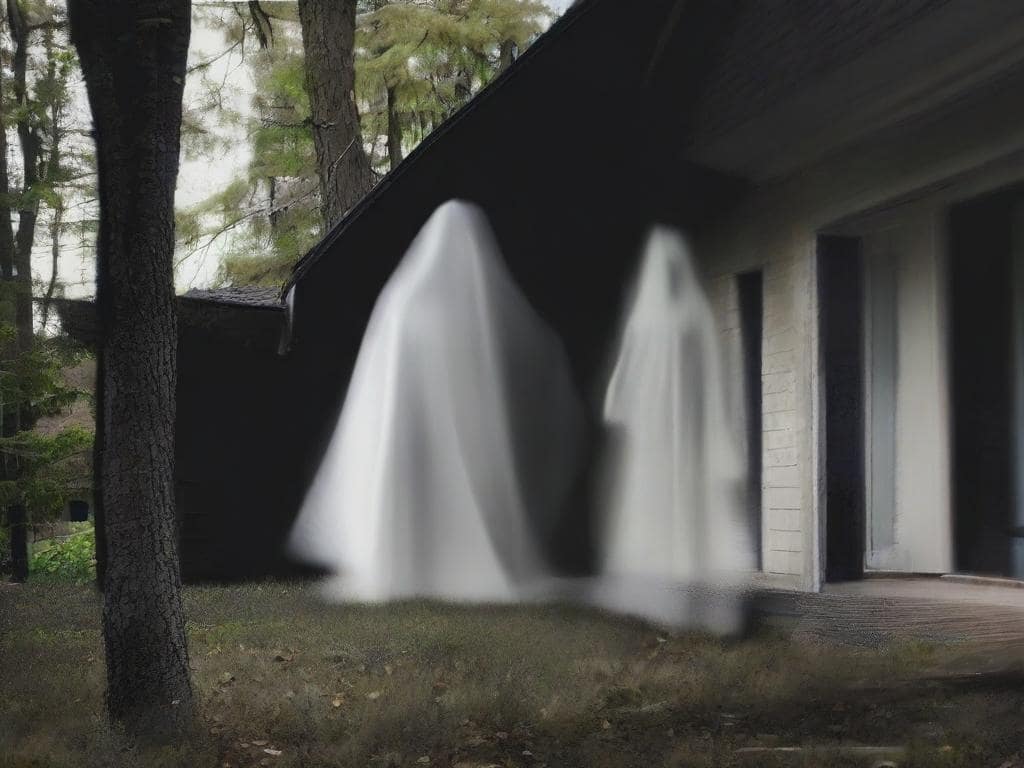
Ghost stories are full of details that raise uncomfortable questions. A ghost knows its name. It recognizes people. It repeats the same actions over and over. It reacts to certain places, objects, or dates.
That leads to a surprisingly logical question: if ghosts remember who they were, where does that memory live? And if memory exists, does that mean ghosts somehow have DNA, or at least something similar to it?
The idea sounds impossible, yes. DNA is biological. It exists in cells, in bodies, in physical matter. Ghosts, by definition, don’t have bodies. So how could DNA apply to them at all?
The answer depends on how you understand memory, identity, and what people mean when they talk about spirits.
Do Ghosts and Spirits Have DNA?
From a biological standpoint, ghosts do not have DNA. DNA is part of a living organism. It requires cells, reproduction, and physical structure. A ghost, spirit, or apparition does not meet any of those conditions.
However, most people asking this question aren’t actually talking about genetics. They’re trying to understand something else: how a ghost can retain personal identity without a body or brain.
In spiritual and paranormal belief systems, ghosts are often described as residual energy or consciousness that remains after physical death. In this view, what survives isn’t flesh or biology, but an imprint. A record of experiences, emotions, and identity.
That’s where the confusion starts. When people ask whether ghosts have DNA, they usually aren’t talking about genetics in a literal sense. They’re using the word “DNA” as a metaphor for identity. In that context, you could say a ghost carries the “DNA” of the person it once was, meaning their recognizable traits, memories, or emotional imprint, not an actual genetic code.
Memory Without a Body
Ghosts don’t store memories the way humans do. There is no brain. No neurons. No physical memory center. Instead, memory is thought of as imprinted energy.
This could explain why many ghost stories follow the same patterns. Spirits appear in specific locations. They repeat certain actions. They are associated with particular objects, smells, sounds, or times of day.
A former soldier appears on a battlefield.
A child spirit stays near a bedroom.
A deceased family member is tied to a house rather than a person.
The idea is not that the ghost is actively thinking, but that a strong emotional or traumatic experience left a lasting imprint.
The Idea of “Energy Memory”
Some people describe this as a form of energy memory, sometimes casually called “energy DNA.” Not because it behaves like genetic code, but because it seems to preserve identity traits.
In this framework, a ghost may retain:
- awareness of familiar people
- attachment to meaningful locations
- emotional reactions tied to past events
This doesn’t mean the ghost is evolving, learning, or creating new memories. It’s more like a loop, a playback, or a stored impression.
That’s also why many reports describe ghosts as limited or repetitive rather than fully interactive.
Why Ghosts Don’t Create New DNA
Even within spiritual belief systems, ghosts are not considered capable of reproduction or biological influence. They don’t pass on traits. They don’t create descendants. They don’t alter genetic lines. Their identity, if it persists at all, is static.
That’s a key difference between living consciousness and whatever form of awareness people attribute to spirits. A living person changes, adapts, and grows. A ghost, as commonly described, does not.
Why the Question Still Matters
Despite the lack of physical evidence, the question keeps coming back for a reason.
People aren’t really asking whether ghosts have DNA. They’re asking whether identity survives death. Whether memory, personality, or awareness can exist without a body.
For many, the idea that something of us remains is comforting. Not necessarily as a ghost haunting a hallway, but as continuity. The thought that experiences, relationships, and identity aren’t erased instantly.
Ghosts may not have DNA in any literal sense. But the stories humans tell about them suggest something deeper: a refusal to believe that memory and meaning disappear completely.
Whether that’s spiritual truth, psychological coping, or cultural myth depends on who you ask. But the question itself reveals how deeply people care about what survives after the body is gone.