


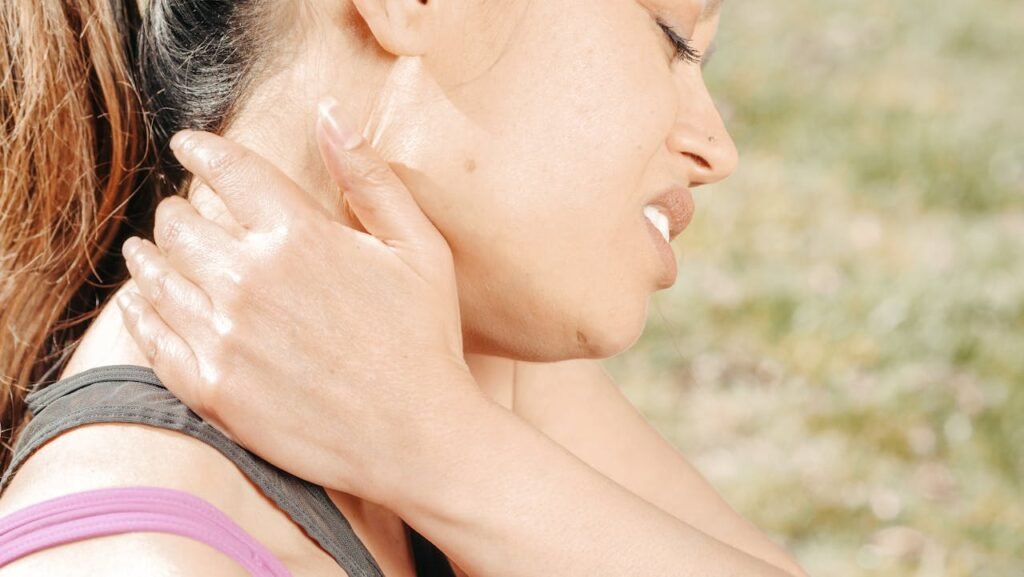
Throughout the day, the body adjusts constantly without drawing attention to it. Posture shifts to match whatever is in front of you. The neck carries more than it should. Shoulders stay slightly raised instead of settling into a neutral position. The jaw remains engaged longer than necessary. Breathing becomes more limited, staying higher in the chest.
These adjustments overlap. A slight forward tilt of the head combines with a small lift in the shoulders. The ribcage moves less, so the breath adapts around that restriction. The body holds this pattern for hours before it fully registers, often becoming clear only when something shifts, or when you actively bring attention to it, whether through stretching, stopping, or using an at-home body massager to reach areas that have been holding.
How the Load Builds Throughout the Day
These changes develop through repetition. Time spent in the same position, sustained focus, and continuous transitions between tasks all contribute to a steady level of physical load.
Small habits reinforce it. Looking down at a screen instead of bringing it to eye level. Resting more weight into one side of the body while sitting. Keeping the hands in front of the body for extended periods pulls the shoulders slightly forward and holds them there. The neck compensates, the upper back stays active, and that pattern carries through the rest of the day.
As the day moves forward, this load accumulates. The body continues to function, so the tension stays in place, carried from one moment into the next.
It builds gradually and stays consistent. That consistency makes it easy to move through the day while the overall load increases in the background.
When activity slows, the physical state becomes easier to notice. The body still holds what it carried earlier, and without a direct release, that tension stays present.
Where Tension Actually Settles
The body concentrates tension in specific areas that are already involved in maintaining position.
The base of the skull is one of the first places it collects. As the head shifts slightly forward during the day, the muscles in that area stay engaged longer than they should. It creates a dense, compressed feeling that becomes clear once attention moves there.
The tops of the shoulders carry another portion of it. Not through large movements, but through constant low-level activation. They stay prepared instead of resting, which over time creates a sense of weight rather than sharp tightness.
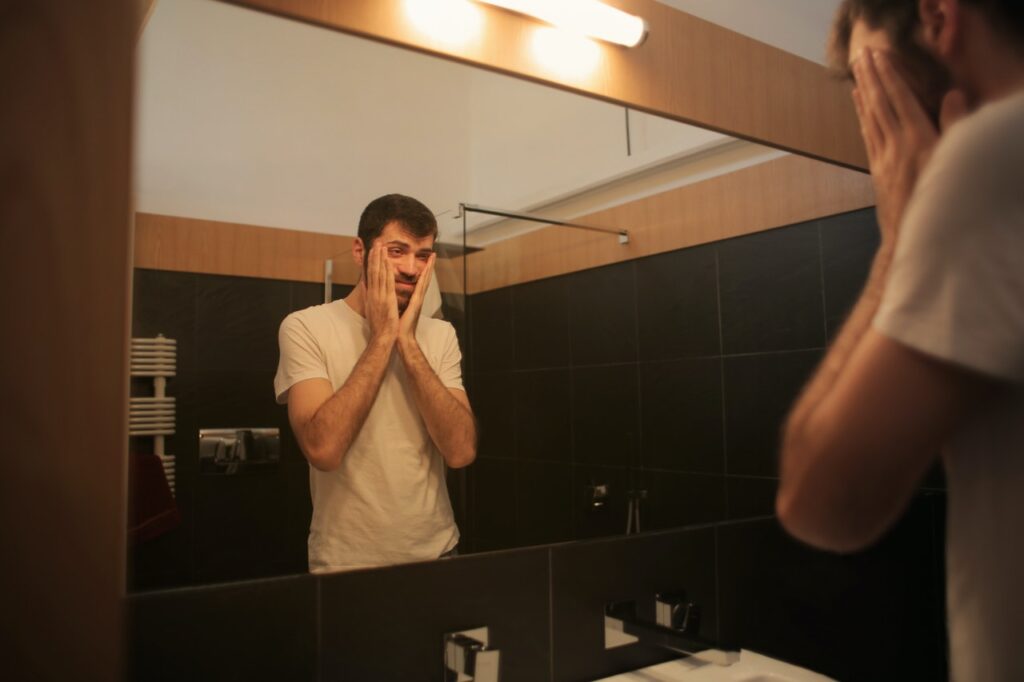
The jaw holds tension that continues past the moment that triggered it. It stays engaged even when there’s no immediate reason for it. The tongue presses upward, the teeth hover close together, and the muscles remain active longer than needed.
These areas follow the same pattern throughout the day. As long as the pattern continues, they continue to carry the load.
How Ongoing Focus Changes the Body
Mental load starts to show in the body long before it’s fully noticed. During focused work, breathing becomes smaller and more contained. It continues, but with less range, staying higher in the chest. After some time, the neck begins to feel denser, carrying more tension than it did earlier.
That shift in breathing follows attention. When focus narrows, movement narrows with it. The body reduces variation and settles into a more fixed pattern.
Switching between tasks keeps that tension in place. The shoulders stay slightly lifted, holding a level of engagement that carries from one task into the next.
There is a continuous physical state that runs alongside mental activity. Emails, messages, browsing, and conversations all happen within the same posture.
Unfinished conversations tend to linger in the jaw. It stays engaged throughout the day, with the tongue pressing upward and the muscles around the mouth holding more than they need to. These patterns repeat often enough that they become familiar.
Later, even in rest, certain areas remain active. The body lies down, and parts of it continue to hold tension as if the day is still ongoing.
Interrupting the Pattern Instead of Waiting It Out
Working directly with those areas changes how they respond. Pressure held in one place long enough allows the muscle to release instead of continuing the same pattern.
For some, using an at-home body massager makes that easier. It reaches areas that stay active throughout the day and applies consistent pressure without needing constant adjustment.
As that release happens, the shift is immediate. The breath drops lower. The jaw separates. The shoulders settle further than they have all day. The body holds itself with less effort, and that difference is easy to feel.