

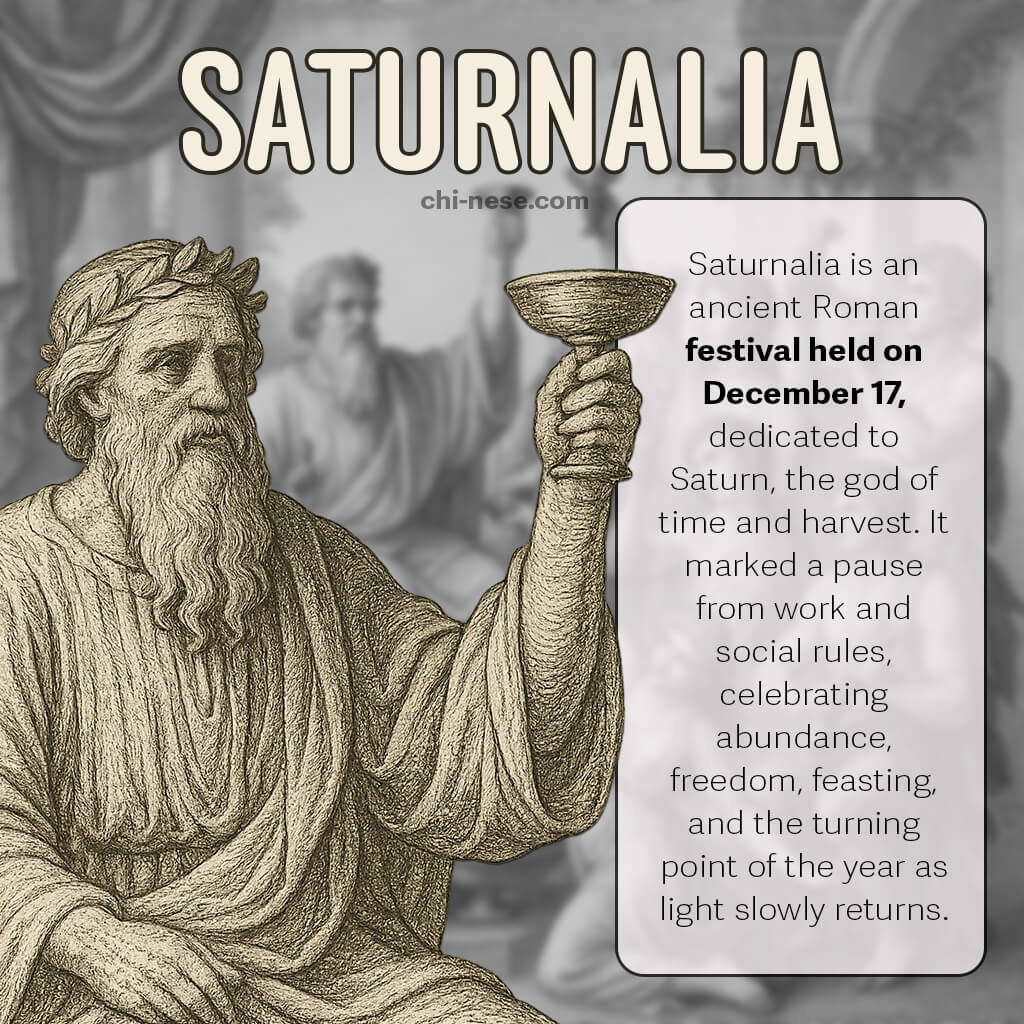
Saturnalia was one of the most important festivals in ancient Rome. It was held in honor of Saturn, the god of agriculture, time, and cycles, and it marked a pause in the normal order of life. During Saturnalia, rules softened, social roles shifted, and everyday pressure was temporarily set aside. People ate, laughed, exchanged gifts, and allowed themselves a rare break from rigid structure.
Although Saturnalia comes from ancient Rome, its themes are timeless. Rest, reversal, generosity, and shared joy still matter. Today, many people celebrate Saturnalia as a seasonal ritual focused on release, gratitude, and balance.
For me, Saturn is not an abstract concept. With strong Saturn placements in my birth chart, it has been the planet that shaped my life the most. I have lived its cycles, felt its delays, its tests, and its timing in very real ways. Over the years, I learned to respect it rather than fight it.
Because of that, Saturnalia is not just an old Roman festival to me. It carries the same emotional weight as Christmas, maybe even more. I have been marking it almost every December for the past 11 or 12 years, in my own way, as a moment to stop, breathe, release pressure, and acknowledge time itself.
The History and Roots of Saturnalia
The roots of Saturnalia reach further back than Rome itself. Many historians believe the festival was influenced by earlier Greek celebrations known as Kronia, which also honored a god of time and cycles. In Rome, Saturnalia opened with a ritual offering at the Temple of Saturn in the Forum, after which the city shifted into collective celebration. Public banquets were held, games filled the streets, and normal routines gave way to indulgence and laughter.
One of the more curious traditions was the selection of a Saturnalia ruler, sometimes called the “mock king.” This figure led the festivities and had the authority to give playful commands to others. These tasks were often silly, awkward, or deliberately absurd, reinforcing the idea that hierarchy itself was temporarily being turned upside down.
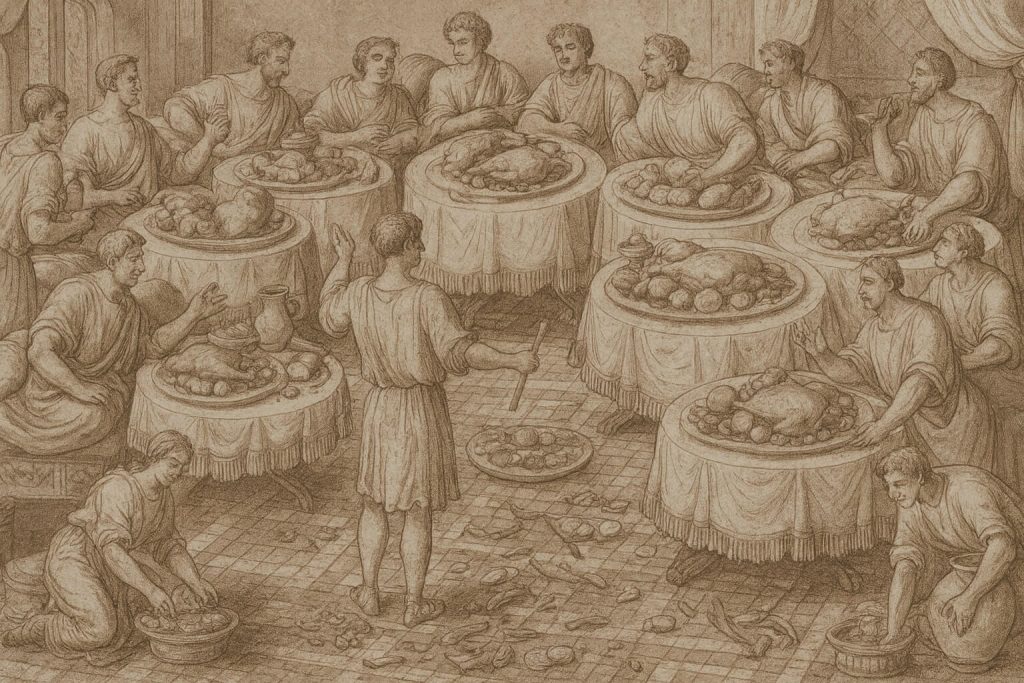
A defining element of Saturnalia was the suspension of social boundaries. For a short time, enslaved people were granted freedoms that were otherwise unthinkable. They joined the feasts as equals, spoke openly, and in many households were served by their owners. This reversal was symbolic rather than permanent, but it carried meaning. It echoed Saturn’s association with a mythical age when no one ruled over another and scarcity did not exist. During the festival, public business stopped, courts closed, and schools fell silent.
The mood of Saturnalia pushed beyond polite celebration. Music, dancing, drinking, and gambling were widely accepted, and satire flourished. Plays and performances openly mocked authority, and behavior that would normally bring punishment or shame was tolerated. For several days, the rigid structure of Roman society loosened, allowing people of different classes to mingle freely. Wealth, status, and power mattered less than participation in the shared release.
Saturnalia created a space where order stepped aside without collapsing entirely. The temporary freedom did not erase Rome’s hierarchy, but it reminded everyone that it was not absolute. For a brief moment each year, restraint gave way to excess, rules bent, and the idea of equality was allowed to breathe.
Saturnalia is celebrated on December 17 and originally lasted one day, though over time it expanded into a week-long celebration. It took place close to the winter solstice, when daylight is at its shortest and the return of the sun begins.
How to Celebrate Saturnalia Today
You do not need to recreate ancient Rome to celebrate Saturnalia. The spirit of the festival translates easily into modern life.
Choose Your Saturnalia Period
Traditionally, Saturnalia was celebrated on December 17, but many modern celebrations stretch from December 17 to the winter solstice or even several days after.
You can celebrate:
- One evening
- A full weekend
- Several days around the solstice
Pause Work and Structure Where Possible
Saturnalia is about stepping outside routine and easing the pressure of everyday structure. If you can, take time away from work or commitments, even if only for a day. Reduce your schedule, avoid obligations that are not truly necessary, and allow plans to remain flexible instead of rigid.
In 2025, Saturnalia falls on a Wednesday, which makes it easier to pause mid-week if your schedule allows. Even a partial break from routine can honor the spirit of the day.
Create a Saturnalia Atmosphere
Ancient Romans decorated with greenery and candles. You can do the same.

Ideas:
- Candles or oil lamps
- Evergreen branches
- Pine, laurel, or ivy
- Warm lighting instead of bright overhead lights
Candles were especially important because they symbolized returning light.
Share a Feast
Food was central to Saturnalia. The meals were rich, social, and unrushed. You do not need elaborate dishes. What matters is sharing and enjoyment.
Ideas:
- Bread, cheese, olives
- Fruit, nuts, dates
- Wine or spiced drinks
- Warm stews or roasted vegetables
Eat together if possible. Talk. Laugh. Stay at the table longer than usual.
Exchange Small Gifts
Saturnalia gifts were modest. They were meant to amuse or symbolize goodwill.

Modern Saturnalia gift ideas:
- Candles
- Handwritten notes
- Small figurines
- Books
- Sweets
- Something humorous
Avoid expensive gifts. The meaning lies in thoughtfulness, not value.
Reverse the Usual Roles (Symbolically)
You can honor the role-reversal aspect of Saturnalia in simple ways.
Examples:
- Let someone else lead who usually does not
- Do chores for someone who usually does them
- Set aside hierarchy in conversation
- Encourage open expression without judgment
Allow Play and Humor
Saturnalia welcomed jokes, games, and lighthearted behavior. People played games, told stories, made music, danced, and allowed humor to flow more freely than usual, including playful teasing that stayed within respectful limits. The point was not chaos, but release. Control softened, structure relaxed, and enjoyment took its place for a short time.
Reflect on Cycles and Time
Saturn is linked to time and cycles. Saturnalia is a moment to notice endings and beginnings.
- Acknowledge what has ended this year
- Recognize what is returning
- Sit quietly by candlelight
- Write down what you are ready to release
This is not goal-setting. It’s just acknowledgment.
Celebrating Saturnalia Alone
Saturnalia does not require a group. It can be celebrated alone with just as much meaning. Light candles, prepare a comforting meal, and give yourself a genuine break from productivity. Read, rest, or write if it feels natural, and take time to acknowledge everything the year has carried with it. Solitude can fully hold the spirit of Saturnalia.
If the weather allows, I usually take warm tea and good food outside and walk without a destination. I think about time, age, and the cycles of life. I express gratitude, release what needs to leave, and let my body move freely. Sometimes that means dancing, jumping, or even shouting into the open air. Saturnalia, for me, is about giving those impulses space.
Why We Should Celebrate Saturnalia
Saturnalia is not only about honoring Saturn as a god of time and cycles. It is about permission. Permission to slow down, to step away from obligations, to eat what you enjoy, to laugh, rest, and stop taking everything so seriously for a moment.
Modern life leaves little room for pauses. Productivity, performance, and structure rule most days. Saturnalia exists as a reminder that even structure needs relief. Without rest, pressure accumulates. And when pressure builds for too long, something eventually gives. Saturnalia offers a conscious pause before that happens.