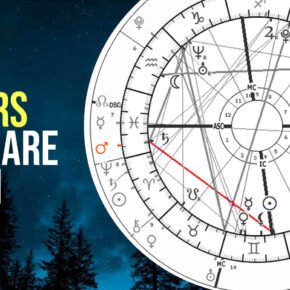


As someone who has spent decades reading charts by hand, tracking transits in ephemerides, calculating solar arcs, and clicking around in Solar Fire, I haven’t exactly rushed to embrace the modern wave of astrology apps.
My long-time staples have been Solar Fire and Astro-Seek. They’re detailed, dependable, and rooted in traditional astrological technique. Still, after hearing Co–Star mentioned endlessly by younger clients, friends, and every corner of TikTok, curiosity got the better of me.
Could an app really replicate what I do with a chart, a notepad, and a cup of tea? With a mix of skepticism and genuine interest, I downloaded Co–Star and entered my birth data.
First Impressions
I’ll give credit where it’s due: the app looks gorgeous. The interface is sleek, minimalist, and easy to navigate. I immediately understood why people enjoy using it. It has a social-media-meets-astrology feel that offers quick, digestible snippets. It’s playful and engaging.
But once I moved past the aesthetics and dug into the chart, the daily updates, and the interpretations, certain things stood out.
To put it plainly, Co–Star’s accuracy depends on what you expect from it. If your definition of accurate is “technically correct planetary positions,” it does fine. If your definition is “nuanced astrological interpretation,” it falls short.
The Chart: Right Data, Limited Depth
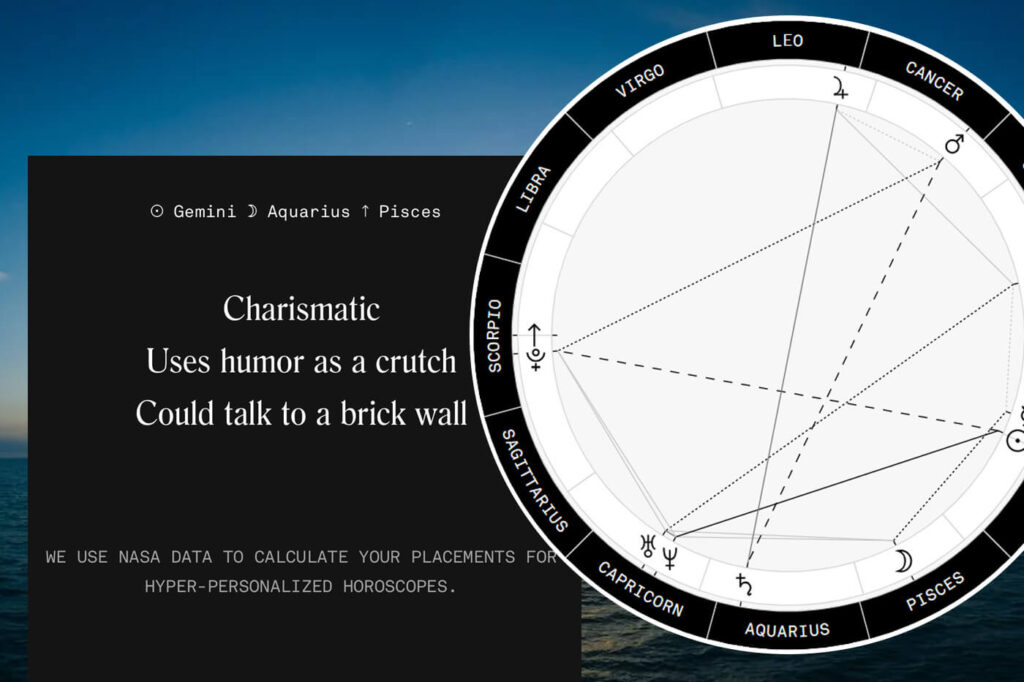
Co–Star does use real astronomical data. It asks for a correct birth time and calculates a real chart. The planets sit in their proper signs, and the house placements line up.
However, I immediately noticed small discrepancies. My Ascendant, for example, appeared at 10° Pisces in Co–Star, while every reliable program, Solar Fire, Astro-Seek, and Astro-Charts, places it at 12°. Two degrees may seem minor, but in astrology, this can alter chart rulerships, planetary strength, and even timing techniques. And if you’re a detail-oriented astrologer like I am, you study degrees closely and you know exactly when planets make aspects to your Ascendant (a two-degree difference can shift transits by days or even weeks).
The structural chart is mostly accurate. The interpretation is where things unravel.
Interpretation: A Keyword Generator Wearing Astrology Clothing
Co–Star’s descriptions read as though an algorithm pulls from a bowl of keywords and assembles them into personality blurbs and daily messages. Traditional astrology doesn’t operate that way. Nuance comes from:
- planetary relationships
- dignity and debility
- rulership chains
- transits interacting with natal placements
- progressions and time-lords
- context
Co–Star skips most of this and instead leans into punchy, cryptic one-liners. One of mine read: “Your skin feels too tight today.”
Interesting, yes. Astrological? Not exactly. And it never explains what transit or technique supposedly produced the message.
Real astrology tells you why something is happening. Co–Star rarely reveals its reasoning, which creates the illusion of depth without offering the substance behind it.
I can’t help noticing a pattern similar to magazine horoscopes or YouTube tarot readings, messages so broad that, out of ten thousand people, at least one will relate and assume it was precise.
This lack of context makes the interpretations feel disconnected from the lived reality of a chart. Something essential gets lost.

Tone and Delivery
Another issue I noticed is tone. Co–Star aims for edgy and modern, but some messages land as unnecessarily harsh or puzzling. Astrology should help people understand themselves more clearly. It shouldn’t leave them confused or uneasy.
I’ve had clients come in genuinely worried after reading one of Co–Star’s more dramatic daily notifications. A tool intended for self-reflection shouldn’t provoke anxiety by being vague or ominous.
What Co–Star Does Do Well
Despite the critiques, I won’t dismiss the app entirely.
For newcomers, Co–Star serves as a gateway. It piques curiosity. It gets people asking questions. Many clients discovered their rising sign or learned how birth charts work because Co–Star sparked their interest. For that alone, I’m grateful.
It’s fun, stylish, and culturally influential. If someone downloads it for entertainment or light inspiration, it succeeds.
If someone wants serious astrological guidance, that requires a different set of tools.
Where This Chart Leaves Us
Co–Star’s accuracy is questionable, or at least not what I’d consider accurate in the traditional sense of astrological interpretation. Yes, the planets usually appear where they should. But beyond that, its interpretations are simplified, stylized, and stripped of the depth that real chart work involves.
If you want:
- detailed transits
- nuanced analysis
- explanations rather than one-liners
- interpretations rooted in traditional techniques
then you’ll be better served by platforms like Astro-Seek or professional software such as Solar Fire.
As someone who has spent a lifetime studying the sky, I’ll keep using my trusted tools. Still, I’m glad apps like Co–Star are getting people curious about astrology. Any doorway that leads someone deeper into the practice is worthwhile.
Just remember: your chart holds far more than an algorithm can express. And you deserve interpretations that honor that depth.