

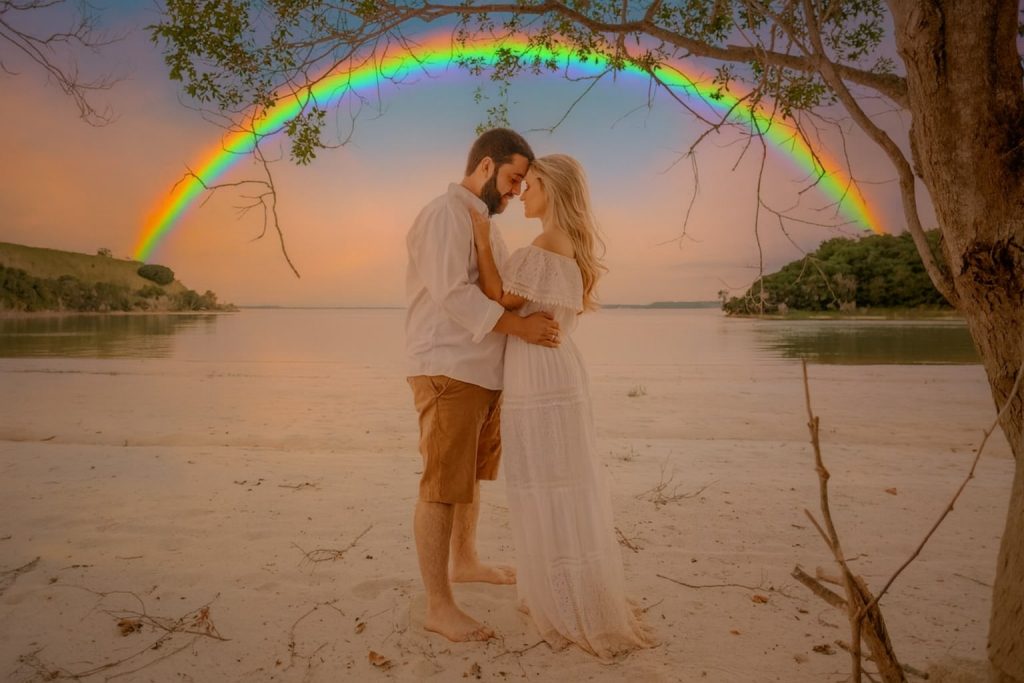
Seeing a rainbow still stops most people in their tracks. The sky is heavy, the rain has just passed, and then the light hits at the right angle and it appears. Even people who don’t believe in signs usually pause, stare for a moment, or grab their phone. Across cultures, rainbows have never been treated as just weather. They’ve long been tied to love, timing, and moments when something emotional is shifting.
Rainbows and Love Symbolism Across Cultures
Long before social media turned rainbows into “good vibes,” they were already loaded with symbolism.
In many traditions, a rainbow marks a transition. Something difficult ends. Something clearer begins. That’s why they often show up in stories about relationships, reunions, and emotional repair.
In love-related folklore, a rainbow is often seen as a bridge. Not a promise that everything will be perfect, but a sign that the worst part has already passed.
That’s why people tend to notice them during breakups, emotional lows, or moments when they’re questioning a connection.
Superstitions About Seeing a Rainbow
Old superstitions around rainbows vary, but a few themes repeat again and again:
- Seeing a rainbow after emotional stress is linked to relief and emotional reset
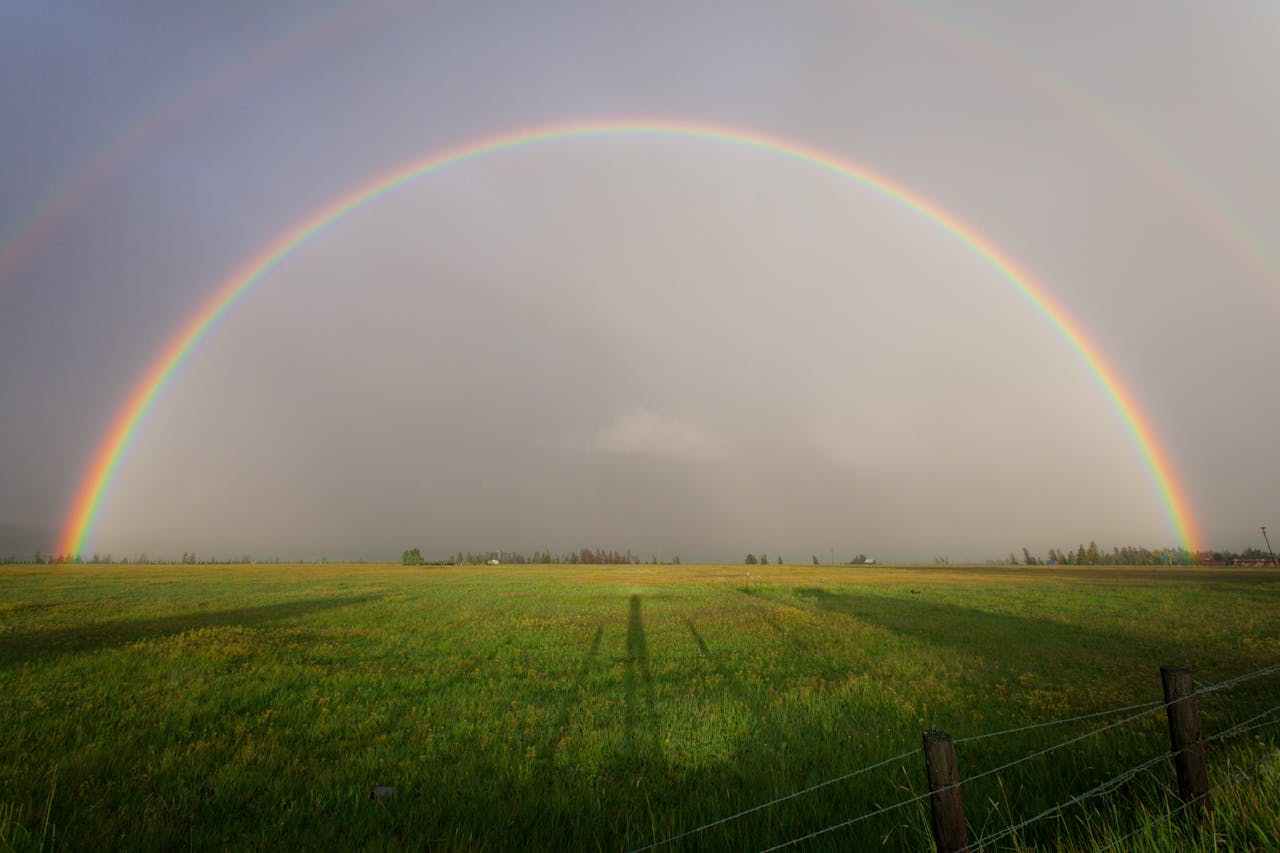
- Double rainbows are often associated with mutual feelings or mirrored experiences
- Pointing at a rainbow was once believed to disrupt its meaning
- Making a wish while seeing a rainbow was said to lock intention into timing
In love-related superstition, a rainbow appearing while thinking about someone is often taken as confirmation that the bond still holds weight, even if circumstances are messy.
Rainbows and Twin Flames
In twin flame symbolism, rainbows tend to show up most during separation. Not necessarily at the reunion moment, but in the in-between space, when things feel unresolved and emotionally stretched.
They often line up with internal shifts rather than external change. You notice them when you’re thinking about a twin flame you’re no longer in contact with. When resentment finally loosens its grip. When you stop trying to control the outcome and start focusing on your own stability instead.
The idea behind this is pretty simple. Two energies don’t meet cleanly while everything inside is tense and reactive. A rainbow only appears when rain and light exist at the same time. Both have to be there.
For many, seeing a rainbow in this phase feels like a confirmation that the connection still exists, but forcing it would only distort it. Sometimes the bond holds precisely because nothing is being pushed.
Rainbows After Heartbreak
This is usually when people notice them most. After arguments. After endings. After days when emotions feel heavy and unresolved.
A rainbow doesn’t erase what happened, but symbolically it shows that intensity doesn’t last forever. Pressure breaks. Light returns.
That’s why seeing rainbows after a breakup is often linked to healing phases in love. Not beginnings built on fantasy, but rebuilding after something real.
Seeing a Rainbow While Single
For people who are single, rainbows are usually tied to divine timing. Old interpretations don’t treat a rainbow as a sign that love is about to drop into your lap. They treat it as a marker that something inside you is loosening. Your guard softens. Your expectations shift. You start making space without forcing anything. It points to emotional clearing, not instant results or guarantees.
Many people only connect the dots later. They remember seeing rainbows again and again right before meeting someone important, not because the rainbow caused the meeting, but because their internal state was already changing. They were more open, more present, and less tangled in old patterns.
Why Rainbows Feel Different Than Other Signs
Rainbows don’t last. You can’t hold onto them or make them stick around. They show up, look unreal for a moment, and then fade. Still, almost everyone reacts to them. Even the most skeptical person usually stops, looks, maybe smiles. I honestly don’t know anyone who sees a rainbow and feels nothing.
That’s part of why they work so well as symbols for love. They interrupt you. They pull you out of your head for a second. Then they’re gone. What stays isn’t the rainbow itself, but the moment you were in when you saw it.
Love works in a similar way. It isn’t constant clarity or nonstop certainty. It comes in flashes. Moments where things make sense before slipping back into real life.
That’s likely why rainbows keep getting meaning attached to them. Not because they promise outcomes, but because they tend to appear when something inside is already shifting. You notice them when you’re between phases, not when everything is settled