

Moth tattoos tend to make people pause. They aren’t light or decorative like butterflies. There’s something more intimate about them, almost confessional. People don’t choose moths just for the look. A moth usually points to change, survival, and parts of life that unfolded out of view.
A moth tattoo often reflects growth that came through pressure, attraction to what challenges comfort, or learning how to exist in spaces that once felt unfamiliar. The symbolism runs deep, and that depth is what gives moth tattoos their lasting pull.
Moth Symbolism in Mythology and Folklore
In ancient Greek mythology, moths were associated with Psyche, whose name translates to “soul.” The link between moths and the soul comes from transformation. A moth’s life cycle mirrors internal change, moving through distinct stages before becoming something entirely different.
Across several Indigenous traditions, moths appeared as messengers of the night. Because they move after sunset, they were connected to intuition, inner awareness, and the unseen parts of the human experience. Where butterflies symbolized daylight and visibility, moths represented what develops in private.
Folklore in various cultures also connected moths with death and transition. Some stories described moths as carriers of departed souls or signs that a boundary had been crossed. Rather than fear, this symbolism often focused on continuity and the idea that existence doesn’t end when one phase closes.
What a Moth Tattoo Represents
At its core, a moth tattoo represents transformation and resilience. Unlike instant change, moth symbolism centers on gradual development shaped by pressure, time, and lived experience. It reflects strength built through repetition and endurance rather than sudden breakthroughs.
Moths are also tied to impermanence. They don’t live long, and that reality tends to land harder than pretty symbolism. For some people, a moth tattoo marks a stretch of life where priorities shifted, or where getting through things mattered more than how it looked.
There’s also the pull toward intensity. Moths move toward light and heat, even when it puts them at risk. In tattoo form, that often reflects passion, curiosity, desire, or choosing what feels real over what feels safe.
For many, a moth tattoo isn’t about making a statement for other people. It’s about marking internal change that happened out of sight, long before anyone else noticed.

What the Tattoo Says
“I don’t take time for granted.” A short lifespan carries weight. This tattoo often reflects someone who values days and moments because they know how easily they pass.
“I’ve survived things most people never saw.” Darkness is part of the symbolism here. The moth often represents experiences that happened away from attention, where strength had to come from within.
“I look for light even when it’s complicated.” Light pulls the moth in. As a tattoo, that pull can represent choosing truth, passion, or purpose, even when the path isn’t simple or safe.
“I change slowly, but completely.” This symbol points to slow, complete change rather than dramatic reinvention. The kind that takes time and reshapes everything quietly.
“I follow instinct more than approval.” Moths don’t move according to rules or expectations. For many people, the tattoo reflects trusting their own pull, even when others don’t understand the direction.
“Beauty doesn’t need to be soft.” Moths aren’t delicate in a pretty way. Their beauty is strange, intense, sometimes unsettling. Choosing one can reflect comfort with complexity rather than surface-level aesthetics.
“I’ve been close to the fire and I’m still here.” Light attracts, but it also carries risk. This line often resonates with people who took chances, paid a price, and kept their footing.
Realistic Moth Tattoo Designs
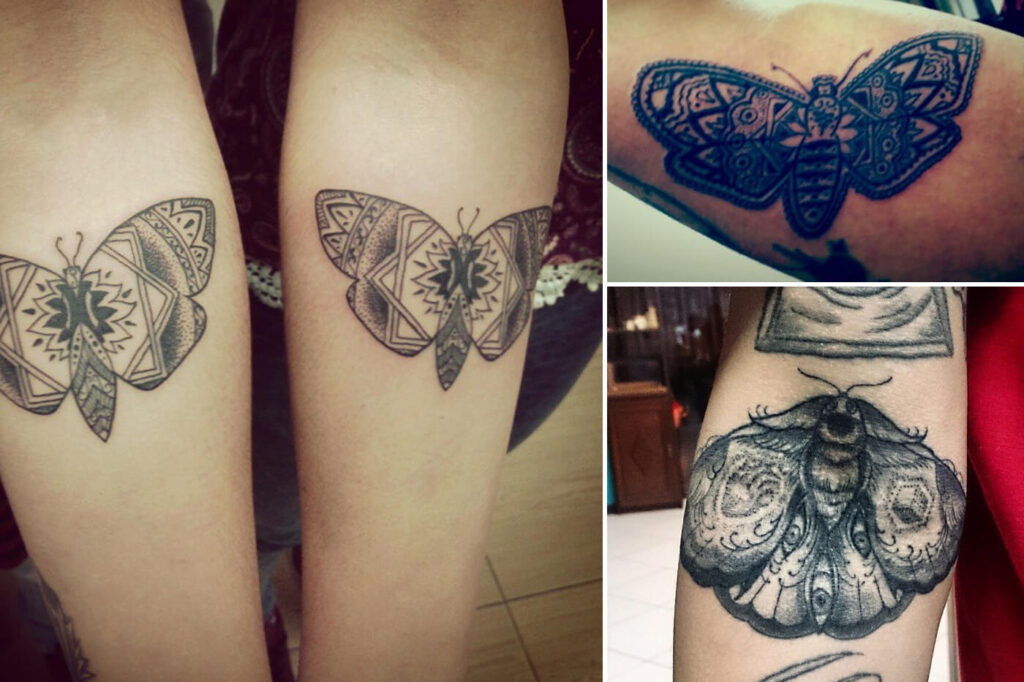
Detailed moth tattoos aren’t about showing off technique. People choose them because real moths are strange, intense, and precise in a way that doesn’t feel decorative. The wing patterns read as intentional, almost like markings with a purpose. In fine line tattoo styles, that precision becomes even more noticeable. When an artist leans into that level of detail, the tattoo stops feeling like a drawing and starts feeling like it belongs on skin.
Large moths like luna, atlas, or cecropia are chosen for their presence. Their size, symmetry, and visual weight give the tattoo a grounded feel. These designs usually resonate with people who want something that feels lived-in and deliberate, not symbolic in a vague way, but tied to something real and slightly unsettling.

Choosing a Moth Tattoo That Fits You
Choosing a moth tattoo usually starts with a feeling, not a checklist. Something about the symbol already fits, and the rest is about placement catching up with that instinct. Some people put it close to the chest because the meaning feels personal. Others place it on arms or legs because the change it represents came through action, movement, or sheer persistence.
The kind of moth people choose tends to mirror their own story. Smaller, softer-looking moths often appeal to those who want something restrained and understated. Larger moths with heavy wings and strong symmetry usually speak to people who aren’t interested in hiding the weight of what they’ve been through.
Size and detail follow naturally from that. A small moth works when the meaning is private. Bigger pieces leave room for texture, pattern, and presence. Not because more detail is better, but because some stories need space.
A moth tattoo rarely exists just to decorate skin. It usually marks a stretch of life, a shift, or a version of yourself that didn’t come easily. Once it’s there, it becomes less about how it looks and more about what it quietly holds.