

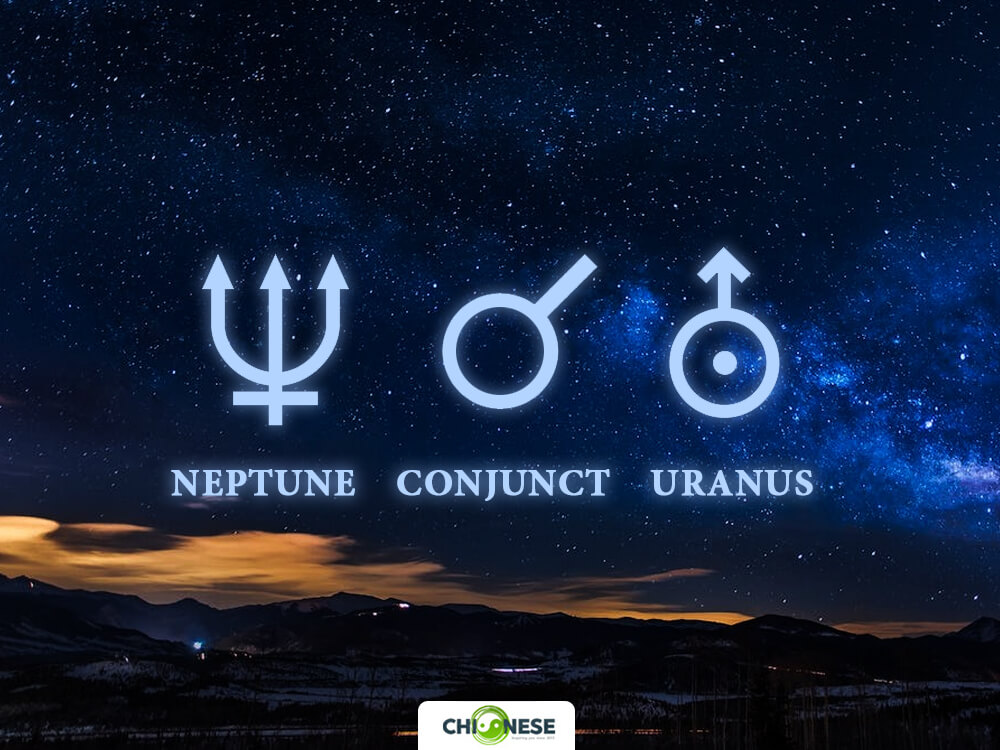
Neptune conjunct Uranus in synastry describes a connection built around shared ideals, imagination, and openness to change. This aspect often creates an immediate sense of mental and conceptual alignment, especially around unconventional ideas, future-oriented thinking, or creative and spiritual themes.
At the same time, this conjunction rarely provides structure. What forms between two people is a shared wavelength rather than a stable relational framework. The bond can feel inspiring, but it requires other grounding factors in the chart to become sustainable.
What Neptune Conjunct Uranus Means in Synastry
In synastry, Neptune conjunct Uranus points to a relationship shaped by imagination, idealism, and nontraditional ways of seeing the world, often without clear boundaries or predictable form.
Neptune dissolves limits. It blurs edges, idealizes, and seeks meaning beyond the tangible. Uranus disrupts existing structures and pushes toward innovation, freedom, and radical shifts in perspective. When these two meet between charts, the connection operates outside conventional relationship patterns.
This aspect does not prioritize stability. It prioritizes possibility.
How This Aspect Is Usually Experienced
People with Neptune conjunct Uranus synastry often feel immediately aligned in how they think about life. Conversations can flow easily around abstract ideas, social change, creativity, technology, psychology, or spirituality.
There is often a sense of recognition on a mental or conceptual level rather than an emotional one. The bond is rooted in shared vision more than shared routine.
This can feel refreshing, especially for people who do not relate well to traditional relationship expectations. At the same time, it can make practical coordination difficult.
Shared Ideals and Future-Oriented Thinking
This aspect supports shared interest in progress, reform, and alternative paths. Both people tend to question established systems and feel comfortable imagining different ways of living, relating, or creating.
The relationship may center around projects, ideas, or causes rather than domestic or emotional security. There is often more emphasis on where things could go than where they currently stand.
Because both Neptune and Uranus are future-facing in different ways, the present moment can feel secondary.
Freedom and Lack of Containment
Neptune conjunct Uranus does not respond well to restriction. Both people usually need a high degree of autonomy, mental space, and freedom of movement.
Attempts to define the relationship too early or too rigidly can create confusion or withdrawal. The connection tends to resist labels, timelines, and expectations that feel limiting.
This does not mean commitment is impossible. It means commitment must be flexible and self-directed rather than imposed.
Where the Difficulties Appear
The primary challenge with this conjunction is lack of clarity.
Neptune can project ideals that are not grounded in reality. Uranus can shift direction abruptly. Together, they can create situations where expectations are implied rather than discussed, and where consistency is difficult to maintain.
Misunderstandings may arise because both people assume shared understanding without confirming it. Emotional needs can go unaddressed while ideas and visions take center stage.
Without other stabilizing aspects, this connection can drift rather than develop.
Boundaries and Reality Testing
Another common issue is boundary confusion. Neptune dissolves distinctions, while Uranus resists containment. This can make it hard to define where one person ends and the other begins, especially in emotional or practical matters.
There may be periods of closeness followed by distance, not necessarily due to conflict, but due to shifting focus or internal realignment.
Clear communication and conscious agreements are essential if this aspect is to function well in long-term relationships.
Generational Influence and Context
Neptune conjunct Uranus is often shared by people born within similar timeframes. As a result, this aspect frequently reflects generational values rather than personal compatibility.
In synastry, it gains importance primarily when it connects directly to personal planets or angles. Without that, it tends to describe shared worldview more than relational dynamics.
When This Aspect Works Best
Neptune conjunct Uranus functions best when the relationship is built around shared ideas, creative collaboration, or mutual exploration of nontraditional paths.
It is less suited to relationships that require strong structure, predictability, or clear emotional containment unless other chart factors provide those elements.
When Vision Is Not Enough
Neptune conjunct Uranus in synastry creates a connection rooted in imagination and possibility. It can open doors to new ways of thinking and relating, but it does not build the house.
Without grounding influences, the bond may remain inspirational rather than lived. With them, it can support innovation, creativity, and shared evolution without needing to follow conventional rules.
Understanding this distinction is what determines whether the connection drifts or develops.