

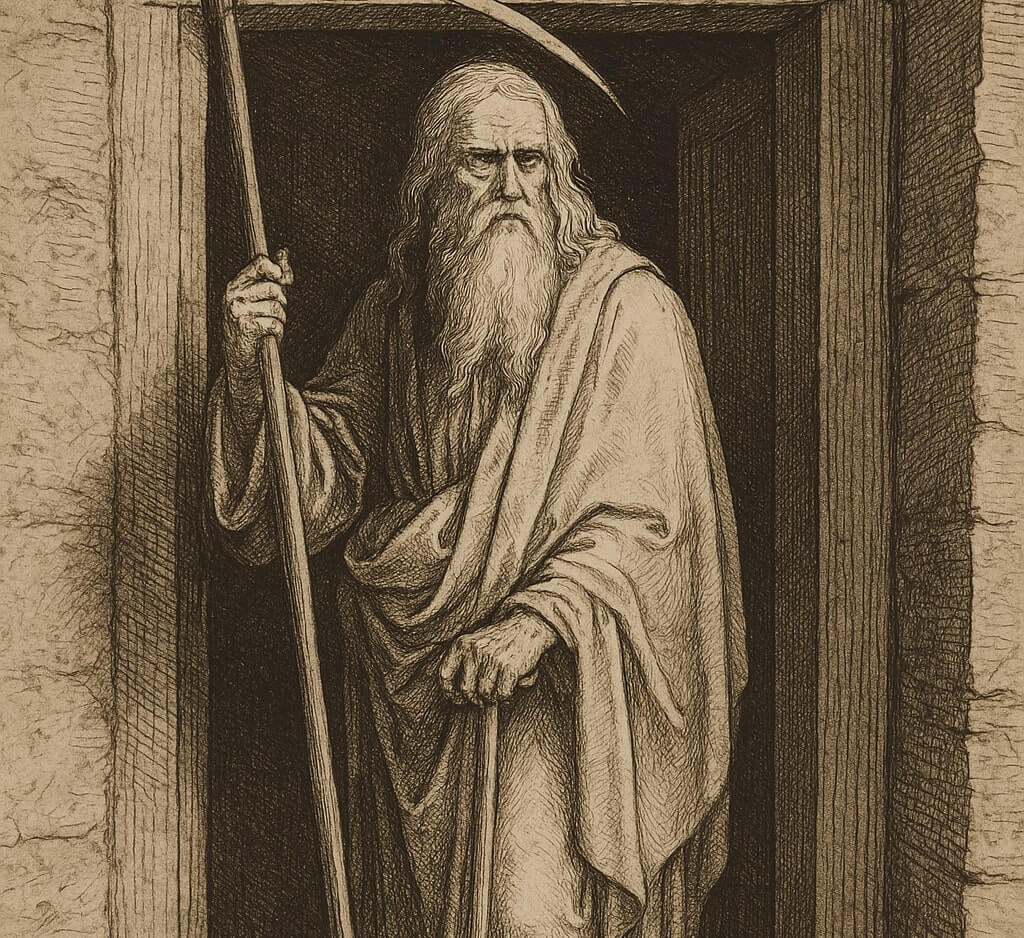
Saturn has a reputation that makes people tense the moment its name comes up. Fear, heaviness, restriction, delays, blockages, illness, coldness, darkness. I understand why. Saturn does not arrive with gifts wrapped in shiny paper. It arrives with weight, responsibility, and consequences that cannot be ignored.
I write this as someone who knows Saturn personally. In my natal chart, Saturn sits in the 1st house, exactly squaring my Sun and angles. I did not meet this planet later in life through a transit or a return. I was born into it. Saturn shaped my identity through low self-esteem, my body through chronic illness, my sense of timing through delays that began the moment I opened my eyes, and my relationship with the world by forcing me to grow up too early and too fast. Life pushed back early and often.
Saturn dragged me through mud, harsh lessons, loss, pressure, and situations where nothing worked unless I worked harder than everyone else. There were no shortcuts, no safety nets, and no easy wins. So when people ask whether Saturn is a devil or a teacher, this is not theory for me. This is lived experience, written into my chart from birth.
Why Saturn Gets Labeled as “Evil”
Saturn earns its dark reputation because it blocks comfort. It removes shortcuts. It exposes weak structures fast and without mercy. Saturn does not ask you to slow down. It makes you slow down. Through exhaustion, illness, accidents, or circumstances that drain your strength, Saturn forces the body and life itself to hit a limit. Whether you agree or resist does not matter. The slowdown happens anyway.
When Saturn touches a planet, a house, or an angle, something stops working the way it used to. A body no longer keeps up. A role collapses. A strategy fails. What once carried you forward suddenly cannot. That alone is enough to trigger fear or anger, especially when there is no clear way around it.
Unlike Jupiter, Saturn does not reward belief. Unlike Venus, Saturn does not soften outcomes. It strips away illusions, dependencies, and excuses. It limits time, energy, and often health or external support. From the inside, this feels harsh, especially when Saturn hits during an already demanding chapter of life.
Astrologically, Saturn also rules fear, scarcity, authority, guilt, and long-term consequences. These are not comfortable themes. Most people want expansion, relief, and immediate results. They want progress without cost. Saturn offers accountability instead. That contrast is exactly why Saturn so often ends up cast as the “bad guy” of astrology.
Saturn Does Not Destroy Without a Reason
After decades of living under Saturn and moving through its major transits, I learned one thing very clearly. Saturn does not break things randomly or for fun. It breaks what can no longer carry weight.
If someone had told me twenty years ago that I would one day say this, I would have hated the idea. Back then, I believed that pushing harder was the answer to everything. I worked until exhaustion, ignored sleep, ignored limits, and treated burnout as discipline. Working meant proving my worth. Stopping felt like failure.
When transit Saturn activated my natal Saturn square Sun, everything collapsed. This happened during my Saturn return, a period I expected to be productive or rewarding simply because it was something I had never lived through before. Instead, I became seriously ill. I ended up in bed, unable to work, unable even to think about work. Survival and getting my health back became the only focus.
With time, the pattern became obvious. Saturn did not make me ill out of cruelty. It removed the only thing I refused to stop doing myself. More work did not bring more stability. It brought depletion. Saturn forced the pause I would never have chosen on my own.
In charts, I see Saturn expose where people live on borrowed energy. Borrowed confidence. Borrowed stability. Borrowed approval. When Saturn arrives, those borrowed structures collapse. The experience feels brutal, but it is precise.
I saw this clearly in a friend’s chart during a Saturn–Moon transit. During that period, she ended a two-year relationship. From the moment she started dating, she had cut herself off from family and friends, myself included. Her world shrank to one person. When Saturn crossed her Moon, that structure failed. The transit showed her that emotional isolation is not independence, and that you cannot erase your support system and then expect it to appear intact when you finally need help.
That is how Saturn works. It does not destroy connection, effort, or ambition. It destroys imbalance.
Why Saturn Feels So Personal
Saturn impacts identity in a way no other planet does. I have lived through Uranus square Moon, Pluto square Sun, and other heavy transits, yet none of them land the same way. Those transits affect the surface of life. Saturn goes deeper. It does not stop at the skin. It settles into the bones.
This is especially clear when Saturn touches the Sun, Moon, Ascendant, or the angles. These transits strip away roles, defenses, and self-images that once felt permanent. External support fades, distractions stop working, and avoidance becomes impossible.
In my life, Saturn stripped everything down repeatedly. Comfort, certainty, and safety were removed early, before I even had words for them. Maturity was not optional. It was imposed. That is the hidden cost of strong Saturn placements. You grow up before you are ready. But Saturn never takes without leaving something behind.
Is It Fair to Call Saturn a Devil?
I might have called Saturn a devil twenty years ago. I would not do that now. Not after living through its transits, returns, and long cycles, and seeing the same patterns repeat in chart after chart.
Saturn is neither kind nor cruel. It is exact. Sometimes painfully exact. It does not act with emotion or intention. It applies pressure where structure is weak and waits to see what holds.
Calling Saturn evil usually comes from fighting reality. Calling Saturn a teacher comes from staying long enough to recognize the pattern behind the pain.
In astrology, Saturn represents time. Time does not punish or reward. It continues. It exposes what is sustainable and what is not.
If a chart carries strong Saturn themes, especially hard aspects or angular placements, life often feels heavier. Slower. More demanding. But those same charts produce people with depth, endurance, and authority that cannot be imitated. Someone with Saturn square the Moon may live through emotional hardship and traums and, over time, develop the kind of understanding that makes an exceptional psychologist or guide for others.
Saturn does not promise happiness. It promises mastery. And for those who stay with its lessons long enough, mastery becomes a form of freedom that nothing else can provide.