

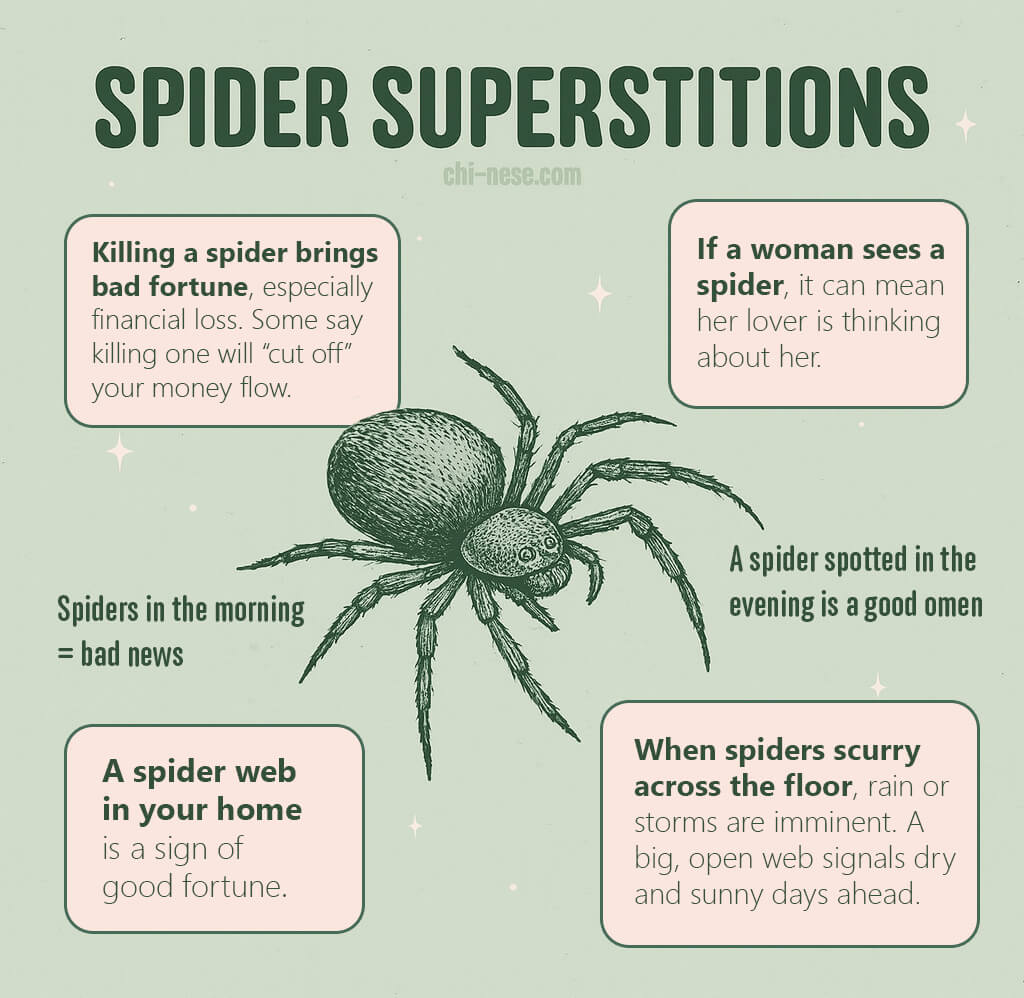
Spider superstitions are surprisingly positive. Seeing a spider can mean money is coming, finding one on your clothes is considered lucky, and killing a spider is said to bring bad luck. Even the time of day can change the omen, with evening spiders traditionally receiving a much warmer welcome than morning ones.
My grandmother always told me, “Never kill a spider. It’s like throwing money out the window.” That warning has plenty of company in European folklore, where spiders became closely associated with money, luck, weather, visitors, and news.
Here are 21 spider superstitions and the stories behind them.
1. A Money Spider Means Money Is Coming
Tiny spiders are commonly called money spiders in Britain. If one crawls on you, money or good fortune is supposedly on the way.
An old saying claims that a money spider crawling across your hand or clothes is “spinning” new clothes for you, suggesting that you will soon have enough money to buy them.
2. A Spider on Your Clothes Is Good Luck
Finding a spider crawling on your clothes is traditionally considered a sign of money or good luck coming your way. An old superstition even says the spider may be “spinning” you new clothes, meaning you will soon have enough money to buy them.
A spider dangling from your clothing on its thread carries a similar meaning and can signal a financial gain or a new possession.
3. Killing a Spider Brings Bad Luck
“Never kill a spider” is probably the spider warning most people have heard from parents or grandparents.
Killing one is said to destroy your luck, bring financial trouble, or invite misfortune into the home. In money-spider folklore, the warning is particularly literal: killing the creature associated with wealth means sending your own prosperity away.
4. Seeing a Spider in the Evening Is Lucky
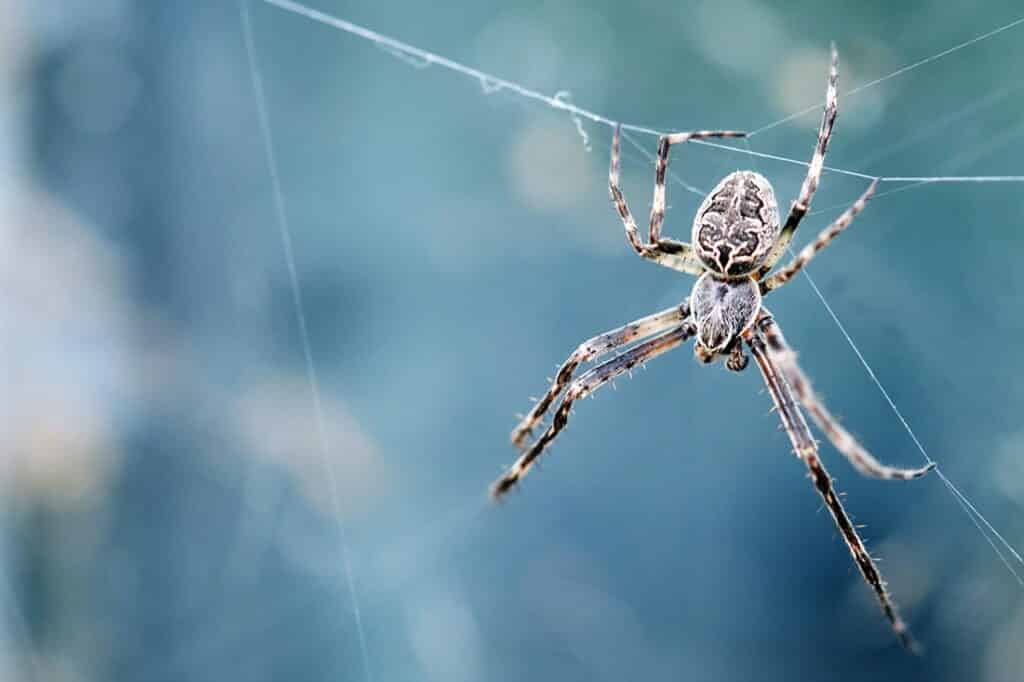
An old spider superstition says seeing one in the evening brings good luck, hope, or happiness. Morning gets the opposite reputation and is traditionally associated with sorrow, with a spider seen around noon linked with worry.
Several old rhymes preserve this morning-noon-evening pattern, although their wording varies. The evening spider consistently gets the luckiest reputation, making a late-day encounter a welcome omen.
5. A Morning Spider Can Mean Bad News
Morning spiders have a darker reputation in old European sayings. Seeing one early in the day was associated with sorrow, disappointment, or troublesome news.
The superstition is almost the reverse of the lucky evening spider. The same creature can bring a completely different omen depending on when you encounter it.
6. A Spider Dropping Down in Front of You Means a Visitor
If a spider suddenly lowers itself on a thread directly in front of you, prepare for company. An old household superstition says a descending spider announces a visitor or incoming news. Finding it hanging near a doorway can strengthen the association with someone arriving at the house.
7. A Spider Crawling Toward You Brings Luck
Direction plays a role in spider folklore too. A spider crawling toward you can represent something desirable coming your way, particularly money or good news.
A spider moving away may be given the opposite meaning, with an opportunity, visitor, or money leaving instead.
8. A Spider on Your Hand Can Mean Money

A spider crawling across your hand is another variation of the money-spider superstition. Hands receive, hold, and spend money, so a tiny spider wandering across your palm became a lucky sign of financial gain. The omen is similar to the familiar superstition about an itchy palm.
9. Finding a Spider in Your Home Can Be Lucky
A house spider may be an unwelcome roommate, but folklore can give it a positive meaning.
Spiders catch flies, mosquitoes, and other insects, making them useful inhabitants of houses, barns, and storage spaces. Their webs also became associated with catching and keeping good fortune inside the home.
Killing a house spider could consequently mean removing some of the household’s luck along with it.
10. A Spider Web Near the Door Can Protect the Home
Spider webs naturally catch anything that flies into them, and folklore gave that ability a symbolic use as well.
A web near an entrance can represent trapping bad luck before it enters the house. This protective symbolism is easy to understand: unwanted things enter the web but cannot pass through it.
11. Large Spider Webs Can Mean Fine Weather
Spiders have also been used as weather signs. Large, exposed webs outdoors were traditionally taken as a sign of dry, settled weather.
Spider activity really can change with environmental conditions, which probably helped weather folklore like this survive among farmers and people who spent much of their time outdoors.
12. Spiders Hiding Can Warn of Rain

If spiders suddenly retreat from exposed webs or become harder to find, old weather lore may take it as a warning of rain or worsening weather.
Changes in humidity, wind, and other conditions affect spider behavior, so watching them offered another clue alongside clouds, wind, birds, and insects.
13. A Spider Indoors Can Signal Rain
Spiders moving into houses have also been linked with approaching wet or cold weather. A sudden increase in spiders indoors could easily convince people that the creatures knew something about the weather before humans did, creating another familiar household weather omen.
14. A Spider on a Wedding Dress Is Good Luck
Finding a spider on your wedding dress sounds like terrible timing, but an old English wedding rhyme gives it the opposite meaning.
A spider discovered on the bridal gown is considered a sign of good luck for the marriage. The bride may have every reason to remove her eight-legged guest before the ceremony, but superstition recommends doing so without killing it.
15. Spiders Can Be Connected With Love

Spider folklore sometimes connects the creature with lovers and romantic news.
A spider descending toward you can be interpreted as news arriving from someone you love, especially when you are already waiting for a letter, message, or reunion.
Its thread makes the symbolism easy to see: two distant points remain connected by something thin but surprisingly strong.
16. A Spider Web Can Represent Fate
The spider creates its own web thread by thread, which has made it a natural symbol of fate and the course of a person’s life.
A web can represent different events and choices becoming connected. This symbolism also explains why spiders feature so heavily in stories about destiny, creation, patience, and control.
17. Spider Grandmother Is a Creator Figure
Spiders hold an important place in the traditional stories of several Indigenous peoples of the American Southwest.
Spider Grandmother features in Hopi tradition as a powerful figure connected with creation, guidance, and helping humanity. Spider figures also occur in other Southwestern traditions, although the stories and roles should not be treated as identical across different peoples.
These stories give the spider a much deeper role than the lucky household omens found in European folklore.
18. Anansi Represents Cleverness and Wit
In Akan folklore from West Africa, Anansi is a famous trickster figure commonly represented as a spider or as a human with spider characteristics.
Anansi succeeds through intelligence, storytelling, deception, and cleverness, sometimes defeating characters far stronger than himself. Stories about him later traveled across the Atlantic through the African diaspora and became part of Caribbean folklore as well. Here, the spider represents intelligence and the ability to escape trouble through wit.
19. Dreaming About Spiders Can Mean You Feel Trapped
Spider dreams have several traditional meanings, and the web is often the key. Being caught in a web can represent a situation that has become complicated or difficult to escape. Watching a spider build one can have a more positive meaning connected with patience, planning, creativity, and slowly building something of your own.
A spider dream can also take on a very different meaning if you are frightened of spiders, so the dreamer’s reaction changes the symbolism considerably.
20. Robert the Bruce’s Spider Represents Persistence
A famous Scottish story tells of Robert the Bruce watching a spider repeatedly attempt to build or reach its web after he had suffered military defeats.
The spider failed several times but continued trying until it succeeded. Bruce supposedly took courage from what he saw and returned to his struggle.
21. Black Spiders Can Carry a Darker Omen
Not every spider receives a lucky interpretation. Dark, large, or unexpectedly encountered spiders can be associated with danger or bad news in modern superstition.
Much of this comes from the spider’s broader reputation. Venom, hidden corners, nighttime activity, and the fear many people have of spiders make darker specimens easy candidates for ominous symbolism.
Color alone, however, has no universal meaning in spider folklore. A black spider may be unlucky in one modern interpretation and carry no special significance in another.
Are Spiders Good Luck?
According to most of the superstitions on this list, spiders are more lucky than unlucky. Small money spiders are linked with wealth, a spider on your clothes can promise good fortune, a spider on a wedding dress is lucky for marriage, and killing one risks sending that luck away.
The safest rule, at least according to my grandmother, is simple: if you find a spider in the house, let it keep its legs and your money may keep theirs.
More Animal & Insect Superstitions
- Is It Bad Luck to Kill a Cricket? The Superstition & Spiritual Meaning
- Black Cat Superstitions Around the World: Good Luck or Bad Luck?
- When a Bird Keeps Flying Into Your Window: Spiritual Meaning & Superstitions
- Crows Gathering in Large Numbers: Spiritual Meaning & Superstitions
- Why Sneezing Was Once Feared: Superstitions From Around the World