


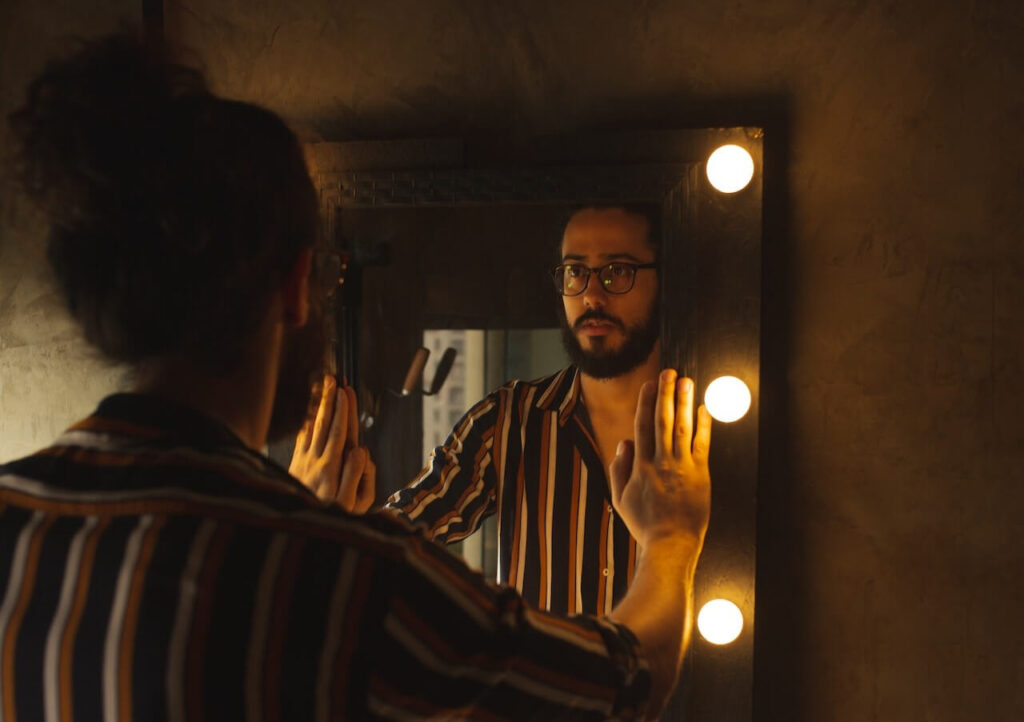
Mirror meditation sounds simple on the surface. You just sit in front of a mirror, look into your own eyes, and focus inward. No mantras, no apps, no complicated setup. That simplicity is exactly why many people underestimate it.
For some, mirror meditation turns into a powerful self-awareness practice. For others, it opens doors they did not expect to open. Before you try it, it helps to understand what this practice actually does and why it can feel intense, confusing, or unsettling for certain people.
What Mirror Meditation Actually Is
Mirror meditation involves sustained eye contact with your own reflection while keeping your body still and your attention inward. The goal is not to analyze your appearance or correct details you notice. The idea is to stay present with whatever comes up while your reflection remains unchanged.
This practice is often linked to self-inquiry. People use it to explore identity, emotional patterns, and internal reactions. Without external distractions, the mind tends to surface material that normally stays in the background.
Some describe it as facing themselves without filters. Others experience it as confronting thoughts or feelings they have avoided for a long time.
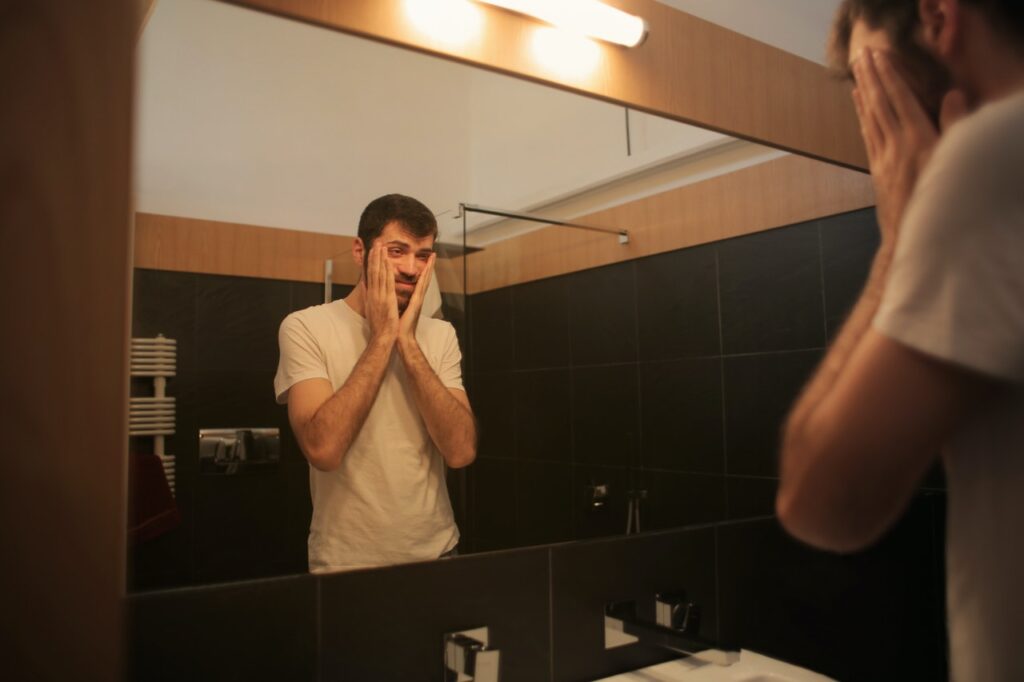
Why Mirrors Can Trigger Strong Reactions
Human brains are not used to prolonged eye contact with their own reflection. In everyday life, mirrors are used briefly and with purpose. During mirror meditation, that normal pattern breaks.
After several minutes, perception can shift. Facial features may appear unfamiliar. Expressions may seem to change. This is a known psychological effect linked to sensory adaptation and dissociation.
For some people, this shift feels meaningful. For others, it feels disturbing. Neither reaction is unusual.
How People Practice Mirror Meditation
Most approaches follow a similar structure:
- You sit facing a mirror at eye level.
- You remain physically still.
- You maintain steady eye contact with your reflection.
- You observe thoughts, emotions, and physical sensations as they arise.
Sessions are usually kept short at first, often five to ten minutes. Longer sessions tend to intensify effects rather than deepen clarity.
Lighting matters more than people realize. Dim environments tend to increase visual distortion and emotional reactions. Bright, stable lighting reduces that effect.
The Darker Side of Mirror Meditation
Mirror meditation is not neutral. It amplifies what is already present. That is where problems can arise.
Distortion and Dissociation
Mirror meditation can lead to a sense of detachment from identity. Some people feel disconnected from their reflection. Others describe the experience as watching themselves from a distance.
This can be disorienting, especially for people prone to anxiety, dissociation, or intrusive thoughts. If the sense of detachment lingers after the session, the practice should be stopped.
Emotional Overload
Mirror gazing often brings up unresolved emotions. Sadness, anger, shame, or grief can surface without warning. Unlike guided meditation, there is no structure to help process what comes up. For people with unresolved trauma, this can feel overwhelming rather than helpful.

Body Image and Self-Criticism
If someone already struggles with self-image, staring at their reflection can intensify critical thoughts. Instead of insight, the session can turn into rumination or self-judgment.
In those cases, mirror meditation tends to reinforce the problem it claims to heal.
Obsession With the Practice
Some people repeat mirror meditation frequently because of intense early experiences. This can turn into fixation rather than growth.
Any practice that pulls attention inward too forcefully can destabilize balance if not paired with grounding habits like physical movement, social interaction, or routine.
Spiritual and Folklore-Based Concerns
In certain belief systems, mirrors are viewed as symbolic thresholds. Because of this, some people believe prolonged mirror gazing can expose the psyche to unwanted influences.
While this interpretation depends on personal beliefs, it explains why mirror practices often come with protective rituals in traditional systems rather than being practiced casually.
Even without spiritual framing, the symbolic weight of mirrors should not be dismissed. Mirrors change perception. That alone carries psychological impact.
Who Should Avoid Mirror Meditation
Mirror meditation is generally not recommended for people who experience:
- Anxiety disorders
- Dissociation or depersonalization
- Severe self-criticism
- Unprocessed trauma
- Sleep disruption triggered by mental practices
There are many other forms of meditation that encourage awareness without creating perceptual strain.
If You Still Want to Try It
If you still decide to try mirror meditation, limits matter. Keep sessions short. Use normal lighting. Stop the moment the experience shifts from focused to uncomfortable. Pushing through strange reactions does not build strength or insight. It usually does the opposite.
Mirror meditation is not automatically dangerous, but it is not neutral either. Prolonged staring strips away mental filters very quickly. Some people handle that well. Others do not. The difference often comes down to emotional stability and how grounded someone already is in daily life.
This practice does not create something new. It exposes what is already sitting under the surface. For some people, that exposure feels useful. For others, it creates confusion, unease, or lingering mental noise that takes time to shake off.
No technique deserves blind commitment just because it is popular or framed as transformative. A practice earns its place only if it leaves you more stable than before you started. If it disrupts sleep, mood, or your sense of orientation, it is not helping.
In many cases, approaches that create distance rather than confrontation work better. Practices that allow thoughts and emotions to pass without locking onto them tend to support balance far more reliably than techniques that force direct psychological exposure.