

You’re at a party. You spent two hours getting ready. Hair, makeup, outfit changes, that one detail you weren’t sure about but went with anyway. You walk in and immediately feel it. That tight, alert feeling. Like eyes are on you. Like every move counts.
Now pause for a second.
That feeling isn’t intuition. It’s projection.
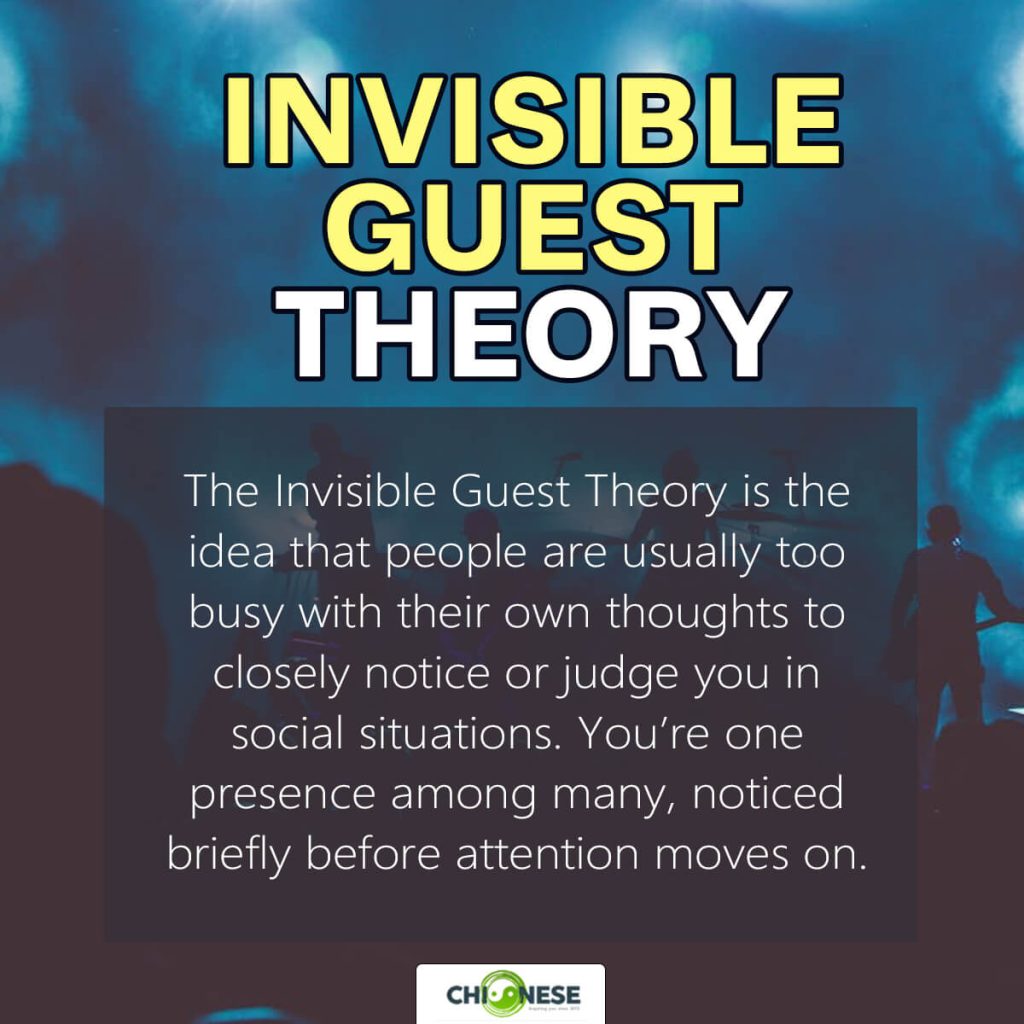
This is where the Invisible Guest Theory comes in.
The idea is simple. When you walk into a room, you feel visible. Exposed. Evaluated. But in reality, you’re closer to an invisible guest than the main attraction. Not because you don’t matter, but because everyone else is busy dealing with themselves.
They’re thinking about how they sound. How they look. If they said something awkward. If they should have worn something else. If they’re coming across as interesting enough. They’re replaying their own sentences in their head while you’re worrying about yours.
Most of the time, you barely register. And once you understand that, something loosens.
What the Invisible Guest Theory Really Is
The Invisible Guest Theory isn’t about dismissing yourself or shrinking into the background. It’s about recognizing how self-focused human beings actually are.
When you enter a social situation, your brain tells you a story. It says, Everyone sees me. Everyone is evaluating me. Everyone will remember this.
That story feels convincing because it’s coming from inside you.
But step outside your own head for a moment. Think about the last event you attended. Can you remember what everyone else wore? What they ate or drank? The exact words they used? The small mistakes they made? Probably not.
You were busy with your own experience. And that’s the point.
The Invisible Guest Theory suggests that most people are too wrapped up in their internal dialogue to spend much energy analyzing yours. You are not under a spotlight. You’re one presence among many, passing briefly through other people’s attention before they return to their own concerns.
Why We Feel So Seen When We’re Not
There’s a reason this illusion is so strong.
Your brain treats social situations as high stakes. Historically, belonging mattered. Rejection meant danger. So your nervous system stays alert, scanning for signals, assuming you’re being evaluated at all times.
Add modern social conditioning on top of that. Photos, profiles, constant comparison. You’re trained to think you’re always being assessed. So when you walk into a room, your brain fills in the blanks. It assumes attention that isn’t actually there.
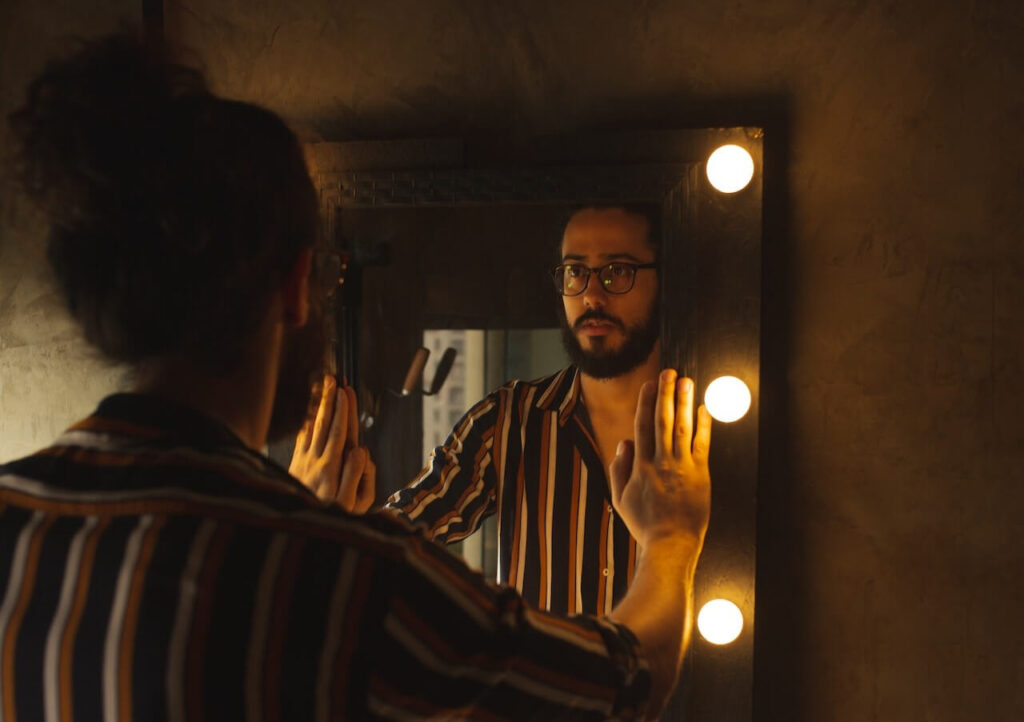
You feel observed because you are observing yourself. That’s an important distinction.
The Post-Event Spiral
Most people don’t suffer during the event itself. They suffer afterward.
You leave the room and your mind starts replaying moments on a loop. Why did I say that? Did that joke land wrong? I sounded strange. They must think I’m awkward.
But by the time you’re replaying those moments, everyone else has moved on. They’re thinking about what they said. Or what they’re doing next. Or what they’re eating when they get home.
The version of you that lives in your head after the event does not exist in theirs. That imagined audience is empty.
You Are Not the Main Character in Other People’s Stories
This sounds harsh until it feels freeing. You are not the center of other people’s attention. Not for long, anyway. And that’s not a flaw. It’s relief.
Once you accept that, the pressure to perform starts to fade. You don’t have to be impressive. You don’t have to be perfectly composed. You don’t have to manage how you’re being perceived minute by minute.
Because no one else is doing that work for you. They’re busy managing themselves.
How This Changes the Way You Show Up
When you internalize the Invisible Guest Theory, social spaces feel different.
You speak more naturally because you’re not scripting every sentence in advance.
You move more freely because you’re not monitoring your body constantly.
You stop treating conversations like auditions.
You’re no longer acting for an audience that isn’t paying attention.
That doesn’t mean you stop caring altogether. It means you stop carrying a weight that was never yours to begin with.

A Different Way to Walk Into a Room
The next time you enter a gathering, try this shift.
Instead of asking, How am I coming across?
Ask, What am I experiencing right now?
Notice the space. The sounds. The temperature. The way your body feels standing there. Let yourself arrive without commentary.
You don’t need to disappear. You don’t need to dominate. You don’t need to prove anything.
You’re just there. And so is everyone else, absorbed in their own version of the same internal process.
The Point People Miss
The Invisible Guest Theory isn’t about invisibility. It’s about proportion.
You take up 100 percent of your own mental space. You take up a fraction of a percent in anyone else’s. That balance is normal.
Once you accept it, social life stops feeling like a test you can fail.
It becomes something simpler.
You show up. You interact. You leave. And the world keeps turning, just as it always did, even when you thought all eyes were on you.