



Sleeping on the floor changes the way you experience something you normally do without thinking. Instead of climbing into a soft bed, you lower yourself onto a firm surface, feel the weight of your body against it, and spend the night much closer to the ground.
Spiritually, sleeping on the floor is associated with grounding, humility, simplicity, discipline, and a reduced attachment to physical comfort. It can also make you more conscious of your body and the environment around you. A mattress absorbs much of that awareness. The floor gives you nowhere to sink.
For some people, floor sleeping becomes an occasional reset when life feels excessive or overstimulating. Others incorporate it into meditation, minimalism, religious practice, or spiritual discipline.
Sleeping Closer to the Ground
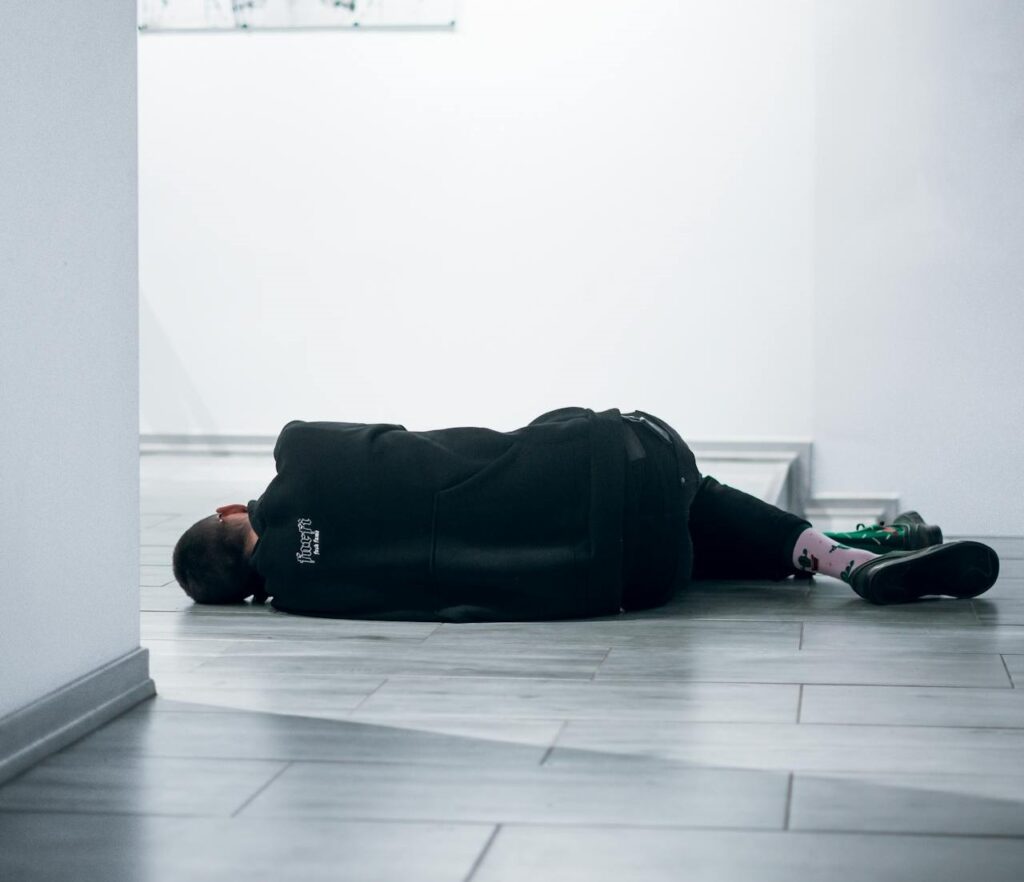
When you sleep on the floor, your relationship with the space around you changes immediately. You are at the lowest point in the room, physically closer to the earth beneath the building, with your entire body resting against a stable surface.
That position can create a powerful sense of grounding. Instead of feeling mentally scattered at bedtime, you become aware of your physical presence: the weight of your legs, your back against the floor, your breathing, and the solid surface holding you.
In chakra traditions, sleeping close to the ground has a natural connection with the root chakra, associated with the physical body, safety, survival, stability, and our connection to the earth. If you spend your days caught in thoughts, worries, plans, and constant stimulation, lying close to the ground can bring your awareness back into your body and the physical space you occupy.
Humility and Returning to Basics
A bed can be one of the most luxurious places in the home. Thick mattresses, toppers, expensive sheets, several pillows, heated blankets, adjustable frames. Sleeping can involve an impressive amount of equipment, and the floor strips most of that away.
You need somewhere clean and safe, something underneath you, enough warmth, and very little else. That simplicity can be humbling in a good way. You realize how little the body actually requires to lie down and rest. There is also something psychologically different about lowering yourself onto the ground and giving up the elevated, protected sleeping space you normally occupy.
When I first tried sleeping on the floor, it unexpectedly made me feel grateful for everything I had. Getting back into my bed afterward felt completely different. I noticed the mattress, the warmth, the clean sheets, the pillows, and all those little comforts I normally used without thinking about them.
It also made me think about people who sleep on floors because they have no other choice, or who live without many of the things I consider completely normal. What started as an experiment with floor sleeping ended up changing the way I looked at comfort and how much I already had.
Detachment From Comfort
Comfort itself is wonderful. Dependence on very specific comforts can become restrictive. Maybe you believe you need your exact pillow to sleep. Perhaps the mattress has to have a particular softness, the room needs to be a certain temperature, and everything has to feel exactly right before your body will relax. Sleeping on the floor interrupts those expectations.
Choosing a simpler sleeping surface for a night can become a small exercise in non-attachment. You still appreciate comfort, while discovering that you can temporarily live without some of it.
This idea has a long history in ascetic and monastic life. People have deliberately chosen simpler food, clothing, possessions, and sleeping arrangements as part of spiritual discipline. The purpose is to reduce dependence on physical pleasures and direct more attention inward. You certainly need no monastery to explore the same principle for one night in your bedroom.
From Monks to Yogis: Sleeping Without Comfort

Simple sleeping arrangements have existed within monastic, yogic, ascetic, and religious lifestyles for centuries. Sleeping with fewer comforts could accompany prayer, fasting, meditation, renunciation, or a broader commitment to living simply.
The bed itself was never necessarily the important part. Attachment was. When someone deliberately owns less, eats simply, sleeps simply, or temporarily gives something up, everyday habits become easier to examine. How much do I need? How much do I merely prefer? Which comforts have become expectations? Floor sleeping can bring those questions into an area of life most of us hardly examine.
If You Want to Try It Yourself
You certainly do not need to sleep directly on a hard wooden floor to experience this practice. Start with a yoga mat, thin futon, folded blanket, or carpet and see how your body responds. The aim is to simplify your sleeping space, not to prove how much discomfort you can tolerate.
The first night may surprise you. You might notice your body more than usual, sleep differently, wake up with a clearer sense of where you hold tension, or simply discover that you love your mattress far more than you realized. Give some attention to your thoughts as well. Sleeping in such a basic way can bring up interesting feelings about comfort, security, gratitude, and what you consider essential.
You may decide to sleep on the floor again whenever you want to feel more grounded or strip things back for a night. You may also wake up the next morning, climb straight into bed, and decide the experiment was enough. Either way, you have learned something about your relationship with rest and comfort, and that is where much of the spiritual value lies.
More Spiritual Sleep Meanings
- The Dangers of Sleeping With Windows Open (& Spiritual Meaning)
- The Spiritual Meaning of A Cat Sleeping On Your Chest, Explained
- Spiritual Meaning of Hearing Your Name While Sleeping: Who Is Calling You?