



Sleeping on the floor sounds extreme until you actually try it. No mattress. No layers of foam. Just your body and a firm surface underneath. For some people it starts as curiosity, for others as a physical experiment, but many end up noticing something deeper than posture or back alignment.
Floor sleeping strips sleep down to its most basic form. And when comfort is reduced, perception tends to sharpen.
A Practice Older Than Modern Comfort
For most of human history, beds as we know them didn’t exist. People slept on mats, hides, wood, or bare ground. Soft mattresses are a recent invention.
Across cultures, sleeping closer to the ground wasn’t seen as deprivation. It was normal.
In Ayurveda, firm sleeping surfaces were recommended to support balance in the body. Yogis still sleep on thin mats to avoid dependency on comfort. In traditional Chinese medicine, hard surfaces were believed to support energetic circulation through the body. Spartan culture trained resilience through physical simplicity, including where and how one slept. Christian monks and ascetics used floor sleeping as a way to reduce attachment to comfort and keep focus inward.
Different traditions, same idea. Less softness, more presence.
Simplicity Changes How You Relate to Rest
Sleeping on the floor removes excess. You’re not sinking into anything. Your body meets resistance immediately.
That alone shifts perspective. Rest becomes intentional instead of automatic. You notice how you lie down. How you breathe. How your body settles.
Many people describe a sense of humility that comes with it. Not in a moral sense, but in a grounded one. You stop expecting sleep to be luxurious. You allow it to be functional. That simplicity can reset how you relate to comfort in general.
Feeling Supported Without Excess
The floor doesn’t adapt to you. You adapt to it. That can sound harsh, but for some people it’s stabilizing. The surface is steady. It doesn’t move. It doesn’t respond. It simply holds.
Sleeping this way can create a stronger sense of physical grounding. Your weight distributes differently. Your muscles learn to release without sinking. Your body finds its own balance points.
Over time, this can carry into waking life. People often report feeling more stable, less restless, and more physically anchored during the day.
Heightened Body Awareness
On a mattress, your body disappears into softness. On the floor, you feel everything.
Pressure points become obvious. Tension shows up quickly. You can’t ignore how your hips, spine, shoulders, or neck are holding themselves.
This awareness can be uncomfortable at first. Then it becomes informative.
Instead of distraction, you get feedback. Your body tells you where it’s tight and where it needs release. That kind of awareness often carries into daily movement and posture.
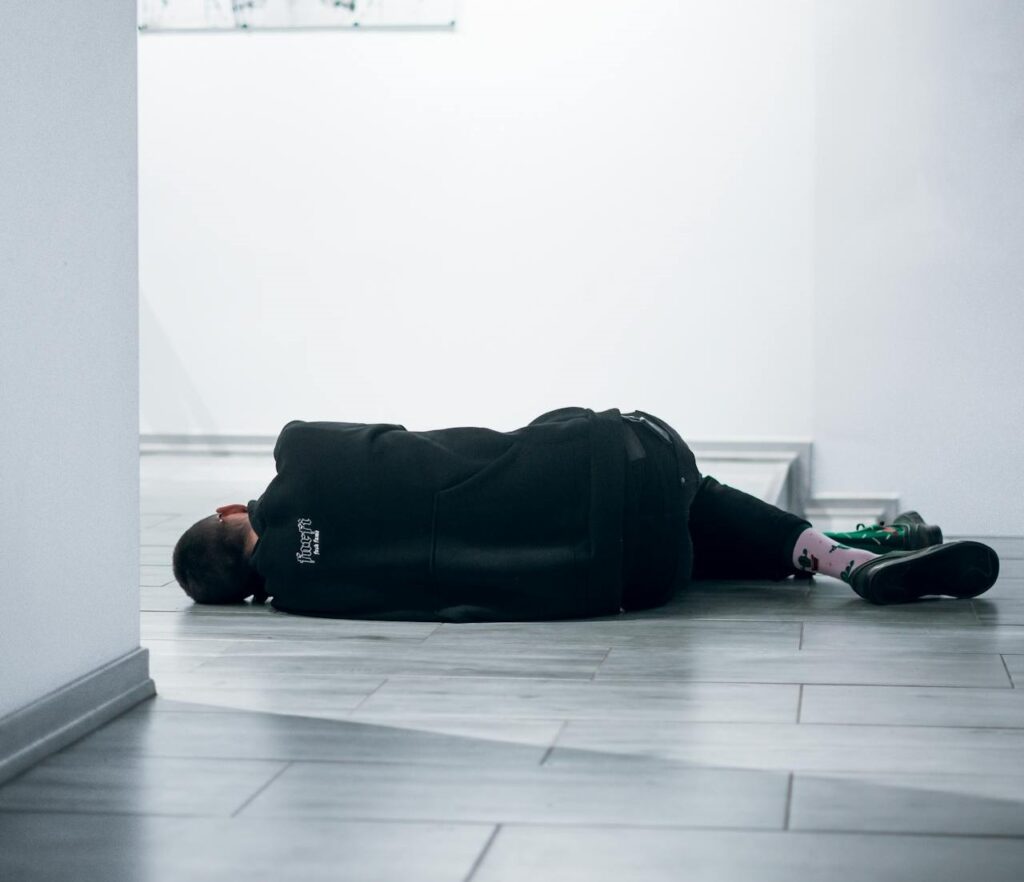
A Different Relationship With Sleep
Floor sleeping usually reduces tossing and turning. Not because it’s cozy, but because movement feels purposeful rather than habitual.
Many people fall asleep faster once their body adjusts, not because it’s easier, but because there’s less negotiation involved. You lie down. You rest.
Sleep can feel deeper, heavier, and more contained. Fewer half-awake position changes. Fewer interruptions.
Emotional and Mental Effects
Reducing comfort can quiet mental clutter. Without layers of softness, the mind has less to latch onto.
People often notice thoughts slowing down. Emotional processing can surface more clearly before sleep. Not overwhelming, just present.
For some, this creates space for emotional release. For others, it brings clarity around stress that’s been sitting unnoticed.
Spiritual Effects of Sleeping on the Floor
Spiritually, sleeping on the floor tends to change how you relate to your body and your inner state. Being closer to the ground creates a stronger sense of physical presence. You feel where you are, how you’re resting, and how your body settles instead of sinking into comfort and disappearing into it.
Over time, many people notice less attachment to constant ease and stimulation. Sleep becomes simpler. You stop expecting it to feel luxurious and start letting it be restorative. That shift alone can bring a deeper appreciation for basic needs being met, a safe place, warmth, rest.
Sleeping on the floor can also bring emotional patterns into clearer focus. Without layers of padding, there’s less distraction, and whatever you’ve been carrying mentally tends to surface in a more straightforward way. The transition between waking and sleep often feels calmer and more contained, as if the body and mind are syncing instead of pulling in different directions.
How to Try It Without Overdoing It
Floor sleeping doesn’t have to turn into a rule or a lifestyle. You can start small. A blanket, a thin mat, even a rug is enough. One night is usually all it takes to notice that your body reacts differently the next day. Sometimes better, sometimes just different, but noticeable.
Some people move between the bed and the floor depending on how they feel physically or mentally. Others return to the floor during periods when life feels overloaded and they need something that strips things back. There’s no correct schedule. Your body will make its preferences clear.
Most people who stick with floor sleeping don’t do it because it feels nice. They do it because it changes their relationship with rest. With their body. With how they slow down at night. It makes sleep feel intentional instead of automatic.
It takes away the extra layers and leaves you with something basic and honest.
And in certain phases of life, that simplicity makes all the difference.