

Christmas trees have collected plenty of superstitions over the centuries. Bringing an evergreen indoors, decorating it, choosing ornaments, placing something on top, and deciding when to take the tree down have all been connected with luck, protection, spirits, and the coming year.
Many Christmas tree superstitions have roots in older winter traditions surrounding evergreens, with additional customs developing across Europe as the Christmas tree became part of the holiday. Here are ten strange superstitions you may want to know before decorating your tree.
1. Evergreens Were Connected With Life During Winter
Evergreens stay green through winter, giving them strong associations with life, endurance, protection, and renewal. Long before the modern Christmas tree developed, evergreen branches and plants were used during winter celebrations.
Their ability to remain green when many other plants had lost their leaves made them especially symbolic around the winter solstice. Bringing evergreen greenery into the home became connected with surviving winter and welcoming the return of light.
2. Bringing a Tree Indoors Could Bring Spirits With It
Older folklore sometimes treated trees as homes or gathering places for spirits and supernatural beings. Bringing branches or an entire tree indoors could therefore carry more than greenery across the threshold.
Some customs involved shaking or striking greenery before taking it inside, symbolically removing anything unwanted that might be attached to it.
The superstition gives the Christmas tree a slightly eerie side: you may have brought something else home with it.
3. Spirits Could Live Inside the Tree
Another belief treated the tree itself as spiritually inhabited. Trees and groves held sacred significance in numerous pre-Christian European traditions, and cutting living wood could require respect.
Food and small offerings were sometimes associated with trees and household spirits. Later Christmas customs involving fruit, nuts, sweets, and other edible decorations fit naturally alongside much older traditions of decorating greenery with food.
Under this interpretation, decorating the tree becomes more than making it beautiful. It also honors the life represented by the evergreen.
4. Decorating From the Bottom Up Brought Better Luck
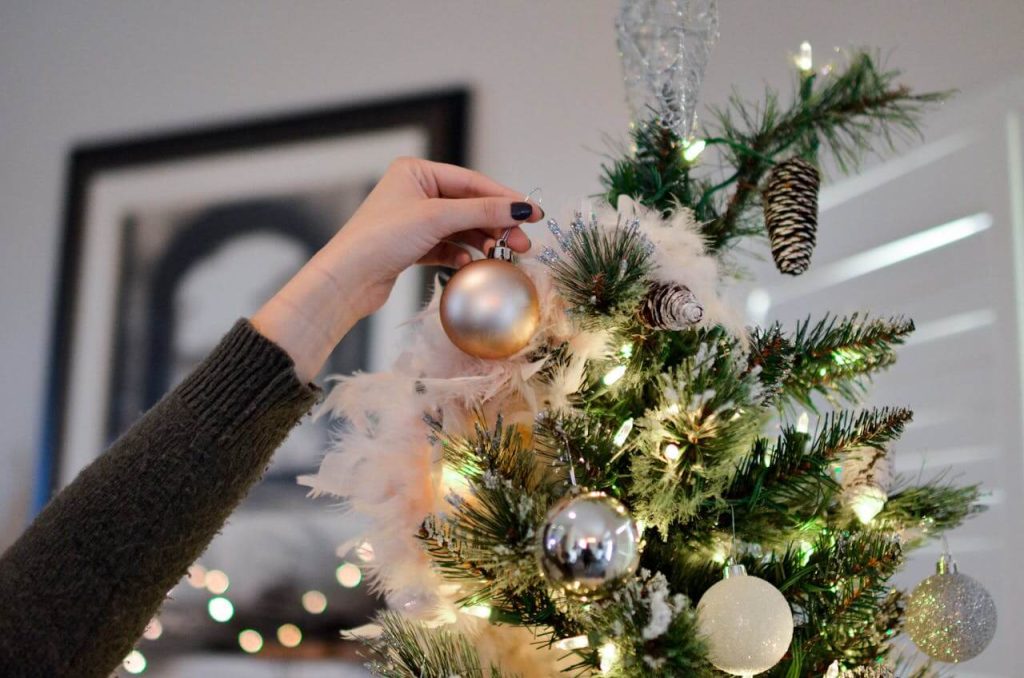
One superstition says the Christmas tree should be decorated from the bottom upward, symbolically encouraging fortune to rise during the coming year.
Decorating downward carried the opposite association, with luck or prosperity moving in the wrong direction.
Even without following the superstition, decorating upward has a satisfying symbolism: starting at the bottom and finishing at the highest point mirrors progress and growth.
5. Leaving the Tree Half-Decorated Was Unlucky
An unfinished Christmas tree was associated with unfinished business carrying into the coming year.
According to the superstition, once decorating began, the tree should be completed instead of being abandoned halfway through. Leaving it unfinished overnight could symbolize plans, promises, or goals remaining incomplete.
For anyone who starts decorating at 11 p.m., this particular superstition is inconvenient.
6. Ornament Colors Could Influence Your Luck
Christmas ornaments acquired their own symbolism. Red has been associated with protection, vitality, love, and prosperity, making red decorations especially fortunate.
Gold naturally became connected with wealth and abundance, green with life and renewal, and white with purity and peace.
Some superstitions also favored balance in the number and placement of decorations, turning the finished tree into a symbolic picture of the household’s hopes for the year ahead.

7. The Top of the Tree Was Spiritually Important
The highest point of the Christmas tree carries special symbolism because it crowns the entire tree. Today, stars and angels dominate this position.
The star connects with the Star of Bethlehem, and the angel with the angels associated with the Nativity story. Earlier tree and evergreen traditions also gave special importance to the uppermost branches and the symbolic direction toward the heavens.
Placing the topper therefore became the final and most prominent part of decorating the tree.
8. Real Trees Were Considered More Protective
A living evergreen naturally carried stronger symbolism than an imitation because its defining feature was its ability to remain green through winter.
The needles, scent, resin, and living branches were all part of its association with endurance and protection. Once artificial Christmas trees became available, they lacked that literal connection with a living evergreen.
For people interested in the older symbolism, a real tree therefore represents life surviving the darkest part of the year in a way an artificial version cannot physically reproduce.
9. Taking the Tree Down Too Early Could Bring Bad Luck
Removing Christmas greenery before the celebrations were finished was considered unlucky in some traditions.
The tree and greenery remained part of the household throughout the Christmas season, so taking them away prematurely could symbolically end the celebration and its blessings too soon.
This belief also explains the strong traditions surrounding specific dates for removing Christmas decorations instead of simply taking everything down whenever convenient.
10. Leaving It Up Too Long Could Also Bring Bad Luck
Keeping Christmas decorations up beyond the traditional end of the season has its own bad-luck superstition.
Twelfth Night and Epiphany became important dates for removing Christmas greenery, although customs differ over the exact date. In some folklore, spirits associated with greenery needed to be released back outdoors once the Christmas season ended.
Leaving the greenery inside beyond its proper time could therefore reverse its protective symbolism and bring misfortune into the household.
Before You Take Down the Tree
The Christmas tree carries older symbolism beneath the lights and ornaments. Evergreen branches represented life through winter, the tree could be associated with spirits and protection, and even decorating or removing it developed its own rules for luck.
So if someone insists that the tree has to come down on a particular day, or that a certain ornament belongs in a certain place, they may be repeating a superstition much older than they realize.
More Superstitions & Traditions
- Is It Bad Luck to Put Your Christmas Tree Up Before Thanksgiving?
- How to Celebrate Saturnalia, the Season of Rest and Reversal
- 6 New Year’s Food Traditions and Superstitions for Good Luck
- 4 Powerful New Year’s Rituals for Prosperity and Wealth