

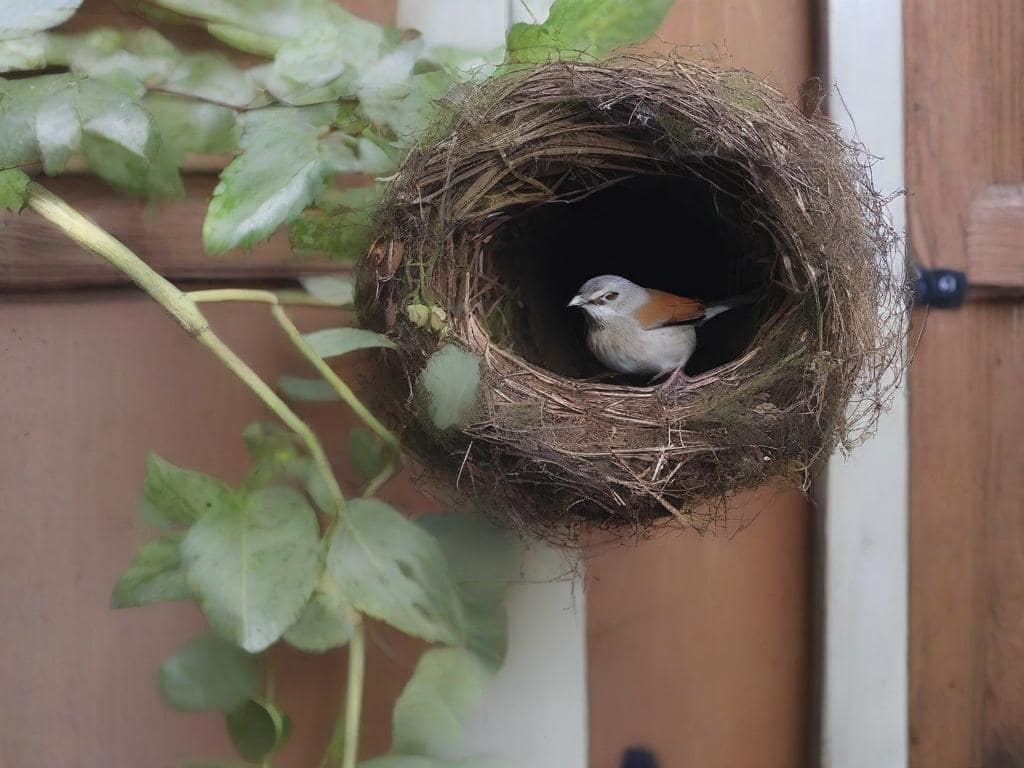
You open your door one day and notice it. Tucked above the frame, in a corner of the awning, or right over the entrance, there’s a bird’s nest. Carefully built. Intentionally placed. It catches your attention because it feels deliberate, not accidental.
For many people, this moment brings curiosity rather than fear. Especially if you’re familiar with Feng Shui or symbolism, it naturally makes you pause and look at the space a little differently.
A bird choosing your front door isn’t only about convenience. In both Feng Shui and spiritual traditions, entrances carry meaning. And so do birds.
The Symbolism of Birds in Feng Shui
In Feng Shui, birds are associated with positive movement, communication, and new phases of life. They’re seen as carriers of fresh energy, not because they predict events, but because they respond to environments that feel supportive and alive.
Birds don’t nest where energy feels chaotic or unsafe. They look for stability, shelter, and balance. When a bird builds a nest near your home, especially close to the entrance, it suggests the space feels secure and supportive on an energetic level.
Different birds carry slightly different associations:
- Swallows are often linked with loyalty, return, and long-term happiness
- Magpies are traditionally associated with news, messages, and changes
- Small songbirds generally symbolize peace, domestic harmony, and steady growth
What matters most isn’t the species, though. It’s the choice of location.
Why the Front Door Is Important
In Feng Shui, the front door is where energy enters the home. It reflects how opportunities, connections, and experiences flow toward you.
A well-kept entrance supports clarity and movement. When something chooses to settle there, especially something living, it suggests that energy isn’t rushing past or getting blocked. It’s able to arrive and stay.
A bird nesting near the front door often points to a period where things are stabilizing rather than shifting abruptly. It’s associated with continuity, not disruption. The home becomes a place where life feels sustainable, not just active.
This is one reason nests here are generally interpreted positively.
What the Nest Itself Can Indicate

Details matter more than superstition.
- A nest with eggs or chicks often symbolizes growth in progress. Something is forming, but it needs time.
- An empty nest can point to a phase that has already completed its role. It’s a sign of transition, not loss.
- A fallen or damaged nest doesn’t mean bad luck, but it may reflect physical issues around the entrance that need attention, such as loose structures, leaks, or neglect. Feng Shui often connects physical upkeep with energetic clarity.
Again, this isn’t about predicting outcomes. It’s about noticing themes.
Should You Remove the Nest or Leave It?
If the nest is active, meaning birds are still using it, Feng Shui traditionally advises leaving it alone. Disturbing it can create unnecessary disruption, both practically and symbolically.
If the nest is empty and clearly abandoned, it’s fine to remove it gently once the birds are gone. Many people choose to clean the area and place a small birdhouse nearby as a respectful alternative. This keeps the environment welcoming without encouraging repeated nesting directly over the door. The key is intention, not fear.
Is a Bird Nest at the Front Door a Good or Bad Sign?
In Feng Shui and spiritual symbolism, it’s generally considered a positive sign.
It suggests your home is perceived as safe, supportive, and balanced. Birds respond to environments that feel stable. Their choice reflects conditions that already exist rather than warning of something dramatic ahead.
At its core, a bird’s nest at your front door points to continuity, care, and the ability to sustain what arrives in your life. Whether that shows up as opportunities, relationships, or inner stability depends on your own circumstances.
Sometimes, the message isn’t about what’s coming. It’s just about recognizing what’s already working.