


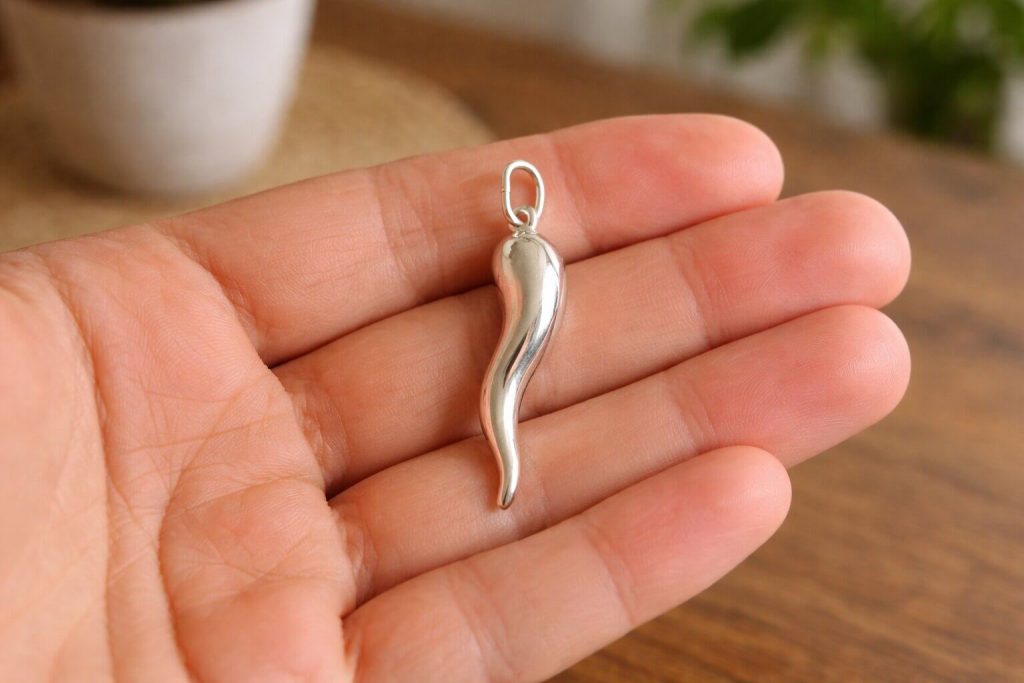
The Italian horn, also known as the Cornicello, is one of the most recognizable charms linked to Italian tradition. You have probably seen it hanging from car mirrors, worn as a necklace, or attached to a keychain. Its curved shape looks similar to a red chili pepper, yet its meaning goes far beyond decoration.
A common belief says you should never buy a Cornicello for yourself because it only “works” when it is given as a gift. But is that actually true, or just a popular myth that keeps getting repeated?
The History and Meaning Behind the Cornicello
The Cornicello, sometimes called corno or “little horn,” has roots in ancient Italy. For centuries it has been associated with protection against the malocchio, or evil eye. Its horn-like shape is linked to symbols of strength, vitality, fertility, and courage.
Traditionally, these charms were made from gold, silver, or red coral. People believed these materials carried protective qualities, which made the Cornicello more than just jewelry. Families often passed it down through generations as a small token meant to guard against misfortune.
In some regions of Italy, babies even receive a Cornicello as a gift soon after birth. The charm represents care and protection from loved ones, which is why many people associate it with meaningful moments rather than simple superstition.
Common Myths About Buying Your Own Cornicello
The idea, or rather the superstition, that buying a Cornicello for yourself brings bad luck comes mostly from old traditions.
The “It must be a gift” belief
Some say a good luck charm only carries power when someone else gives it to you. The reasoning is that a gift holds the intention and support of the person who chose it. Yes, a gifted Cornicello can feel more personal, but its meaning does not disappear if you buy one yourself.
The “You are forcing luck” idea
Another belief suggests that buying your own charm somehow challenges fate. In truth, choosing a Cornicello because it makes you feel protected or connected to tradition is simply a personal choice. When you pick one with clear intention, it can feel even more meaningful than receiving a charm that was given only as a casual gift.
The “It loses its meaning” myth
Some people believe the horn becomes less effective when self-purchased. Historically, however, the Cornicello has always been a symbol. Its value comes from what it represents than who paid for it.
Is It Really Bad Luck to Buy One for Yourself?
The Cornicello has always been more about culture and symbolism than strict rules. In Italy, you will find people who buy their own horn without a second thought, simply because they like what it represents or feel connected to its history. For many, it is a small personal talisman rather than something that depends on who paid for it.
Where people sometimes go wrong is expecting a charm to change their life overnight. The horn was never meant to replace real choices or effort. Most Italians see it as a reminder of strength, protection, and heritage, not as a shortcut to good fortune.
Of course, receiving a Cornicello as a gift can feel special. It carries a story, a relationship, a moment between two people. Still, tradition does not say you must wait for someone else to give you one. Choosing your own simply adds another layer of meaning, one that comes from your own connection to the symbol.
Gifted or Self-Bought, It’s Still a Cornicello
Buying an Italian horn for yourself is not bad luck. Whether gifted or self-chosen, the Cornicello remains a symbol of protection, heritage, and personal strength.
If you like its look or feel connected to its history, wear it with confidence. The real meaning of the Cornicello comes from the story behind it and the intention you bring to it, not from outdated rules about who should buy it.
I bought my Cornicello myself last year while spending a night in Rome before a flight to Terceira, Portugal. I picked it with protection in mind, and that moment made it feel personal from the start.
Che fortuna, as Italians say. Sometimes luck begins with a choice that simply feels right.