

Mirrors have never been treated as ordinary objects. Across cultures, they’ve been surrounded by caution, symbolism, and unease. Ancient Chinese traditions, Feng Shui included, warned against mirrors facing the bed long before modern sleep science existed. European folklore saw mirrors as thresholds rather than decor. In many parts of the world, they were covered at night for a reason.
The discomfort people feel around a mirror facing the bed isn’t new, and it isn’t accidental. It sits at the crossroads of energy, awareness, and how the human mind responds to being reflected while vulnerable.
Why Mirrors Facing the Bed Make People Uncomfortable
Across cultures, mirrors were never treated as neutral objects. They weren’t just for checking your hair or outfit. They were seen as thresholds. Surfaces that didn’t just reflect light, but awareness.
Sleeping in front of a mirror was believed to leave a person exposed. Not physically, but energetically. At night, when the mind loosens its grip and the body rests, mirrors were thought to interfere with that natural withdrawal.
Even today, many people report the same thing without knowing any superstition at all. Poor sleep. Restlessness. A sense of being watched. Vivid or unsettling dreams. The reaction happens first. The explanation comes later.
Old Superstitions About Mirrors and Sleep
In parts of Europe, mirrors were believed to open into other realms and sleeping in front of one was considered dangerous. The idea was that a sleeping person might wander somewhere they couldn’t return from.
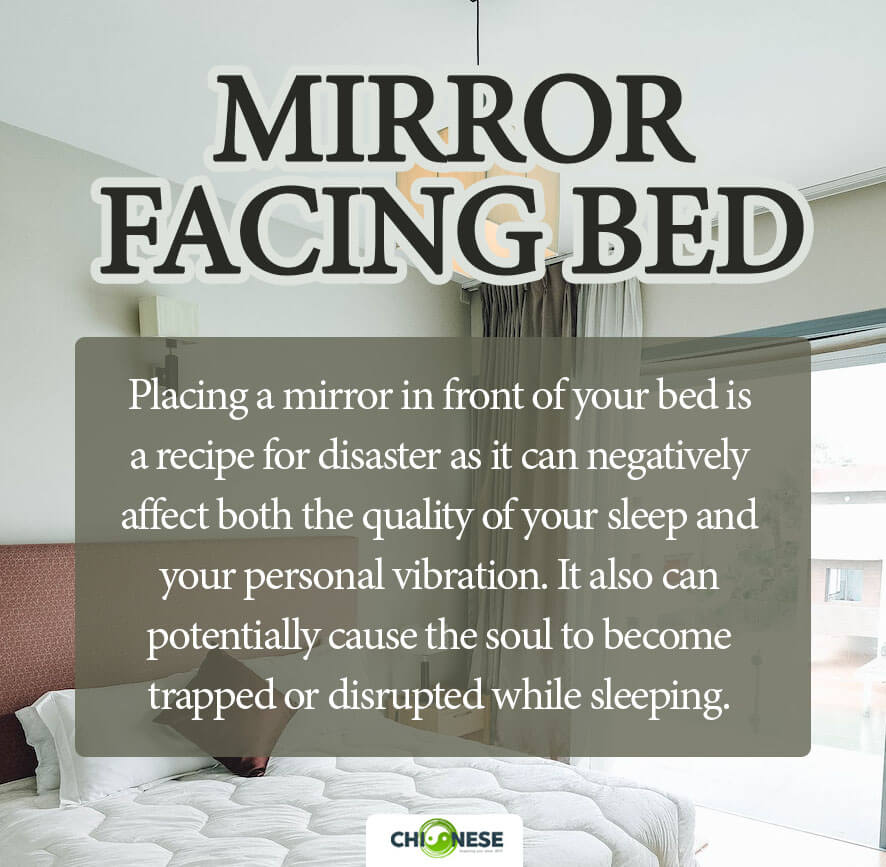
In China, mirrors were said to double whatever they reflected. Joy doubled into abundance. Problems doubled into burden. Placing a mirror opposite the bed meant whatever stress you carried during the day followed you into the night and echoed back at you.
In India, mirrors were often covered after sunset. The concern wasn’t vanity. It was vulnerability. The belief was that during sleep, the soul loosened its hold on the body, and mirrors could interfere with that process.
Different cultures, same instinct: mirrors and sleep simply don’t mix well.
The Paranormal Angle People Still Talk About
Mirrors have always been linked to the idea of passage. Not movement, but crossing. Folklore describes them as surfaces that don’t just show you your image, but also observe you back.
The belief goes like this: when you sleep, awareness drifts. Not in a mystical way for everyone, but in a deeply internal one. A mirror facing the bed is thought to pull attention outward again, interrupting that inward rest.
Some paranormal traditions go further and claim mirrors can attract unwanted presence. That they act like open windows instead of walls. Whether someone believes that literally or not, the experience many people describe is the same: the room feels unsettled at night.
What Feng Shui Says About Mirrors Facing the Bed
From a Feng Shui perspective, the issue with a mirror facing the bed has nothing to do with fear or bad luck. It comes down to how energy behaves in a sleeping space.
Mirrors are considered active objects in Feng Shui. They reflect, stimulate, and keep energy in motion. That quality works well in hallways, dining areas, or offices. A bedroom, however, serves a different purpose. It is meant for rest, recovery, and slowing the body down after the day.
When a mirror faces the bed, it reflects the sleeping body and continuously bounces energy back into the space. Instead of settling, the energy stays in circulation. According to Feng Shui principles, this constant movement can interfere with deep rest and make sleep feel lighter or more fragmented. People often wake up feeling tired even after enough hours in bed, as if their body never fully shut off.
This is why Feng Shui discourages mirrors facing the bed. Not because mirrors are negative objects, but because they keep the bedroom in an alert state when it should support restoration. The repeated reflection creates an energetic loop, moving back and forth between the mirror and the sleeper. During sleep, that ongoing movement can disrupt the body’s natural ability to relax and reset.
Feng Shui sees a mirror facing the bed as an imbalance. The bedroom needs stability and stillness. A mirror directly reflecting the bed works against that goal, which is why repositioning or covering it often leads to noticeably better sleep.
Mirrors and Relationship Tension

There’s also a long-standing belief that mirrors reflecting the bed interfere with intimacy.
The idea isn’t literal. It’s symbolic. A reflection creates duplication. Presence becomes divided. Some traditions describe it as introducing another influence into a private space that should belong only to the people in it.
Many couples notice more tension, emotional distance, or restless sleep when a mirror faces the bed, even if they don’t believe in any symbolism at all.
If You Can’t Move the Mirror
Sometimes the mirror isn’t optional. Built-in closets. Small bedrooms. Rentals. In that case, the goal is to reduce its impact at night.
Covering the mirror is the oldest solution for a reason. A simple cloth or curtain changes the feel of the room immediately. The reflection stops competing for attention.
If covering isn’t possible, angling the mirror so it doesn’t directly reflect the bed helps. Even a small shift can make the space feel calmer.
Some people also choose to move reflective surfaces out of direct line of sight while lying down. What you don’t see, your body doesn’t respond to.
Where Mirrors Work Better Instead
Mirrors do well in active spaces. Hallways. Dining areas. Living rooms. Places where movement, light, and interaction are welcome.
In Feng Shui, mirrors placed thoughtfully can support flow and expansion. The bedroom simply isn’t the place for that kind of energy.
A More Grounded Way to Look at It
You don’t have to believe in souls escaping or portals opening to notice the effect of a mirror facing the bed. Pay attention to how your body responds.
If sleep improves when the mirror is covered or moved, that’s your answer. The room tells you what works long before belief does.
Mirrors are powerful objects. Not because they’re dangerous, but because they’re active. And when it comes to rest, activity isn’t always what you want around you.
If something feels off in your bedroom, especially at night, start with what’s reflecting you back.