


Pregnancy superstitions cover almost everything an expectant mother does, from food cravings and haircuts to eclipses, dreams, belly shape, and preparing for the baby too early. Some old wives’ tales claim to reveal whether the baby is a boy or girl, and others warn that certain actions could bring bad luck or affect the birth.
Many developed long before pregnancy tests, ultrasounds, and modern prenatal care. Families looked at physical changes, dreams, food, and everyday events for clues about the pregnancy and the baby.
Cravings Could Reveal the Baby’s Sex
Food cravings have inspired countless pregnancy old wives’ tales. Craving sweet foods is commonly said to mean a girl, with salty or savory cravings pointing to a boy.
Sour foods have their own reputation. Pickles are so closely associated with pregnancy that suddenly craving them can immediately make people wonder whether someone is expecting.
A Girl “Steals Her Mother’s Beauty”
An old saying claims that a baby girl steals her mother’s beauty during pregnancy. Breakouts, duller skin, or changes in facial features are taken as signs of a daughter.
Clear skin and the famous pregnancy “glow” are linked with carrying a boy in the same folklore.
It is hardly a flattering superstition for daughters, but it remains a familiar pregnancy saying and still circulates in gender-guessing games.

The Ring Test
The ring test uses a wedding ring suspended from a thread or strand of hair and held above the pregnant belly.
If the ring swings back and forth, folklore usually points to a boy. Circular movement indicates a girl. You may encounter the directions reversed depending on the family or region, which is part of the fun of comparing results.
Some versions hold the ring above the palm instead of the belly. The test has also been used to guess how many children someone will have.
Carrying High or Low
The shape and position of the belly are probably among the best-known ways of guessing a baby’s sex without an ultrasound.
Carrying low is said to mean a boy, and carrying high means a girl. A belly that sticks straight out in front is also commonly associated with a boy, with a wider or rounder belly linked with a girl.
Dreams About Fish and Pregnancy
Dreaming about fish is traditionally linked with pregnancy, conception, and fertility. A fish dream may be taken as a sign that someone is pregnant, sometimes before the pregnancy has been announced or discovered.
Korean folklore has a specific tradition called taemong, meaning conception dreams. The expectant mother may have the dream herself, but a partner, relative, or someone close to the family can dream it too. Taemong can feature fish, other animals, fruit, plants, jewels, and other memorable symbols.
Fish are also natural fertility symbols because they produce many offspring and live in water, which itself is closely associated with birth and creation. This helps explain why fish dreams became connected with pregnancy in folklore beyond Korea as well.

Cutting Your Hair During Pregnancy
An old superstition warns pregnant women against cutting their hair. Hair has traditionally represented vitality, strength, and life force, so cutting it during pregnancy was sometimes feared to affect the child or shorten its life.
Variations of this warning survive in different places, although the consequences attributed to a haircut vary considerably.
Eclipses and Pregnancy
Eclipses have inspired particularly strong pregnancy taboos. In parts of Latin America and South Asia, pregnant women have traditionally been advised to stay indoors during an eclipse.
Some folklore claims that exposure to an eclipse could cause a birthmark, cleft lip, or other physical difference in the baby. Protective customs may include covering the belly, wearing something red, carrying a protective object, or avoiding certain activities until the eclipse ends.
These customs come from older fears surrounding eclipses, which were once regarded as dangerous or disruptive events in many cultures.
Knitting, Rope, and the Umbilical Cord
Several pregnancy superstitions involve knots, loops, ropes, and thread because they resemble an umbilical cord wrapped around something.
Knitting during pregnancy has consequently been discouraged in some folk traditions. Stepping over ropes, cords, or similar objects can carry the same warning, with the action supposedly increasing the chance that the umbilical cord will become wrapped around the baby.
The association comes from visual symbolism: tangled thread or crossed rope represents a tangled cord.
Sitting in a Doorway
Pregnant women have also been warned against sitting on a doorstep or directly in a doorway.
A doorway represents an entrance and exit, which made it easy to connect symbolically with childbirth. Blocking the doorway could supposedly make labor difficult or prevent the baby from passing easily into the world.
Doorways already carry plenty of folklore outside pregnancy, including warnings about greetings across thresholds, protection from spirits, and luck entering or leaving the home.
Preparing for the Baby Too Early
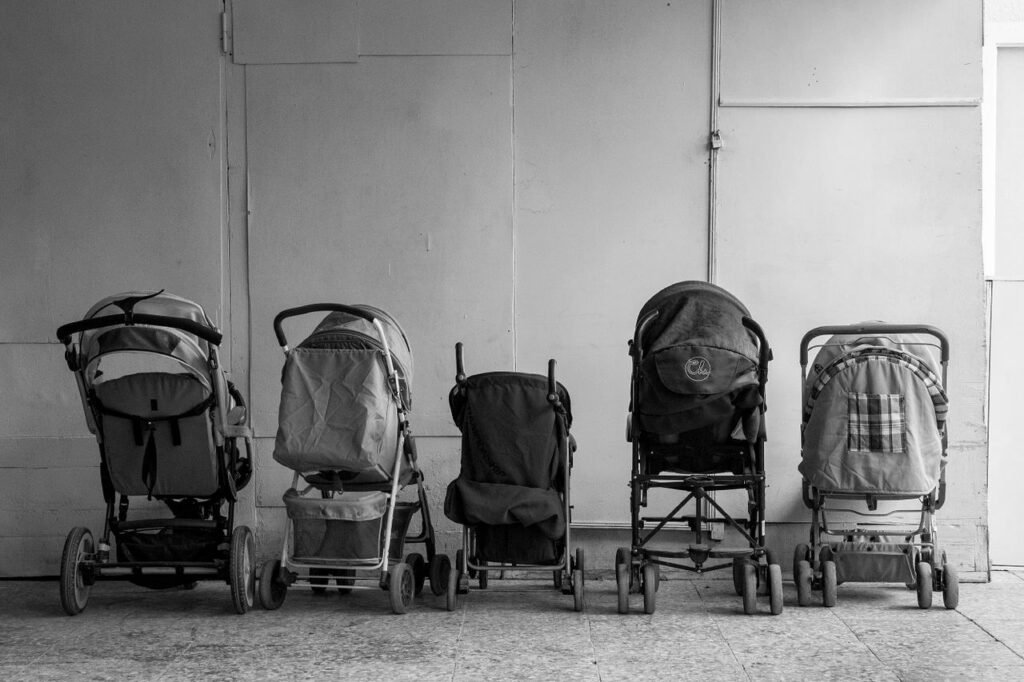
Many pregnancy superstitions warn against preparing too much before the birth. Buying certain baby items, setting up the nursery, bringing a pram home, or rocking an empty cradle can all be considered unlucky.
These customs have strong roots in the risks that historically surrounded pregnancy and childbirth. Families sometimes avoided treating a safe delivery as certain before the baby had arrived.
The empty cradle became particularly ominous. Rocking it without a baby inside was believed to invite bad luck, which is closely related to the superstition against pushing or rocking an empty pram.
Sharp Objects as Protection
Knives, scissors, and other iron or steel objects have a long history in protective folklore. In some pregnancy customs, a sharp object placed near the bed was believed to keep harmful spirits away from the expectant mother and baby.
The symbolism comes from the power to cut. A blade could symbolically cut through harmful spiritual influence or prevent an unwanted entity from approaching.
Old Wives’ Tales That Refuse to Disappear
Ultrasounds can reveal a baby’s sex, pregnancy tests can give an answer within minutes, and modern prenatal care can tell expectant parents far more about a pregnancy than previous generations could ever know. Yet people still hold rings over pregnant bellies, compare cravings, guess from belly shape, and warn expectant mothers about eclipses or cutting their hair.
Most of these superstitions survive through families. A grandmother remembers hearing one from her mother, passes it to her daughter, and years later the same warning gets repeated to the next generation. Sometimes it is taken seriously, sometimes it becomes a joke at a baby shower, and sometimes a pregnant woman follows it simply because she grew up hearing it.
More Pregnancy & Baby Superstitions
- Do Dry Lips During Pregnancy Reveal Your Baby’s Gender?
- Pram Superstitions: What Parents Were Warned Never to Do
- The Superstition Behind Biting Your Lip Without Meaning To
- Why Is Crossing Someone on Stairs a Bad Luck Superstition?
- 23 Spooky Halloween Superstitions You’ve Probably Never Heard Of