

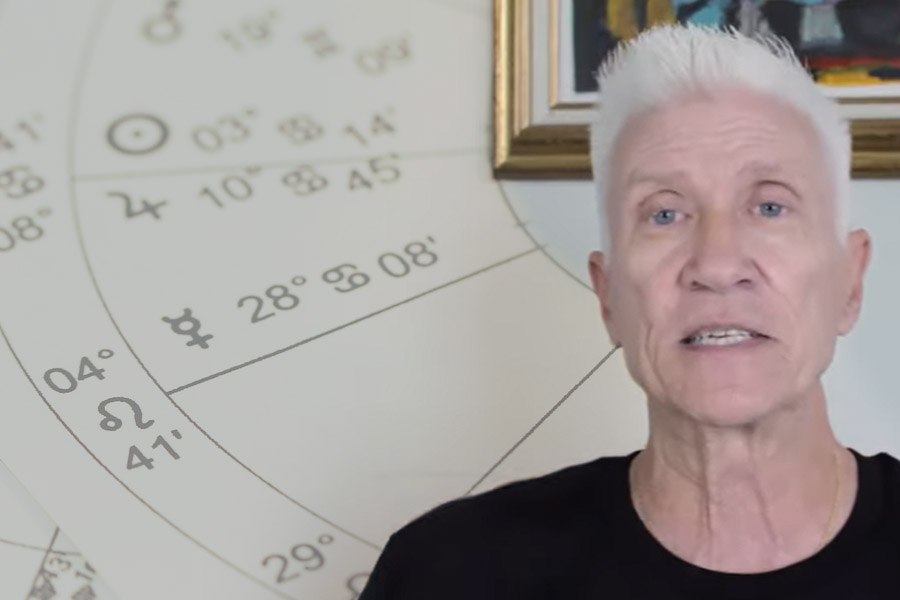
Terence Guardino is a long-time astrologer whose name comes up often among people who follow astrology on YouTube with a serious interest. He is not a trend-based creator and never framed his work as entertainment first. His content sits closer to traditional astrology, built on decades of study rather than short-form commentary.
People usually find him through his YouTube channel, then realize he has been working in astrology far longer than most online creators.
Background and Early Interest in Astrology
Terence Guardino was born in Honolulu, Hawaii, and later settled in Los Angeles, where he currently lives. He has kept most details about his early life private, including his exact birth year. Based on available timelines, he is generally believed to be in his 60s or early 70s.
His interest in Western astrology began in 1971. During his college years, he met an established astrologer in Chicago, an encounter he has referenced as influential in shaping his approach. That experience pushed him beyond casual curiosity and into structured study.
By 1977, he was already working with astrology professionally.
Western and Vedic Astrology Practice
Terence Guardino works with both Western and Vedic astrology. He began with Western methods and later added Vedic astrology to his practice, integrating both systems rather than treating them as competing frameworks.
This dual approach is a defining feature of his work. He tends to focus on timing, planetary cycles, and long-range themes rather than daily horoscope-style content. His tone stays instructional and methodical, aimed at viewers who already understand basic astrological concepts or want to learn them properly.
He has described himself as a traveler and observer, which shows in how he contextualizes astrology within broader life cycles instead of isolated moments.
Media Appearances and Public Work
Before YouTube became his primary platform, Terence Guardino appeared on television and radio across the United States and Canada. He has been featured twice on ABC morning programming and quoted in publications such as USA Today and the New York Daily News.
These appearances positioned him as a public-facing astrologer long before astrology content became common online.
YouTube Channel and Long-Term Growth
Terence launched his YouTube channel in 2006, naming it after himself. Unlike many creators who pivoted into astrology later, his channel grew gradually over time.
As of recent years, the channel has surpassed 225,000 subscribers and accumulated nearly 7 million views. The growth reflects consistency rather than viral spikes. His videos are usually longer, structured, and focused on astrological cycles rather than quick summaries.
This steady approach has built a loyal audience that returns for continuity rather than novelty.
Books and Written Work
In 2004, Terence Guardino published The Seasons of Astrology: Connecting Your Biological Clock to Your Sun Sign Personality. The book explores how planetary cycles align with human development and includes case studies involving public figures.
More recently, he released an e-book titled Your Perfect Match, available through his website. The book focuses on relationship compatibility through astrology and is positioned as a practical guide rather than a personality quiz.
The Guardino Surname
The surname Guardino has Italian origins. It derives from the verb “guardare,” meaning to watch or protect. Linguistically, it can be interpreted as “little guard” or “watchful one.”
Historically, surnames like Guardino were often linked to roles involving protection or oversight, either occupational or descriptive. The name appears most commonly in Italian regions before spreading through migration.
Where Terence Guardino Stands Today
Terence Guardino occupies a specific place in online astrology. He is neither new nor flashy, and his work does not chase trends. His credibility comes from longevity, consistency, and a clear commitment to astrology as a discipline rather than a content niche.
For viewers looking for astrology rooted in study and repetition rather than performance, his work continues to hold attention year after year.