


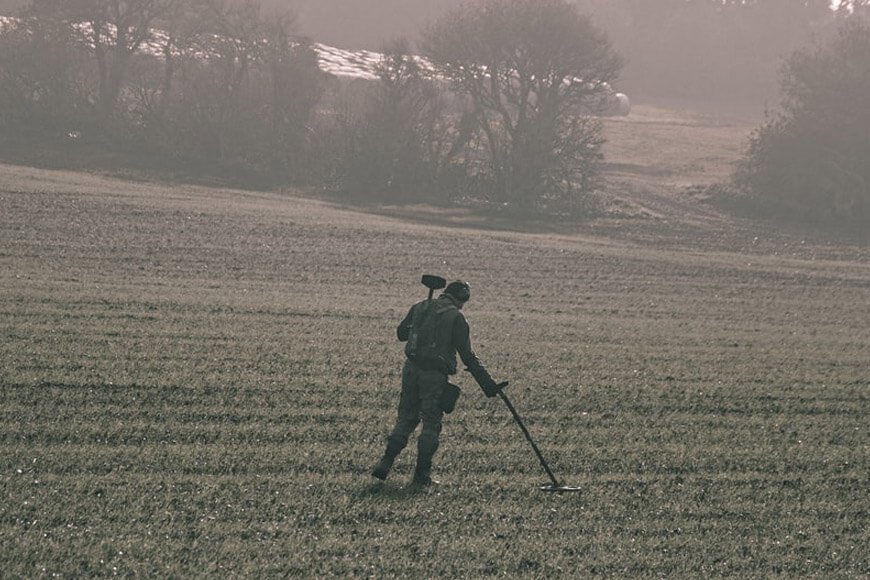
Metal detecting looks simple from the outside. Someone walking slowly, headphones on, swinging a coil back and forth. But once you try it yourself, you realize it’s much more than that.
It gets you outside without feeling like exercise. It gives your brain something to focus on without draining it. And strangely enough, it has a way of pulling you out of your head when you really need that.
If you’ve ever felt restless, mentally overloaded, or stuck in the same routines, metal detecting can be a surprisingly good reset.
It’s Good for Your Mental Health
Metal detecting gives your mind a break from noise. Not silence, but a different kind of attention. You’re listening for signals, watching the ground, noticing patterns. Your thoughts don’t disappear, they just stop piling up.
There’s also something deeply satisfying about the hunt itself. Most finds aren’t treasures in the movie sense, and that’s fine. Even a modern coin or an old button can shift your mood instantly because you found it. You uncovered something that was hidden.
For me, metal detecting works like plugging a phone into a charger. When my head feels overloaded or heavy, I grab my detector and go recharge myself. I always come back lighter than when I left.
It Increases Your Activity Level Without Feeling Like Exercise
You walk more than you realize when detecting. A lot more. Fields, beaches, forests, paths you wouldn’t normally choose. Time passes fast because you’re focused on signals, not steps.
It’s also not a one-size-fits-all activity. Some days you move slowly and carefully. Other days you cover a lot of ground. Terrain matters too. Sand, grass, hills, roots, uneven soil. Your body adjusts naturally.
If you’re not very fit, that’s not a problem. Start on flat ground. Beaches, meadows, plowed fields. Over time, stamina builds without you having to force anything. Many people are surprised when they check their distance later and realize how far they actually walked.

It Helps Release Built-Up Stress
Metal detecting has a way of narrowing your focus. You’re solving a small puzzle every time the detector signals. Is it iron? Aluminum? Something worth digging? Your brain stays busy in a productive way.
Most people also choose places away from crowds. Fields, forests, quiet edges of towns. Not because they’re hiding, but because those places feel better. Nature does part of the work for you.
When you’re out there, stress doesn’t disappear, but it loosens its grip. You stop replaying the same thoughts. You start paying attention to what’s under your feet instead of what’s weighing on your mind.
Metal Detecting Can Be Good for the Environment Too
A lot of what detectors find isn’t treasure. It’s trash. Bottle caps, foil, sharp metal, old junk buried for years.
Many detectorists carry a separate bag just for waste and take it out with them. It’s a small act, but over time it adds up. Fields and paths get cleaner, safer, and more pleasant.
Doing something useful while doing something you enjoy changes how the hobby feels. You’re not just taking from the ground. You’re giving something back, and that leaves a good feeling that lasts longer than the hunt itself.
My Personal Metal Detecting Setup
I’ve gone through more than one detector, and each one taught me something different about how this hobby actually works in the real world.
My first detector was the Nokta Makro Simplex+ by Nokta Makro. This one was perfect for learning. The signals were clear, the tones were easy to understand, and I could make mistakes without feeling lost. It helped me figure out how different metals react underground, how soil affects depth, and how patience matters more than speed. That phase is important, because if learning feels frustrating at the start, most people quit.
Later, I switched to the Minelab Equinox 800 from Minelab. The difference was obvious almost immediately. Better depth, cleaner target separation, and much more detail in the signals. It felt like moving from guessing to actually reading the ground. Once you already understand the basics, this kind of detector lets you trust what you’re hearing instead of second-guessing every signal.
What I learned from using both is simple. The right detector isn’t about hype or specs on paper. It’s about where you are in the learning process. A detector should make you curious, not overwhelmed. When that balance is right, metal detecting stays enjoyable instead of turning into a chore.
Why This Hobby Sticks With People
Metal detecting doesn’t demand anything from you. You don’t need a schedule. You don’t need perfect conditions. You just go when you feel like it.
Some days you find nothing. Some days you don’t want to stop. Either way, you’ve walked, breathed fresh air, focused your mind, and stepped away from screens and stress.
That combination is rare. And once you experience it, you understand why so many people quietly stick with this hobby for years.